Why Leaving Leaves on Your Roof This Winter Will Destroy Your Shingles in Toco Hills
Those beautiful oak and maple trees in your Toco Hills neighborhood create stunning fall colors but also leave behind a hidden threat. When leaves accumulate on your roof during Atlanta’s wet winter months they trap moisture against your shingles creating the perfect environment for rot algae growth and premature roof failure. The combination of Georgia’s high humidity frequent rain and dense tree canopy in Toco Hills makes leaf debris removal not just a cosmetic concern but a critical maintenance task that protects your home’s most important investment. Georgia Secretary of State licensing information.
Many homeowners in Toco Hills wait until spring to address roof debris but by then the damage is already done. The constant moisture trapped under layers of wet leaves breaks down the asphalt in your shingles causes granule loss and creates weak spots where water can penetrate into your attic. This leads to ceiling stains mold growth and structural damage that costs thousands to repair. Understanding how Atlanta’s unique climate and Toco Hills’ specific tree canopy affect your roof is the first step in preventing expensive winter damage. Attic Ventilation Systems.
The Science Behind Leaf Damage to Atlanta Roofs
Leaves act like a sponge on your roof absorbing rainwater and holding it against the shingle surface. In Toco Hills where mature oak and maple trees are common this creates a persistent moisture problem. The trapped water prevents your roof from drying properly between storms and the constant dampness breaks down the asphalt binder that holds your shingles together. This process accelerates in Atlanta’s humid climate where relative humidity often stays above 70% even on dry days.. Read more about Why Ice and Water Shields are Essential for Atlanta Roof Valleys (Even Without the Snow).
The damage goes beyond simple water exposure. As leaves decompose they release acids that further break down shingle materials. The organic matter also provides food for algae and moss which can establish themselves in the moist environment and spread across your roof surface. Once moss takes hold it grows root-like structures that lift and separate shingles creating even more entry points for water. This cycle of decay can reduce your roof’s lifespan by 5 to 10 years if left unchecked.. Read more about How We Recycle Your Old Asphalt Shingles After a Roof Replacement in Decatur.
In Toco Hills the problem is compounded by the neighborhood’s mature tree canopy. Many homes sit under large oak trees that drop leaves continuously from October through December. The dense canopy also blocks sunlight from reaching the roof which would normally help dry out moisture between storms. This creates a perfect storm of conditions for roof damage: constant leaf fall high humidity frequent rain and limited sun exposure.
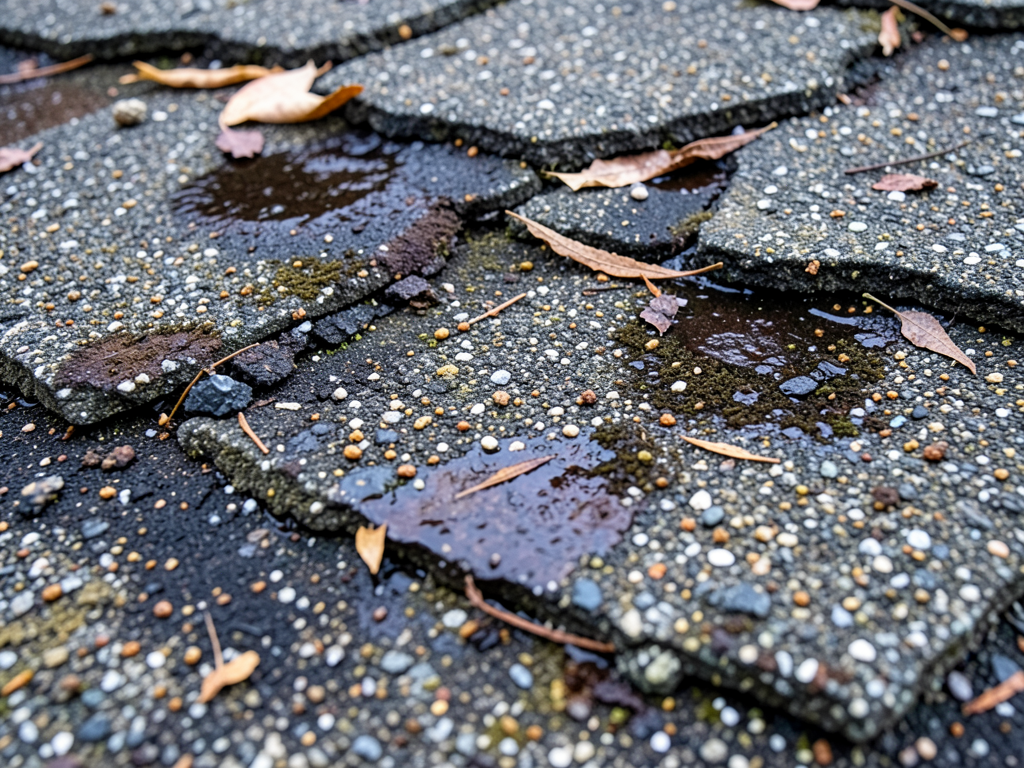
Image Description: Close-up photo showing damaged asphalt shingles with visible granule loss and dark water stains where leaves have been trapped for months demonstrating the physical deterioration caused by leaf debris.
How Atlanta’s Winter Weather Makes Leaf Debris Worse
Atlanta’s winter weather pattern creates ideal conditions for leaf-related roof damage. The region experiences frequent cold fronts that bring alternating periods of rain and brief freezes. When leaves are wet and temperatures drop below freezing the trapped moisture expands and contracts causing shingles to crack and separate. This freeze-thaw cycle repeats throughout the winter gradually breaking down the roof’s protective barrier.
The heavy rainfall typical of Atlanta winters compounds the problem. When a storm drops several inches of rain in a short period leaves already on your roof become saturated and heavy. This weight can cause minor sagging in roof sections creating new low spots where water pools. The combination of standing water and decomposing leaves creates a breeding ground for bacteria and fungi that accelerate material breakdown.
Toco Hills experiences these weather patterns more intensely than other Atlanta neighborhoods due to its elevation and proximity to Lullwater Park. The area often sees slightly more rainfall and cooler temperatures than downtown Atlanta which means the freeze-thaw cycles and moisture retention are even more pronounced. Homes in this area need more frequent debris removal to prevent the accelerated damage that Atlanta’s winter weather can cause.
Warning Signs Your Toco Hills Roof Already Has Leaf Damage
Identifying early signs of leaf-related roof damage can save you thousands in repair costs. One of the first indicators is dark streaks or stains on your shingles particularly in areas where leaves tend to accumulate. These stains indicate moisture retention and often signal the beginning of algae or moss growth. In Toco Hills you might notice these streaks more on north-facing roof sections that receive less direct sunlight.
Another warning sign is the appearance of shingle granules in your gutters or on the ground around your home’s perimeter. As leaves trap moisture against the shingle surface the protective granules begin to loosen and wash away. This exposes the underlying asphalt to UV damage and accelerates deterioration. If you notice a significant amount of granules during your seasonal gutter cleaning it’s time to inspect your roof for leaf damage.
Interior signs can also indicate roof problems caused by leaf debris. Water stains on your ceiling particularly near exterior walls suggest that moisture has penetrated through damaged shingles. In Toco Hills homes these stains often appear in upstairs bedrooms or bonus rooms where roof angles create vulnerable spots for water entry. The musty smell of mold or mildew in your attic is another red flag that moisture has compromised your roof’s integrity.
The Cost of Ignoring Leaf Debris in Atlanta’s Climate
The financial impact of neglecting leaf debris removal can be substantial. A roof that might last 25 years with proper maintenance can fail in as little as 15 years when constantly exposed to trapped moisture and decomposing organic matter. For a typical Toco Hills home with a 2000-square-foot roof this means replacing your roof five years earlier than necessary costing an additional $8000 to $12000 in replacement expenses.. Read more about A Practical Roof Maintenance Plan for Landlords Owning Rental Property in Home Park.
Beyond premature replacement leaf debris can cause immediate damage that requires emergency repairs. When water penetrates through damaged shingles it can destroy attic insulation ruin ceiling drywall and damage personal belongings. In severe cases the moisture creates conditions for wood rot in your roof deck and rafters which can compromise your home’s structural integrity. These repairs often cost $3000 to $7000 and require immediate attention to prevent further damage. Who to Call for Urgent Emergency Roof Repairs in Buckhead.
Insurance companies in Georgia are increasingly denying claims related to neglected maintenance. If your insurance adjuster determines that leaf debris contributed to your roof damage they may refuse to cover the repairs. This leaves homeowners in Toco Hills responsible for the full cost of both the emergency repairs and any subsequent damage caused by the initial failure. Regular debris removal which costs a fraction of these potential expenses becomes an essential investment in your home’s protection. Chimney Leak Emergency Repair.

Image Description: Technician using specialized roof cleaning equipment to safely remove leaves and debris from a Toco Hills home demonstrating professional debris removal techniques that protect shingles while clearing harmful buildup.
Professional vs. DIY Leaf Removal: What Toco Hills Homeowners Need to Know
Many homeowners consider cleaning their own roofs to save money but this approach carries significant risks in Atlanta’s climate. Walking on a wet leaf-covered roof is extremely dangerous especially during Toco Hills’ cooler winter months when surfaces can be icy. Professional roofers use safety harnesses and specialized equipment to prevent falls while DIY attempts often result in injuries that cost more than professional service.
The technical knowledge required for proper debris removal is another consideration. Different roofing materials require different cleaning approaches. Asphalt shingles which are common in Toco Hills can be damaged by aggressive cleaning methods that strip away protective granules. Professional roofers understand the correct pressure levels and cleaning techniques for each material type ensuring your roof is cleaned without causing additional damage. Roofing Dunwoody.
Time is another factor that favors professional service. A trained crew can clear a typical Toco Hills home in 2 to 3 hours while a DIY approach might take an entire weekend and still not achieve the same results. Professionals also inspect your roof during the cleaning process identifying potential problems before they become expensive repairs. This inspection service alone can save you money by catching issues early when they’re less costly to fix.
Atlanta Building Code Requirements for Roof Maintenance
The Georgia State Minimum Standard Residential Code requires that all roofing systems be maintained in good repair to prevent water intrusion. While the code doesn’t specifically mandate leaf removal it does require that roofs be free from conditions that could lead to moisture damage. This means that allowing leaves to accumulate to the point of causing damage could be considered a code violation potentially affecting your home’s compliance status.
DeKalb County which includes Toco Hills has specific requirements for roof drainage systems under the International Residential Code. Section R903.4 requires that roof drainage be sufficient to prevent water accumulation that could damage the structure. When leaves block proper drainage they create ponding water that violates this requirement. Professional debris removal ensures your roof meets these drainage standards and maintains code compliance. International Residential Code Section R903.4.
Insurance companies also reference building code compliance when evaluating claims. If your roof damage results from neglected maintenance that violates code requirements your insurance company may deny coverage. This makes regular professional maintenance not just a good practice but a requirement for maintaining your insurance protection. The cost of annual debris removal is minimal compared to the potential loss of coverage or increased premiums following a denied claim.
Seasonal Maintenance Schedule for Toco Hills Homes
Creating a seasonal maintenance schedule helps Toco Hills homeowners stay ahead of leaf-related roof damage. The most critical time for debris removal is late fall after most leaves have fallen but before winter rains begin. This timing allows you to clear the heaviest accumulation before it has a chance to trap moisture during Atlanta’s wet season. A second cleaning in early spring removes any leaves that accumulated over winter and addresses any damage that may have occurred.
Monthly visual inspections during fall months can help identify problem areas before they become severe. Pay special attention to roof valleys areas around chimneys and sections near large trees. In Toco Hills where many homes have complex rooflines with multiple valleys and dormers these inspection points are crucial for catching debris buildup early. Look for dark patches that indicate moisture retention and areas where leaves appear to be collecting.
Year-round gutter maintenance complements roof debris removal. Clean gutters prevent water from backing up onto your roof edge where it can seep under shingles. In Toco Hills where mature trees are common you may need to clean gutters every 6 to 8 weeks during fall and spring. Consider installing gutter guards if you have persistent problems with leaf accumulation but remember that even with guards some debris will still reach your roof surface.
Image Description: Before and after comparison showing a roof section before debris removal with heavy leaf accumulation and after cleaning revealing clean shingles and proper water flow paths that prevent moisture damage.
Preventing Future Leaf Accumulation in Toco Hills
While you can’t stop trees from dropping leaves you can minimize the impact on your roof. Strategic tree trimming is one of the most effective prevention methods. Removing branches that overhang your roof reduces the amount of debris that falls directly onto the surface. In Toco Hills where many trees are protected or where homeowners want to maintain their tree canopy selective trimming focuses on removing only the branches closest to the roof while preserving the overall tree structure.
Installing zinc or copper strips near your roof ridge can help prevent algae and moss growth. When it rains these metals release trace amounts that flow down your roof surface creating an environment where organic growth struggles to establish. This won’t stop leaves from accumulating but it prevents the secondary problems of algae and moss that make leaf debris more damaging. The strips are particularly effective in Atlanta’s humid climate and can extend your roof’s life by several years.
Consider the long-term benefits of roof material selection when replacement becomes necessary. Some modern shingle materials include algae-resistant coatings and improved water-shedding capabilities that make them more resistant to leaf-related damage. While these materials cost more initially they can save money over time by reducing maintenance needs and extending roof life. For Toco Hills homes where tree coverage is a defining characteristic investing in these advanced materials can be particularly beneficial.
Choosing the Right Professional for Roof Debris Removal
Not all roof cleaning services provide the same level of care and expertise. When selecting a professional in Toco Hills look for companies with specific experience in Atlanta’s climate and the neighborhood’s unique challenges. Ask about their safety protocols insurance coverage and whether they conduct roof inspections during cleaning. A reputable company will provide before and after photos and explain exactly what services are included in their pricing.
Verify that any contractor you hire is properly licensed in Georgia and carries both liability and workers’ compensation insurance. Roof work is inherently dangerous and you don’t want to be held liable if a worker is injured on your property. Ask for proof of insurance and check their standing with the Georgia Secretary of State’s office. Professional companies will readily provide this information and explain their coverage details.
Get multiple estimates and compare not just price but the scope of services offered. The cheapest option may not include important services like gutter cleaning downspout flushing or minor repairs to damaged shingles. A comprehensive service that addresses all aspects of roof maintenance provides better value than a bare-bones cleaning that leaves other problems unresolved. For Toco Hills homes where roof complexity is common choose a company with experience handling similar properties.
Frequently Asked Questions
How often should I have my roof cleaned in Toco Hills?
Most Toco Hills homes need professional debris removal at least twice yearly typically in late fall after leaf drop and again in early spring. Homes with heavy tree coverage or complex roof designs may need cleaning three to four times per year to prevent damage.
Can leaf debris really cause that much damage to my roof?
Yes. In Atlanta’s humid climate trapped moisture from leaves can reduce your roof’s lifespan by 5 to 10 years. The constant dampness breaks down shingle materials promotes algae and moss growth and creates conditions for water infiltration that leads to expensive interior damage.
Is it safe to walk on my roof to remove leaves myself?
No. Wet leaf-covered roofs are extremely slippery and dangerous especially in Toco Hills where winter temperatures can create icy conditions. Professional roofers use safety equipment and have training to work safely at heights. DIY attempts often result in falls and injuries.
What’s the difference between soft washing and pressure washing for roof cleaning?
Soft washing uses low pressure and specialized cleaning solutions to safely remove debris without damaging shingles. Pressure washing uses high pressure that can strip away protective granules and force water under shingles. For Atlanta homes with asphalt shingles soft washing is the recommended method.
How much does professional roof debris removal cost in Toco Hills?
Prices vary based on roof size complexity and debris level but most Toco Hills homes can expect to pay $300 to $600 for a comprehensive cleaning that includes debris removal gutter cleaning and basic inspection. This investment prevents much more expensive damage repairs.
- Schedule Professional Cleaning
Have your roof professionally cleaned at least twice yearly focusing on late fall and early spring timing to address Atlanta’s leaf fall patterns.
- Inspect Monthly During Fall
Check your roof monthly during peak leaf fall season for dark patches indicating moisture retention and areas where leaves are collecting.
- Maintain Gutters Year-Round
Clean gutters every 6-8 weeks during fall and spring to prevent water backup that can damage your roof edge and shingles.
- Trim Overhanging Branches
Remove branches within 10 feet of your roof to reduce debris fall while maintaining your tree canopy’s overall appearance.
- Install Preventive Measures
Consider zinc strips or algae-resistant shingles when replacement becomes necessary to reduce future maintenance needs.
Don’t let beautiful fall leaves become a winter disaster for your Toco Hills home. The combination of Atlanta’s wet winters high humidity and dense tree canopy creates perfect conditions for roof damage when leaves are left to accumulate. What starts as a minor maintenance issue can quickly escalate into thousands of dollars in repairs if moisture penetrates your roof’s protective barrier.. Read more about What to Do When a Hidden Roof Leak Starts Growing Mold Inside Your Virginia-Highland Walls.
Professional debris removal is a small investment that protects your home’s most important asset. Our experienced team understands the specific challenges Toco Hills homeowners face from the mature oak trees that create constant leaf fall to the unique weather patterns that make moisture retention particularly damaging. We use safe effective cleaning methods that protect your shingles while removing harmful debris.
Call (770) 610-9366 today to schedule your professional roof inspection and debris removal. Don’t wait until you see water stains on your ceiling or notice missing granules in your gutters. Our team will assess your roof’s condition remove all harmful debris and provide recommendations to prevent future damage. Protect your investment and avoid expensive emergency repairs by addressing leaf debris before Atlanta’s winter rains begin.
Pick up the phone and call (770) 610-9366 before the next storm hits. Your roof protects everything inside your home and regular maintenance is the key to keeping it in top condition for years to come. We’re ready to help Toco Hills homeowners protect their properties from the hidden dangers of leaf debris.
You may also find this helpful. Why the Thick Yellow Pollen on Your Morningside Roof is More Than Just an Eyesore.
{
“@context”: “https://schema.org”,
“@type”: “BlogPosting”,
“headline”: “Why Leaving Leaves on Your Roof This Winter Will Destroy Your Shingles in Toco Hills”,
“description”: “Learn how Atlanta’s wet winters and Toco Hills’ dense tree canopy create perfect conditions for roof damage when leaves accumulate on your shingles.”,
“wordCount”: 2922,
“datePublished”: “2026-04-15T13:12:00.000Z”,
“dateModified”: “2026-04-15T13:12:00.000Z”,
“inLanguage”: “en-US”,
“mainEntityOfPage”: {
“@type”: “WebPage”,
“@id”: “https://firstchoiceroofingatlanta.com”
},
“publisher”: {
“@type”: “LocalBusiness”,
“name”: “First Choice Roofing Atlanta”,
“url”: “https://firstchoiceroofingatlanta.com”
},
“author”: {
“@type”: “Organization”,
“name”: “First Choice Roofing Atlanta”,
“url”: “https://firstchoiceroofingatlanta.com”
},
“image”: {
“@type”: “ImageObject”,
“url”: “https://firstchoiceroofingatlanta.com/wp-content/uploads/2026/03/why-leaving-leaves-on-your-roof-this-winter-will-d-1.png”
}
}
{
“@context”: “https://schema.org”,
“@type”: “RoofingContractor”,
“name”: “First Choice Roofing Atlanta”,
“url”: “https://firstchoiceroofingatlanta.com”,
“address”: {
“@type”: “PostalAddress”,
“addressLocality”: “Atlanta”
},
“areaServed”: {
“@type”: “City”,
“name”: “Atlanta”
}
}
{
“@context”: “https://schema.org”,
“@type”: “FAQPage”,
“mainEntity”: [
{
“@type”: “Question”,
“name”: “How often should I have my roof cleaned in Toco Hills?”,
“acceptedAnswer”: {
“@type”: “Answer”,
“text”: “Most Toco Hills homes need professional debris removal at least twice yearly typically in late fall after leaf drop and again in early spring. Homes with heavy tree coverage or complex roof designs may need cleaning three to four times per year to prevent damage.”
}
},
{
“@type”: “Question”,
“name”: “Can leaf debris really cause that much damage to my roof?”,
“acceptedAnswer”: {
“@type”: “Answer”,
“text”: “Yes. In Atlanta’s humid climate trapped moisture from leaves can reduce your roof’s lifespan by 5 to 10 years. The constant dampness breaks down shingle materials promotes algae and moss growth and creates conditions for water infiltration that leads to expensive interior damage.”
}
},
{
“@type”: “Question”,
“name”: “Is it safe to walk on my roof to remove leaves myself?”,
“acceptedAnswer”: {
“@type”: “Answer”,
“text”: “No. Wet leaf-covered roofs are extremely slippery and dangerous especially in Toco Hills where winter temperatures can create icy conditions. Professional roofers use safety equipment and have training to work safely at heights. DIY attempts often result in falls and injuries.”
}
},
{
“@type”: “Question”,
“name”: “What’s the difference between soft washing and pressure washing for roof cleaning?”,
“acceptedAnswer”: {
“@type”: “Answer”,
“text”: “Soft washing uses low pressure and specialized cleaning solutions to safely remove debris without damaging shingles. Pressure washing uses high pressure that can strip away protective granules and force water under shingles. For Atlanta homes with asphalt shingles soft washing is the recommended method.”
}
},
{
“@type”: “Question”,
“name”: “How much does professional roof debris removal cost in Toco Hills?”,
“acceptedAnswer”: {
“@type”: “Answer”,
“text”: “Prices vary based on roof size complexity and debris level but most Toco Hills homes can expect to pay $300 to $600 for a comprehensive cleaning that includes debris removal gutter cleaning and basic inspection. This investment prevents much more expensive damage repairs.”
}
}
]
}
{
“@context”: “https://schema.org”,
“@type”: “HowTo”,
“name”: “How to Protect Your Roof from Leaf Damage”,
“step”: [
{
“@type”: “HowToStep”,
“position”: 1,
“name”: “Schedule Professional Cleaning”,
“text”: “Have your roof professionally cleaned at least twice yearly focusing on late fall and early spring timing to address Atlanta’s leaf fall patterns.”
},
{
“@type”: “HowToStep”,
“position”: 2,
“name”: “Inspect Monthly During Fall”,
“text”: “Check your roof monthly during peak leaf fall season for dark patches indicating moisture retention and areas where leaves are collecting.”
},
{
“@type”: “HowToStep”,
“position”: 3,
“name”: “Maintain Gutters Year-Round”,
“text”: “Clean gutters every 6-8 weeks during fall and spring to prevent water backup that can damage your roof edge and shingles.”
},
{
“@type”: “HowToStep”,
“position”: 4,
“name”: “Trim Overhanging Branches”,
“text”: “Remove branches within 10 feet of your roof to reduce debris fall while maintaining your tree canopy’s overall appearance.”
},
{
“@type”: “HowToStep”,
“position”: 5,
“name”: “Install Preventive Measures”,
“text”: “Consider zinc strips or algae-resistant shingles when replacement becomes necessary to reduce future maintenance needs.”
}
],
“image”: “https://firstchoiceroofingatlanta.com/wp-content/uploads/2026/03/why-leaving-leaves-on-your-roof-this-winter-will-d-1.png”
}
{
“@context”: “https://schema.org”,
“@type”: “BreadcrumbList”,
“itemListElement”: [
{
“@type”: “ListItem”,
“position”: 1,
“name”: “Home”,
“item”: “https://firstchoiceroofingatlanta.com”
},
{
“@type”: “ListItem”,
“position”: 2,
“name”: “Blog”,
“item”: “https://firstchoiceroofingatlanta.com/blog”
},
{
“@type”: “ListItem”,
“position”: 3,
“name”: “Why Leaving Leaves on Your Roof This Winter Will Destroy Your Shingles in Toco Hills”
}
]
}
{
“@context”: “https://schema.org”,
“@type”: “Service”,
“serviceType”: “Roofing”,
“provider”: {
“@type”: “LocalBusiness”,
“name”: “First Choice Roofing Atlanta”,
“url”: “https://firstchoiceroofingatlanta.com”
},
“areaServed”: {
“@type”: “City”,
“name”: “Atlanta”
},
“description”: “Learn how Atlanta’s wet winters and Toco Hills’ dense tree canopy create perfect conditions for roof damage when leaves accumulate on your shingles.”
}