




menu

Commercial Roof Replacement in Atlanta | Minimize Downtime, Maximize Asset Protection

First Choice Roofing Atlanta delivers industrial roof replacement and commercial reroofing designed for operational continuity. Our crews work off-hours to keep your facility productive while extending roof lifespan through code-compliant, high-performance installations built for Georgia's climate demands.

Slider Image 1
Slider Image 2
Slider Image 3
Slider Image 4
Slider Image 5
Slider Image 7
Slider Image 8
Slider Image 9
Slider Image 10
Slider Image 11

Why Atlanta's Climate Accelerates Commercial Roof Deterioration

Atlanta sits at the intersection of severe weather patterns that compound roof stress. Summer heat routinely exceeds 90 degrees, expanding membrane systems and accelerating UV degradation on TPO and EPDM roofing. When afternoon thunderstorms dump two inches of rain in 30 minutes, undersized drainage systems pond water, weighing down structural decking and saturating insulation.

Winter freeze-thaw cycles crack parapet walls and open seams in metal panel roofing. Ice dams form along gutters when daytime temperatures climb above freezing, then plummet at night. Clay soil beneath your foundation shifts with moisture changes, creating stress cracks in masonry and misaligning roof penetrations.

These factors compress the lifespan of commercial building roof replacement cycles. A facility designed for 20-year service often requires intervention at 12 to 15 years. Deferred maintenance on commercial flat roof replacement compounds exponentially. A small blister becomes a saturated insulation field, adding thousands in tear-off costs and extending project timelines.

The economic calculus shifts when roof failure threatens inventory, halts production lines, or violates lease obligations. Industrial roof replacement becomes a liability mitigation tool, not a discretionary expense. Buildings near Hartsfield-Jackson face added environmental stress from jet fuel particulates and vibration. Facilities in Midtown or Buckhead contend with urban heat island effects that add 5 to 10 degrees to surface temperatures.

Commercial reroofing in this region requires material selection based on thermal cycling, wind uplift ratings for 90 mph gusts, and drainage engineering for five-inch-per-hour rain events.

Why Atlanta's Climate Accelerates Commercial Roof Deterioration
How First Choice Roofing Atlanta Executes Commercial Roof Installation Without Business Interruption

How First Choice Roofing Atlanta Executes Commercial Roof Installation Without Business Interruption

Commercial roof replacement demands precision in logistics and sequencing. Our methodology starts with non-destructive testing using infrared thermography to map wet insulation zones. This data determines whether you need full tear-off or can implement a recover system, directly impacting cost and timeline.

We coordinate with your facility manager to phase the work around production schedules. For 24-hour operations, we schedule tear-off and hot work during low-occupancy windows. Crew size scales to compress timelines. A 40,000-square-foot commercial building roof replacement with six installers takes 12 days. Deploy 12 installers and finish in seven.

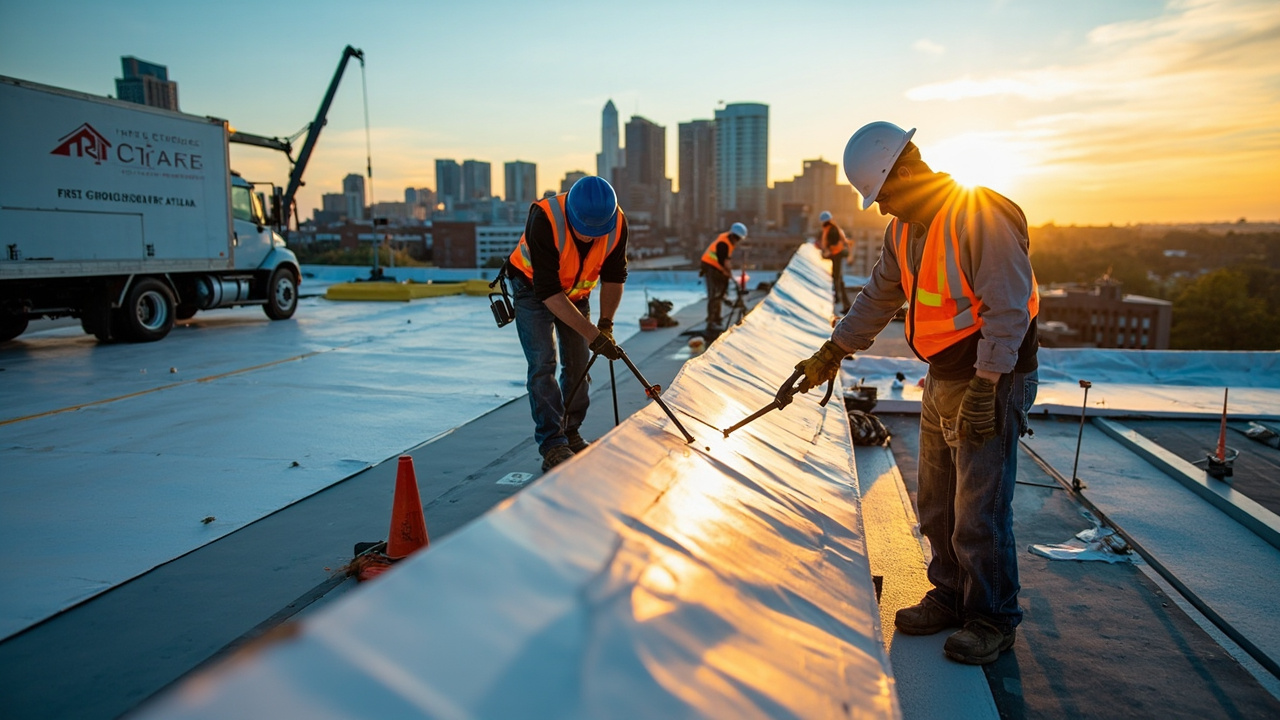
Material staging happens off-site when ground space is limited. We use crane lifts to position insulation bundles and membrane rolls on staging areas, eliminating ground congestion and forklift traffic near active loading docks. For occupied buildings, we establish debris chutes and containment barriers to prevent dust migration into HVAC intakes.

Substrate preparation drives longevity. We verify deck fastening meets current wind uplift requirements, adding screws or retrofitting plates where original construction falls short. New tapered insulation systems eliminate ponding and direct water to scuppers rated for Atlanta's rainfall intensity.

Flashing details receive forensic attention. We replace corroded counterflashing, re-seal pipe boots with EPDM collars, and install two-part termination bars on parapet walls. Every penetration gets a watertight seal using compatible sealants tested for thermal movement.

Final inspection includes pull tests on membrane seams, verification of fastener patterns against engineering specs, and documentation for your insurance carrier. This process protects your balance sheet and satisfies due diligence requirements during property transactions or audits.

What Happens During Your Commercial Roof Replacement Project

Commercial Roof Replacement in Atlanta | Minimize Downtime, Maximize Asset Protection
01

Site Assessment and Engineering

Our team conducts a structural load analysis and core sampling to assess decking integrity and insulation saturation. We review original construction documents, verify current code requirements, and calculate wind uplift zones based on your building height and parapet configuration. This data informs material specifications and attachment schedules that meet or exceed Georgia's commercial building standards for your occupancy type.
02

Phased Installation and Protection

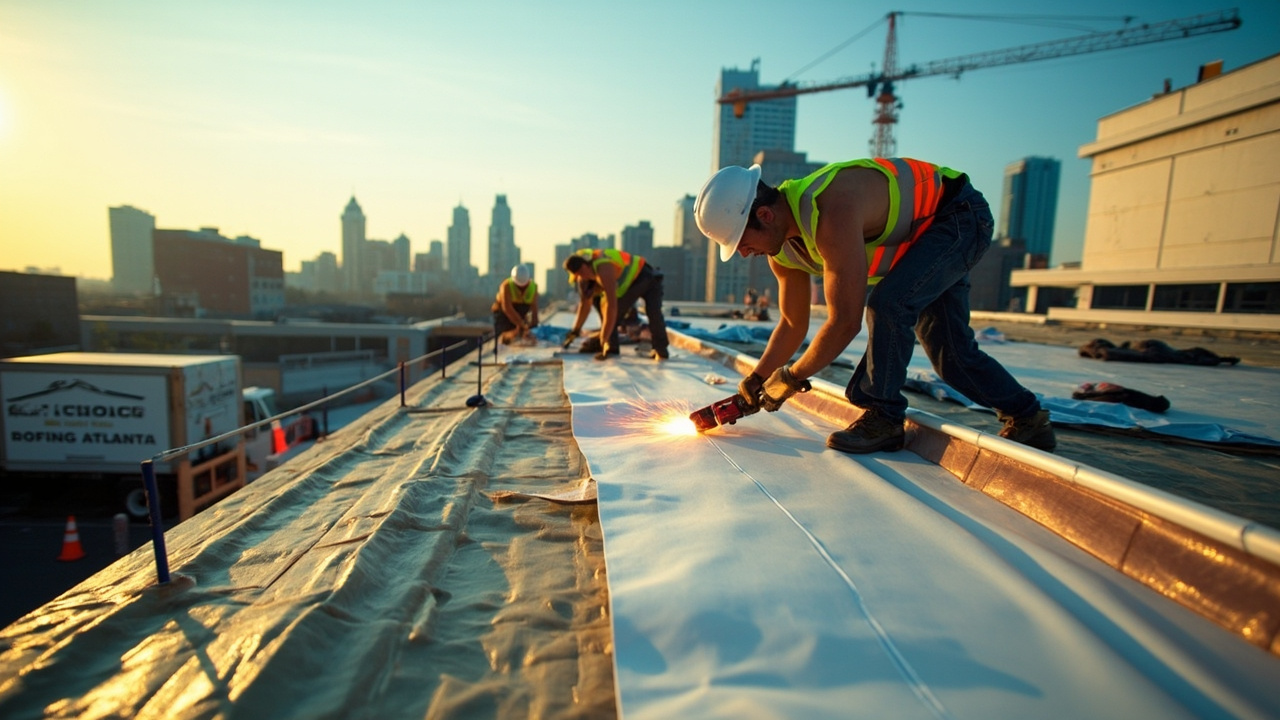
We section the roof into manageable zones, typically 5,000 to 10,000 square feet, and weatherproof each area daily. Tear-off begins at 6 a.m., new membrane installation completes by 4 p.m., and temporary seals protect open sections overnight. This approach prevents weather delays from exposing your interior. Our crews use low-odor adhesives and electric welders to eliminate propane fumes in occupied buildings, maintaining indoor air quality during construction.
03

Warranty Activation and Documentation

After final inspection, we provide a complete material inventory, fastener pull test results, and thermal imaging reports showing uniform insulation coverage. Manufacturer warranties activate only after proper installation verification, which we handle through third-party certification when required. You receive a maintenance protocol tailored to your roof system, outlining bi-annual inspection points and service intervals that preserve warranty coverage and extend system performance.

Why Atlanta Facility Managers Choose First Choice Roofing for Commercial Reroofing

Commercial roof replacement separates contractors who understand liability from those who create it. First Choice Roofing Atlanta operates with the crew depth and equipment fleet to mobilize quickly when your timeline compresses. We maintain relationships with regional material suppliers, ensuring TPO membrane, polyiso insulation, and metal panel inventory arrives within 48 hours, not three weeks.

Our estimators walk rooftops with your maintenance staff, not satellite images. We identify HVAC curb modifications, skylight replacements, and structural repairs before signing contracts. This eliminates change orders that blow budgets and delay certificate of occupancy renewals.

Atlanta's commercial building codes require specific fire ratings for roof assemblies based on occupancy classification. We navigate these requirements daily. A warehouse in Southwest Atlanta needs a different specification than a mid-rise office in Sandy Springs. Our proposals include assembly ratings, insulation R-values, and wind uplift classifications verified by third-party testing labs.

We understand the operational stakes. A failed roof at a cold storage facility spoils inventory worth six figures per day. A leak above server rooms shuts down e-commerce operations. Our project managers communicate through your preferred channels, whether that means daily emails to corporate real estate teams or text updates to on-site supervisors.

Local expertise matters when storm damage triggers insurance claims. We document pre-loss conditions, quantify hail impact damage on membrane and metal, and provide line-item estimates that match adjuster expectations. This accelerates claim approvals and gets commercial roof installation started while competitors wait for multiple revisions.

Atlanta's construction market moves in cycles. When demand spikes after severe weather, contractors with limited capacity push timelines into next quarter. Our crew base scales to meet volume without sacrificing quality or safety protocols.

What to Expect from Your Commercial Building Roof Replacement

Project Timeline and Coordination

Industrial roof replacement timelines depend on square footage, existing conditions, and weather windows. A straightforward 20,000-square-foot tear-off and recover takes seven to ten business days with optimal conditions. Complex projects involving structural repairs, equipment relocation, or phased installation to maintain operations extend to three or four weeks. We provide a critical path schedule during contracting, identifying dependencies like material delivery, crane availability, and inspection milestones. Our project managers update you on progress daily and adjust crew deployment when weather interrupts the sequence.

Pre-Construction Evaluation Process

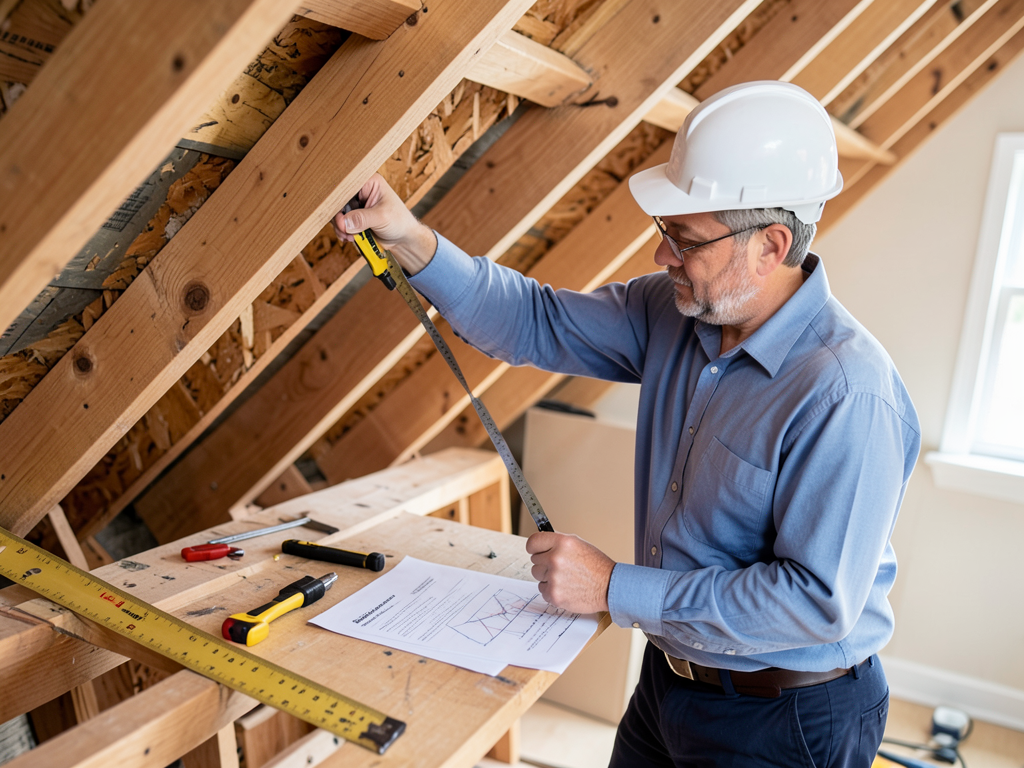
Your commercial flat roof replacement starts with a comprehensive roof survey using moisture meters and infrared cameras to detect hidden water intrusion. We core sample through the assembly to verify insulation type, thickness, and saturation levels. This data determines whether you need full removal or can install a recovery board system. Our structural assessment checks deck fastening, identifies rusted panels requiring replacement, and evaluates parapet stability. You receive a detailed report with thermal images, core sample photos, and recommendations prioritized by risk level before any work begins.

Installation Quality and Performance

Commercial reroofing quality shows in details invisible after completion. We install insulation with staggered seams and offset fastener patterns to eliminate thermal bridging. Membrane seams receive hot-air welding, not adhesive, creating fusion bonds stronger than the base material. Metal edge details get continuous cleat attachment, not spot-fastening that allows wind-driven rain infiltration. Every roof drain receives a sump pan and two-stage flashing. These practices cost more in labor but eliminate callbacks and extend service life. Your facility gets a roof system engineered for Atlanta's weather extremes, not minimum code compliance.

Ongoing Maintenance and Support

Commercial roof systems require bi-annual maintenance to preserve performance and warranty coverage. First Choice Roofing Atlanta offers preventive maintenance contracts that include spring and fall inspections, debris removal from drains and gutters, sealant refreshing on penetrations, and minor repairs before they escalate. We document each visit with photo reports and track conditions over time, creating a service history that supports insurance claims and property valuations. Our maintenance clients receive priority scheduling when storm damage occurs and preferential pricing on emergency repairs, protecting your investment through the full lifecycle of your roof system.

Frequently Asked Questions

You Have Questions,
We Have Answers

How much should a 2000 sq ft roof cost? +

For a 2000 sq ft commercial roof in Atlanta, replacement costs vary based on material and system type. TPO or EPDM single-ply membranes typically run lower than modified bitumen or metal systems. Factors include existing roof removal, deck repairs, and insulation upgrades. Atlanta's humid subtropical climate often requires enhanced waterproofing and ventilation, affecting total investment. Expect material quality, labor rates, and building code compliance to drive your final number. A professional roof inspection identifies structural issues or deck damage that add to scope. Request detailed proposals comparing system longevity and warranty coverage to evaluate true ROI.

How to replace a commercial roof? +

Commercial roof replacement starts with a structural assessment and membrane selection suited to Atlanta's weather patterns. Contractors remove the existing roof system, inspect and repair decking, then install insulation and a new waterproof membrane. Proper flashing around HVAC units, drains, and parapet walls prevents future leaks. Atlanta building codes mandate specific attachment methods to withstand wind uplift during severe storms. The process includes coordinating with building operations to minimize business disruption. Final inspections verify code compliance and warranty activation. Choose contractors experienced with flat and low-slope systems common in Atlanta commercial properties.

Does commercial insurance cover roof replacement? +

Commercial insurance typically covers roof replacement if damage results from covered perils like wind, hail, or fire. Atlanta's thunderstorm season produces hail and wind damage that qualifies for claims. Policies exclude normal wear, poor maintenance, or gradual deterioration. Insurers require documentation of pre-loss condition and timely damage reporting. Your adjuster evaluates whether repair or full replacement is justified based on damage extent and roof age. Many policies depreciate older roofs, reducing payout. Maintain inspection records and document storm damage immediately to strengthen your claim. Review your policy's roof coverage limits and exclusions annually.

Can roofers make 100k a year? +

This question does not align with commercial roof replacement decision-making. Focus on contractor qualifications, not individual earnings. Evaluate commercial roofing firms based on licensing, insurance coverage, manufacturer certifications, and project portfolios in Atlanta. Review references from similar commercial properties and verify code compliance history. A contractor's financial stability matters more than technician wages when protecting your business asset. Request detailed proposals that outline material specifications, installation methods, and warranty terms. Prioritize contractors who understand Atlanta building codes and can minimize operational downtime during your replacement project.

What is the most expensive part of replacing a roof? +

Material costs dominate commercial roof replacement budgets, particularly for high-performance membranes and insulation systems. In Atlanta, proper waterproofing and drainage components add significant expense due to heavy rainfall patterns. Structural deck repairs discovered during tear-off often exceed initial estimates. Labor represents the second largest cost, especially for complex details around mechanical equipment and penetrations. Removal and disposal of existing roof systems adds to total investment. Edge metal, flashing, and parapet cap details require precision fabrication. Emergency repairs from delayed replacement increase costs substantially. Budget for comprehensive solutions rather than deferring necessary substrate work.

How to estimate roof replacement cost? +

Estimating commercial roof replacement requires measuring total square footage, including parapet walls and equipment screens. Identify your current roof system type and condition through professional inspection. Atlanta's climate demands evaluation of drainage adequacy and insulation R-value requirements. Factor in deck condition, number of penetrations, and edge complexity. Request detailed proposals comparing TPO, EPDM, modified bitumen, and metal systems with projected service life. Include costs for permits, engineering analysis if required, and business interruption planning. Compare warranty coverage and maintenance requirements. Professional estimators account for Atlanta building code requirements and wind uplift specifications for accurate budgeting.

How often should a commercial roof be replaced? +

Commercial roofs in Atlanta require replacement every 15 to 30 years depending on material type and maintenance quality. TPO and EPDM single-ply systems average 20 to 25 years with proper upkeep. Modified bitumen roofs last 15 to 20 years in Atlanta's humid conditions. Metal roofing systems can exceed 30 years. Neglected maintenance, poor drainage, and ponding water shorten roof life significantly. Atlanta's intense summer heat and UV exposure degrade membranes faster than cooler climates. Schedule biannual inspections to catch small issues before they require full replacement. Document maintenance to maximize system longevity and support future insurance claims.

Is commercial roofing worth it? +

Commercial roofing investment protects your business asset and operational continuity. For Atlanta properties, proper roof systems prevent interior damage, inventory loss, and business interruption during heavy rainfall events. Quality installations reduce energy costs through improved insulation and reflective membranes that counter Georgia heat. Deferred replacement leads to structural damage, mold growth, and liability exposure. New roofs enhance property value and satisfy lender requirements for financing. Calculate ROI by comparing replacement cost against potential downtime, emergency repair expenses, and insurance deductibles from leak damage. Proactive replacement costs less than reactive emergency work during Atlanta's storm season.

Is it better to use plywood or OSB on a roof? +

Commercial applications typically use structural decking materials different from residential plywood or OSB. Steel deck with rigid insulation dominates Atlanta commercial construction. For wood deck applications, plywood offers superior moisture resistance and fastener holding power compared to OSB. Atlanta's humidity makes OSB susceptible to edge swelling and delamination if exposed during installation delays. Plywood maintains dimensional stability better during Georgia's wet conditions. However, deck material selection depends on structural load requirements, building code specifications, and roof system type. Consult structural engineers for load calculations. Most commercial roof warranties require specific deck types and conditions for coverage activation.

Are commercial roof repairs tax deductible? +

Commercial roof repairs qualify as tax-deductible business expenses in the year incurred. Full roof replacement creates a capital asset requiring depreciation over 39 years for commercial buildings. However, replacement may qualify for immediate deduction under Section 179 or bonus depreciation if it meets IRS criteria. Atlanta businesses should document whether work restores functionality, extends life beyond original expectancy, or adapts the building for new use. These distinctions affect tax treatment. Consult your tax advisor to classify expenses correctly. Energy-efficient roofing systems may qualify for additional federal tax credits. Maintain detailed invoices separating materials, labor, and repair versus replacement costs.

How Atlanta's Urban Heat and Storm Patterns Drive Commercial Roof Replacement Cycles

Atlanta's urban core creates a heat island effect that adds seven to ten degrees to roof surface temperatures compared to surrounding suburbs. This thermal stress accelerates membrane aging and increases cooling loads for facilities in Midtown, Downtown, and Buckhead. Summer thunderstorms develop rapidly when Gulf moisture meets Appalachian airflow, producing hail and wind gusts that test roof attachment systems. The combination of intense heat, sudden temperature drops during storms, and expansion-contraction cycling compresses the effective lifespan of commercial roof installation by 20 to 30 percent compared to national averages. Industrial facilities near the airport face additional degradation from jet fuel particulates that break down petroleum-based roofing compounds.

Georgia requires commercial roofing contractors to carry specific liability coverage and maintain active trade licenses verified through the Georgia Secretary of State. First Choice Roofing Atlanta holds these credentials and maintains relationships with local building inspectors who enforce the International Building Code as adopted by each jurisdiction. Our familiarity with permit requirements in Fulton, DeKalb, Cobb, and Gwinnett counties accelerates approvals and prevents project delays. We understand how local fire marshals interpret assembly ratings for different occupancy types and specify materials that satisfy both code minimums and your risk management standards.
Roofing Services in The Atlanta Area

Whether you are in need of a new roof, a quick repair, or a detailed inspection, our team is ready to serve you. We are proud to be a trusted part of the Atlanta community, and you can find our business location on the map below. Feel free to visit us or contact us today to discuss your next project. We look forward to working with you and protecting your property.

Address:
First Choice Roofing Atlanta, 3630 Peachtree Rd NE, Atlanta, GA, 30326

Additional Services We Offer

Our news updates

Latest Articles & News from The Blogs

How Pine Needles Can Secretly Destroy Your Sandy Springs Roof (And Why Blowers Aren’t Enough) Pine needles accumulate on Atlanta…

How Pine Needles Can Secretly Destroy Your Sandy Springs Roof (And Why Blowers Aren't Enough)

How Pine Needles Can Secretly Destroy Your Sandy Springs Roof (And Why Blowers Aren’t Enough) Pine needles accumulate on Atlanta…

What to Do When a Hidden Roof Leak Starts Growing Mold Inside Your Virginia-Highland Walls

What to Do When a Hidden Roof Leak Starts Growing Mold Inside Your Virginia-Highland Walls When you discover mold growing…

Is it Ever Safe to Walk on Your Own Roof in Roswell?

Is it Ever Safe to Walk on Your Own Roof in Roswell? \n\n Walking on your roof in Roswell is…

Contact Us

Roof failure threatens operations, inventory, and liability exposure. First Choice Roofing Atlanta delivers commercial building roof replacement engineered for business continuity. Call (770) 610-9366 now to schedule a comprehensive roof assessment and receive a detailed proposal within 48 hours.