




menu

Emergency Tarping Service in Atlanta – 24/7 Storm Response Teams Dispatch in Under 60 Minutes

When a damaged roof threatens your home or business, every minute counts. Our emergency tarping service protects your property from further water damage while you wait for permanent repairs, with crews ready to respond around the clock across the Atlanta metro.

Slider Image 1
Slider Image 2
Slider Image 3
Slider Image 4
Slider Image 5
Slider Image 7
Slider Image 8
Slider Image 9
Slider Image 10
Slider Image 11

Why Atlanta Roofs Need Immediate Protection After Storm Damage

Your roof just took a hit. A tree limb punched through during last night's storm, or high winds peeled back shingles, leaving your decking exposed. Now you are watching the weather radar, knowing Atlanta's next downpour could arrive in hours.

The humidity here does not wait. Atlanta's average relative humidity sits above 70 percent year-round. An exposed roof deck starts absorbing moisture within hours, not days. That moisture seeps into your insulation, tracks down wall cavities, and saturates ceiling joists. What starts as a three-foot hole in your roof becomes a five-figure mold remediation project if you wait until Monday morning.

Severe weather hits the Atlanta metro harder than most people realize. The National Weather Service documents an average of 40 to 50 thunderstorm days annually across Fulton and DeKalb counties. Spring and summer bring intense wind shear events that rip off architectural shingles like paper. Fall and winter ice storms snap branches that crash through roof planes in Buckhead, Midtown, and across the Perimeter.

Emergency roof tarp installation is not a permanent fix. It is a critical intervention that stops the bleeding. A properly installed temporary roof covering service creates a watertight barrier over compromised areas, buying you time to work with insurance adjusters and schedule proper repairs. Urgent roof tarping prevents secondary damage that insurance companies often dispute or deny.

You need 24 hour roof tarping because storms do not punch a clock. When your roof fails at 2 AM on a Saturday, you cannot afford to leave it open. Storm damage roof tarping protects your largest investment until daylight brings permanent solutions.

Why Atlanta Roofs Need Immediate Protection After Storm Damage
How Professional Emergency Tarping Stops Damage in Its Tracks

How Professional Emergency Tarping Stops Damage in Its Tracks

Most homeowners think tarping means throwing a blue tarp over the hole and weighing it down with bricks. That approach fails within the first rain event. Professional storm damage roof tarping follows structural principles that actually work.

We start with a rapid damage assessment. Our crews identify the full scope of compromise, not just the obvious hole. A tree impact often cracks roof decking three feet beyond the visible breach. Wind damage that peels shingles frequently damages the underlayment across entire roof planes. Missing those areas means your tarp covers the symptom but not the cause.

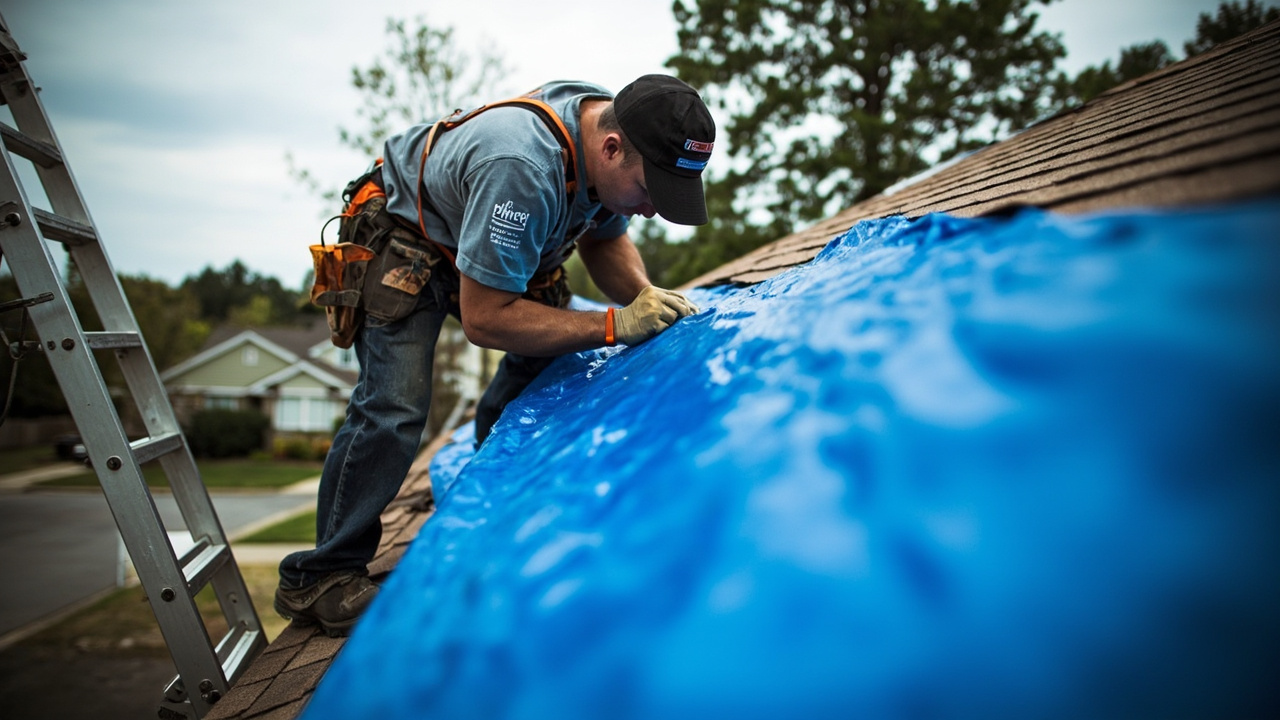
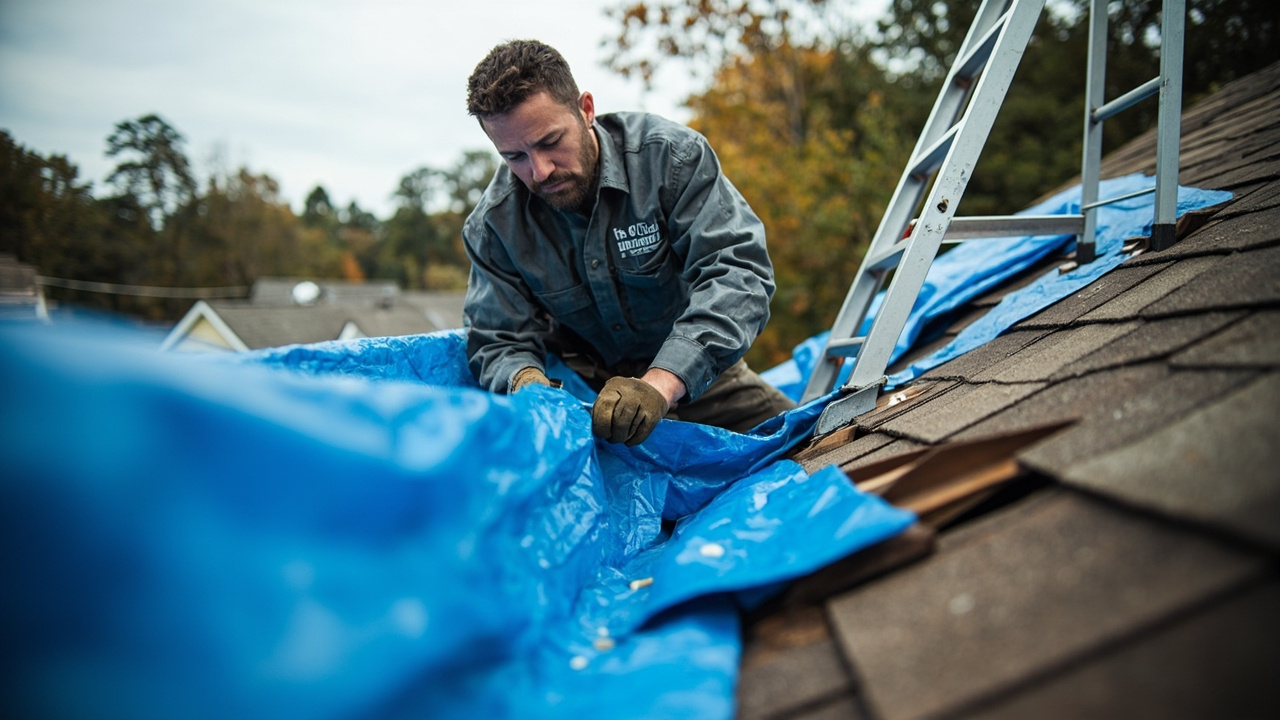
Proper tarp installation requires securing to structural members, not just surface materials. We locate rafters or trusses beneath the damaged area and anchor through to solid wood using screws with backing plates. The tarp extends at least four feet beyond all damaged areas in every direction, then gets fastened every 18 inches along the perimeter. This creates a weather-tight seal that survives 60 mph wind gusts.

Material selection matters. We use heavy-duty polyethylene tarps, minimum six-mil thickness, with reinforced corners and grommets every 18 inches. These tarps resist UV degradation and maintain integrity through multiple storm cycles. The silver or white tarps reflect heat better than blue, preventing thermal damage to your already-stressed roof deck.

Ridge and valley transitions get special attention. Water flows concentrate at these points, so we create overlapping layers that shed water away from vulnerable areas. Every seam gets sealed. Every penetration point receives a backing plate to prevent tear-through.

First Choice Roofing Atlanta trains crews specifically for emergency response. We carry pre-staged equipment trucks with tarps, fasteners, ladders, and safety gear ready to deploy. You get a professional installation, not a panicked improvisation.

What Happens When You Call for Emergency Roof Tarping

Emergency Tarping Service in Atlanta – 24/7 Storm Response Teams Dispatch in Under 60 Minutes
01

Immediate Dispatch and Assessment

Your call triggers immediate crew dispatch. We gather critical information about your damage type, location, and access constraints while our team loads equipment. Most Atlanta metro properties receive arrival within 60 to 90 minutes of your call. Upon arrival, we conduct a safety assessment of the structure and document damage with photos for your insurance claim before any work begins.
02

Secure Installation and Protection

Our crew secures the damaged area with professional-grade materials anchored to structural members. We install tarps that extend well beyond compromised zones, creating overlapping layers at critical water flow points. All fasteners penetrate into solid decking with backing plates to prevent wind tear-through. Interior areas receive protection from debris and water intrusion during the installation process.
03

Documentation and Next Steps

After installation, we provide detailed documentation including photos, damage descriptions, and recommended permanent repairs. You receive a written report suitable for insurance submission. We explain what the tarp will and will not protect against, typical lifespan under current weather conditions, and schedule a follow-up assessment for permanent repair planning. Emergency tarping buys you time, not a permanent solution.

Why Atlanta Property Owners Choose First Choice for Emergency Response

When your roof fails at midnight during a thunderstorm, you need a company that answers the phone and shows up prepared. First Choice Roofing Atlanta maintains dedicated emergency response teams specifically for urgent situations across the metro area.

We understand Atlanta's building landscape. Homes in Virginia Highland and Inman Park feature steep roof pitches and limited attic access that complicate emergency work. The sprawling ranch homes common in Dunwoody and Sandy Springs present different challenges, with lower slopes that require careful tarp anchoring against wind uplift. Commercial properties along the I-285 corridor need rapid response to minimize business interruption and protect inventory.

Our familiarity with local weather patterns informs our approach. We know that Atlanta's spring severe weather season brings tornadic activity and straight-line winds that cause catastrophic shingle blow-off. Summer thunderstorms drop two to three inches of rain in under an hour, overwhelming any marginal tarp installation. We size and secure tarps to handle these specific threats.

Local building codes require proper permits for permanent roof repairs, but emergency tarping falls under urgent maintenance provisions. We navigate these requirements daily, ensuring your temporary protection does not create complications when you move to permanent repairs. Our crews understand the inspection expectations of Fulton, DeKalb, Cobb, and Gwinnett county building departments.

Insurance claim support sets professional contractors apart from fly-by-night operators. We document damage thoroughly, photograph all affected areas, and provide written assessments that insurance adjusters expect. Proper documentation during the emergency phase prevents disputes later when you file your claim.

You also get honest guidance about what comes next. Emergency tarping is a stopgap, not a repair. We explain realistic timelines for permanent fixes, what your insurance will likely cover, and what additional damage might emerge once we remove damaged materials. No surprises, no upselling during a crisis.

What to Expect from Our Emergency Tarping Service

Rapid Response Times

We maintain 24 hour availability, 365 days per year. When you call our emergency line, you reach a person who can dispatch a crew, not an answering service that takes a message. Most properties inside the Perimeter receive service within 60 minutes. Outer metro locations in Marietta, Alpharetta, or Decatur typically see arrival within 90 minutes. Weather conditions affect response times, but we prioritize life safety and property protection above all else. You receive a confirmed arrival window within minutes of your initial call.

Thorough Damage Assessment

Before installing a single fastener, we assess the full extent of your damage. Visible holes represent only part of the problem. Our crews check for compromised decking, damaged underlayment, and structural concerns that affect tarp placement. We document everything with photos and written notes suitable for insurance submission. You receive a copy of this assessment before we leave your property. This documentation proves critical when filing claims, as it establishes the damage baseline immediately after the event, before weather causes additional deterioration.

Professional Installation Quality

Emergency conditions do not justify sloppy work. Our installations use commercial-grade tarps with proper overlap, structural anchoring, and wind-resistant fastening patterns. Every penetration point receives backing plates. Every seam gets overlapped according to water flow patterns. Ridge caps, valleys, and transitions receive extra attention because these areas concentrate stress. The result is a temporary roof covering that survives multiple weather events without failure. Proper installation protects your property and prevents the secondary damage that turns a manageable claim into a total loss.

Follow-Up and Permanent Repair Planning

Emergency tarping buys you time, typically 30 to 90 days depending on weather conditions and tarp quality. We schedule a follow-up assessment within one week of the emergency service to evaluate permanent repair needs. This follow-up occurs during daylight hours when we can conduct thorough inspections. You receive a detailed estimate for permanent repairs, material options, and realistic timelines. We coordinate with your insurance adjuster's schedule and provide any additional documentation needed to support your claim. Our goal is a seamless transition from emergency protection to permanent restoration.

Frequently Asked Questions

You Have Questions,
We Have Answers

How much does emergency roof tarping cost? +

Emergency roof tarping in Atlanta typically costs between $200 and $1,500, depending on roof size, damage extent, and accessibility. A small tarp on a single-story home runs lower, while multi-story or extensive storm damage increases cost. Most Atlanta roofing contractors offer 24/7 emergency tarping to prevent further water intrusion after severe weather. Price factors include square footage covered, number of tarps needed, and safety equipment for steep pitches. Many insurance policies cover emergency tarping as part of storm damage mitigation. Get a written estimate before work begins and ask if the tarping cost applies toward your full roof repair.

What can I use instead of tarping my roof? +

You have limited alternatives to tarping. Emergency roof patches using rubberized sealant work for small holes, but they fail in Atlanta's heavy rain and humidity. Plywood sheeting can cover damaged sections temporarily, but it requires proper fastening and still needs waterproof covering. Roofing cement stops minor leaks but does not protect large openings. Honestly, nothing beats a professionally installed tarp for immediate storm damage protection. Tarps shed water, cover large areas, and buy you time to file insurance claims and schedule permanent repairs. DIY alternatives often fail within hours during Atlanta's unpredictable weather patterns, causing more interior damage.

How to emergency tarp a roof? +

Stop. Do not tarp your own roof during an emergency. Atlanta's steep roof pitches, wet conditions, and multi-story homes make DIY tarping dangerous. Falls kill homeowners every year. If you insist, wait until conditions are safe. Measure the damaged area and add three feet on all sides. Use heavy-duty polyethylene tarps, not cheap plastic. Secure with wood battens screwed through the tarp into roof decking, never nails alone. Extend the tarp over the roof ridge if possible to prevent water pooling. Call a professional roofer for 24/7 emergency tarping. They have safety equipment, experience, and proper materials.

How to pay for a roof when you can't afford it? +

You have options if you cannot afford roof repairs immediately. Most Atlanta roofing contractors offer financing plans with monthly payments. Home equity loans or lines of credit provide funds at lower interest rates. Your homeowners insurance covers storm damage, hail, and wind damage after you pay the deductible. FHA Title 1 loans finance home improvements up to $25,000. Local assistance programs help low-income homeowners with emergency repairs. Some contractors work directly with insurance adjusters to streamline claims. Emergency tarping prevents further damage while you arrange financing. Delaying repairs costs more as water damage spreads to ceilings, walls, and insulation.

Does insurance cover a roof tarp? +

Yes, homeowners insurance typically covers emergency roof tarping as part of immediate loss mitigation after covered events like storms, hail, wind damage, or fallen trees. Insurance companies expect you to prevent further damage, and tarping qualifies as a reasonable protective measure. Keep all receipts and take photos before and after tarping. Most Atlanta insurers reimburse tarping costs quickly, often before the full claim settles. Your deductible applies to the total repair, not the tarping itself. Document everything. Call your insurance company immediately after storm damage, then hire a licensed roofer for emergency tarping. Delays can result in claim denials for secondary water damage.

Does Servpro tarp roofs? +

Servpro focuses on water damage restoration, mold remediation, and cleanup services. They do not specialize in structural roofing repairs or emergency tarping. While some Servpro franchises may offer basic tarping, you need a licensed roofing contractor for proper emergency roof protection. Atlanta roofing companies have the expertise, safety equipment, and materials to secure tarps correctly on steep pitches and multi-story homes. A restoration company handles the interior damage after your roof is secured. Call a roofer first for tarping, then bring in Servpro for water extraction, drying, and mold prevention. Using the right specialist for each job prevents mistakes and insurance complications.

How long will a tarped roof last? +

A professionally installed tarp lasts 90 days in ideal conditions, but Atlanta's weather shortens that timeline. Expect 30 to 60 days of reliable protection. High winds, UV exposure, and heavy rain degrade tarps quickly. Summer heat and humidity cause tarps to crack and tear. Winter freeze-thaw cycles loosen fasteners. Tarps are temporary emergency protection, not a roofing solution. Water can pool on improperly secured tarps, adding weight and stress. Inspect your tarp weekly for tears, loose fasteners, or water pooling. Schedule permanent roof repairs immediately. Extended tarp coverage often leads to insurance claim complications and additional interior damage from eventual failure.

Does roof Maxx really work? +

Roof Maxx is a soybean-based rejuvenation treatment that restores flexibility to asphalt shingles. It works for roofs showing minor aging but has zero value for emergency storm damage, missing shingles, or structural issues. The treatment penetrates shingles and can extend roof life by five years on aging but intact roofs. It does not repair leaks, replace missing shingles, or fix damaged flashing. If you need emergency tarping in Atlanta, your roof has damage beyond what Roof Maxx addresses. Focus on immediate repairs first. Consider rejuvenation treatments later for preventive maintenance on undamaged roof sections after restoration is complete.

Why are people putting blue tarps on their roof? +

Blue tarps signal storm damage and emergency roof protection. Homeowners use them after Atlanta's severe weather, tornadoes, hail storms, or fallen trees punch holes in roofs. The blue color comes from standard polyethylene tarps sold at hardware stores. Blue tarps are visible to insurance adjusters, contractors, and neighbors, indicating active damage claims. They prevent rain from entering your home while you arrange permanent repairs. In Atlanta neighborhoods after major storms, blue tarps mark homes waiting for roofing contractors and insurance settlements. The color has no special function. It is simply the most common tarp material available for emergency roof protection.

Can I nail a tarp to my roof? +

Never nail a tarp directly to your roof. Nails create new holes that leak water into your home. Use wood battens or boards as anchor points. Screw the battens through the tarp into solid roof decking, creating a watertight seal. Nails pull out easily under wind stress and flapping tarps. In Atlanta's high winds and storms, improper fastening leads to tarp failure within hours. Battens distribute stress across a larger area and prevent tearing. Professional roofers use proper fastening techniques and know where to anchor without damaging roof structure. Emergency tarping requires specific skills. Call a licensed Atlanta roofer for safe, effective protection.

How Atlanta's Severe Weather Patterns Make Emergency Tarping Critical

Atlanta sits in a unique weather convergence zone where warm, humid air from the Gulf of Mexico collides with cooler systems moving through the Tennessee Valley. This creates the perfect conditions for severe thunderstorms with damaging winds, heavy rain, and frequent lightning. The metro area experiences peak storm activity from March through September, with secondary ice storm risk during January and February. These storms do not arrive on a schedule. A severe weather outbreak can strike at 3 PM or 3 AM with equal probability. The clay soils common across Fulton and DeKalb counties hold moisture, meaning mature trees become top-heavy and prone to failure during high wind events. When those trees fall, they punch through roof planes with enough force to compromise structural members, not just shingles. Emergency roof tarp installation becomes the only viable option to prevent catastrophic interior damage while you wait for permanent repairs.

Local roofing contractors who specialize in emergency response understand Atlanta's insurance landscape. Georgia's property insurance market has tightened significantly in recent years, with carriers scrutinizing claims more aggressively. Proper documentation during the emergency phase proves critical to claim approval. We know what State Farm, Allstate, and local carriers expect to see in damage reports. Our crews photograph damage from multiple angles, document pre-existing conditions separately, and provide written assessments that align with adjuster expectations. This local expertise prevents the claim disputes that leave homeowners stuck paying out of pocket for damage that should have been covered. First Choice Roofing Atlanta has worked with hundreds of Atlanta-area property owners through the claims process, building relationships with adjusters and understanding the specific documentation requirements that make claims move smoothly.
Roofing Services in The Atlanta Area

Whether you are in need of a new roof, a quick repair, or a detailed inspection, our team is ready to serve you. We are proud to be a trusted part of the Atlanta community, and you can find our business location on the map below. Feel free to visit us or contact us today to discuss your next project. We look forward to working with you and protecting your property.

Address:
First Choice Roofing Atlanta, 3630 Peachtree Rd NE, Atlanta, GA, 30326

Additional Services We Offer

Our news updates

Latest Articles & News from The Blogs

Are GAF Timberline Solar Shingles Finally Worth it for Atlanta Homeowners? Atlanta homeowners are discovering that GAF Timberline Solar Shingles…

Are GAF Timberline Solar Shingles Finally Worth it for Atlanta Homeowners?

Are GAF Timberline Solar Shingles Finally Worth it for Atlanta Homeowners? Atlanta homeowners are discovering that GAF Timberline Solar Shingles…

Why Vaulted Ceilings Often Lead to Roof Rot in Modern Duluth Homes

Why Vaulted Ceilings Often Lead to Roof Rot in Modern Duluth Homes Vaulted ceilings create stunning architectural appeal but often…

The Real Cost and Complexity of Adding a Rooftop Deck to Your Reynoldstown Townhome

The Real Cost and Complexity of Adding a Rooftop Deck to Your Reynoldstown Townhome Adding a rooftop deck to your…

Contact Us

Your roof will not fix itself, and every hour of exposure risks thousands in additional damage. Call First Choice Roofing Atlanta now at (770) 610-9366. Our emergency crews are standing by 24/7 to protect your property. Do not wait until the next storm hits.