
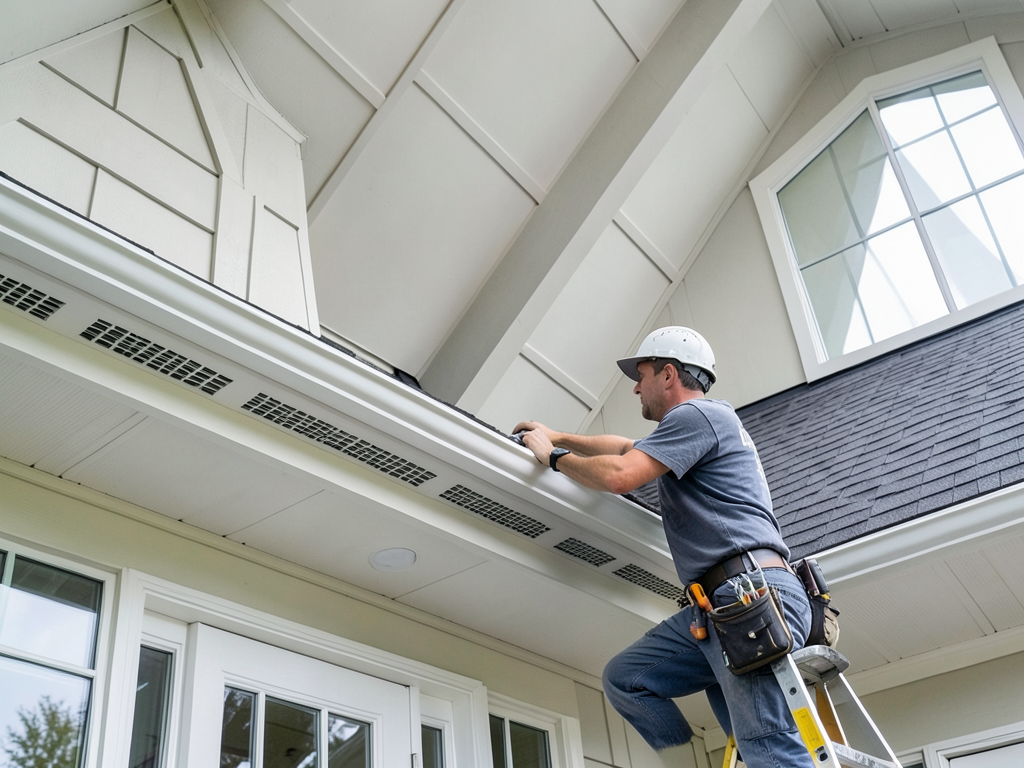
Why Vaulted Ceilings Often Lead to Roof Rot in Modern Duluth Homes
Vaulted ceilings create stunning architectural appeal but often hide a serious moisture problem. In Duluth homes these cathedral-style ceilings trap warm humid air against roof sheathing leading to condensation mold growth and structural decay. Without proper ventilation the enclosed rafter bays become breeding grounds for rot that can compromise your roof’s integrity within just a few years. Attic Ventilation Systems.
Atlanta’s climate zone 3 conditions make this issue even more critical. Our high humidity levels mean the dew point forms inside vaulted spaces much faster than in cooler climates. The lack of traditional attic airflow creates a perfect storm for moisture accumulation that standard roofing practices weren’t designed to handle. Roofing Dunwoody.
Understanding how vaulted ceiling ventilation works is essential for protecting your Duluth home. The physics of airflow in restricted rafter bays differs dramatically from standard attic spaces. When warm air rises it needs an escape path but vaulted ceilings trap this air creating pressure that forces moisture into roof materials.
How Vaulted Ceiling Ventilation Works The Physics of Airflow in Rafter Bays
Traditional attics rely on natural convection where cool air enters through soffit vents and pushes warm air out through ridge vents. Vaulted ceilings disrupt this process because the rafter bays are sealed cavities that prevent continuous airflow.
In a properly ventilated vaulted ceiling system air moves through each rafter bay like a straw. Soffit vents draw in cool outside air while ridge vents allow hot air to escape. Baffles maintain clear channels preventing insulation from blocking the airflow path.
The key measurement is net free area NFA which determines how much ventilation your roof needs. Building codes require 1 square foot of ventilation for every 150 square feet of attic space. Vaulted ceilings often fall short of this requirement because the enclosed bays reduce effective airflow.
Temperature differentials drive the entire system. When outside air is 90 degrees and inside air reaches 120 degrees the pressure difference forces air movement. Without proper intake and exhaust vents this pressure builds up causing moisture to condense on the underside of roof sheathing.
Hot Roof vs Cold Roof Which System is Right for Atlanta Homes
Hot roof systems eliminate ventilation by filling rafter bays with spray foam insulation. This creates an airtight seal that prevents moisture movement but requires careful installation to avoid trapping existing moisture. PVC Roof Installation.
Cold roof systems maintain ventilation channels using baffles and traditional insulation. This approach works better in Atlanta’s climate because it allows moisture to escape before causing damage. The trade-off is slightly higher energy costs due to air movement through the insulation layer. Wind Damage Roof Repair.
Closed-cell spray foam offers an R-value of 6.5 per inch compared to fiberglass batts at 3.2 per inch. For Duluth homes in climate zone 3 building codes recommend R-38 to R-49 in vaulted ceiling assemblies.
The decision often comes down to existing conditions. Homes with previous moisture damage need the moisture management of a cold roof system. New construction can benefit from the energy efficiency of a hot roof approach.
Essential Components Soffit Vents Ridge Vents and the Critical Role of Baffles
Soffit vents provide the intake air that drives the entire ventilation system. Continuous soffit venting offers 9 square inches of net free area per linear foot compared to individual vents at 2-4 square inches each.
Ridge vents create the exhaust path at the roof peak. A continuous ridge vent provides uniform airflow across the entire roof length. Static roof vents create hot spots and dead zones where moisture accumulates.
Baffles are the unsung heroes of vaulted ceiling ventilation. These plastic or foam channels maintain a clear 1-inch air space between insulation and roof sheathing. Without baffles insulation blocks airflow and defeats the entire ventilation strategy.
SmartVent products offer specialized intake solutions for homes with limited soffit space. These vents mount along the roof edge and provide ventilation where traditional soffits aren’t possible.
Common Signs of Poor Ventilation Mold Growth Cooked Shingles and High HVAC Bills
Mold growth appears as black or green spots on roof sheathing inside the attic space. In vaulted ceilings this mold often grows hidden behind drywall where homeowners never see it until structural damage occurs.
Cooked shingles show as curling edges and granule loss on south-facing roof slopes. The trapped heat from poor ventilation bakes asphalt shingles reducing their lifespan from 25 years to as little as 10 years.
High HVAC bills result from the heat buildup in poorly ventilated roof spaces. When attic temperatures reach 150 degrees your air conditioning system works overtime trying to cool your home.
Ice damming isn’t common in Atlanta but heat exhaustion is. The constant thermal cycling from trapped heat causes shingle blistering and premature failure.
Local Considerations Dealing with Atlanta’s 70% Humidity Levels and ASHRAE Requirements
Atlanta’s climate zone 3 designation means we face unique ventilation challenges. Our 70% average relative humidity creates conditions where condensation forms at higher temperatures than in northern climates.. Read more about Caring for the Unique Low-Slope Roof on Your Mid-Century Modern Home in Northcrest.
ASHRAE Standard 62.2 requires mechanical ventilation in homes with vaulted ceilings when natural airflow proves insufficient. This often means installing powered attic ventilators or whole-house fans. ASHRAE Standard 62.2.
Georgia building codes amended the International Residential Code to require vapor retarders on the warm side of vaulted ceiling assemblies. This prevents moisture from migrating into the roof structure during our humid summers. Georgia State Minimum Standard Residential Code.
The Atlanta Regional Commission recommends additional ventilation for homes near the Chattahoochee River where humidity levels often exceed 80% during summer months.
Cost Factors for Retrofitting Ventilation in Existing Atlanta Homes
Retrofitting vaulted ceiling ventilation typically costs $3,000 to $8,000 depending on roof complexity and accessibility. Simple soffit and ridge vent additions run at the lower end while complete baffle system installations cost more.
Roof removal and replacement with integrated ventilation systems costs $12,000 to $25,000 for a typical Duluth home. This approach ensures proper installation but requires significant disruption.
DIY ventilation kits are available for $500 to $1,500 but improper installation often creates more problems than it solves. Professional installation includes moisture testing and ventilation calculations specific to your home’s design.
Energy savings from proper ventilation typically pay for the investment within 5-7 years through reduced HVAC costs and extended roof life.
Case Study Duluth Home with Severe Roof Rot
A 2,500 square foot home in the Sugarloaf Country Club area showed classic signs of vaulted ceiling ventilation failure. The homeowners noticed ceiling stains in their master bedroom but didn’t realize the extent of damage until we performed a moisture scan.
Our inspection revealed 30% of the roof sheathing had moisture content above 20% with several areas showing active rot. The lack of baffles allowed insulation to block all airflow in the rafter bays.
We installed a complete ventilation system with continuous soffit vents and ridge venting. The baffle system restored proper airflow channels and we added a powered ventilator to handle the extreme humidity levels.
Post-installation moisture readings dropped to safe levels within 30 days and the homeowners reported a 15% reduction in cooling costs during the first summer.
Preventive Maintenance for Vaulted Ceiling Homes
Annual roof inspections should include checking ventilation components for blockage or damage. Soffit vents often get covered by insulation during home maintenance projects.
Moisture meters can detect early problems before visible damage appears. Readings above 15% indicate ventilation issues that need attention.
Attic access points in vaulted ceiling homes should be sealed to prevent conditioned air from escaping into unconditioned spaces. Weatherstripping around access doors pays for itself through energy savings.
Roof cleaning removes algae and moss that trap moisture against shingles. Atlanta’s humidity creates ideal conditions for these growths which accelerate roof deterioration.
Building Code Requirements for Vaulted Ceilings in Georgia
The Georgia State Minimum Standard Residential Code requires 1/150 ventilation ratio for vaulted ceiling assemblies. This means 1 square foot of net free area per 150 square feet of ceiling space.
Section R806 of the IRC mandates balanced ventilation with 50% intake and 50% exhaust. Unbalanced systems create negative pressure that draws moisture through roof penetrations.
Recent code amendments require fire-rated materials in vaulted ceiling assemblies when the space connects multiple floors. This affects material selection and installation methods.
Permit requirements in Fulton County include ventilation calculations submitted with roofing permits for homes with vaulted ceilings. Inspections verify proper baffle installation and ventilation ratios. Roofing College Park.
Advanced Ventilation Solutions for Complex Roof Designs
Multi-level vaulted ceilings require zoned ventilation systems. Each roof section needs independent intake and exhaust paths to prevent short-circuiting of airflow.
Solar-powered ventilators eliminate electrical costs while providing consistent airflow. These units activate at specific temperature thresholds ideal for Atlanta’s climate.
Smart ventilation controllers monitor temperature and humidity levels adjusting fan speeds automatically. These systems optimize performance based on current conditions rather than running continuously.
Combination systems using both passive and active ventilation handle the most challenging vaulted ceiling designs. The passive components work continuously while active systems provide boost during extreme conditions.
Energy Efficiency Benefits of Proper Vaulted Ceiling Ventilation
Proper ventilation reduces cooling costs by 10-15% in Atlanta homes. The temperature differential between conditioned space and attic space directly impacts HVAC efficiency.
Extended roof life represents significant savings. A 25-year shingle roof can last 35 years with proper ventilation protection from heat damage.
Moisture damage prevention saves thousands in structural repairs. Rotted roof decking replacement costs $8 to $12 per square foot plus associated interior damage repairs.
Improved indoor air quality results from proper moisture management. Vaulted ceiling homes with ventilation problems often experience musty odors and allergy issues from mold growth.
Common Mistakes in Vaulted Ceiling Ventilation
Blocking soffit vents with insulation represents the most common error. Even small blockages disrupt the entire ventilation system’s effectiveness.
Mixing ventilation types creates dead zones. Combining ridge vents with static roof vents often results in air escaping through the static vents rather than the ridge.
Inadequate net free area fails to provide sufficient airflow. Many homeowners install minimal ventilation trying to save costs but this approach guarantees problems.
Improper baffle installation allows insulation to migrate into airflow channels. Baffles must extend from soffit to ridge without gaps or compression.
Professional Inspection Process for Vaulted Ceilings
Our inspection begins with thermal imaging to identify temperature anomalies indicating moisture problems. Hot spots on roof sheathing suggest inadequate ventilation.
Moisture meters take readings at multiple depths to assess damage extent. Surface readings alone miss problems within the roof assembly.
Baffle inspection verifies proper installation and clearance. We check for insulation migration and ensure all airflow channels remain unobstructed.
Ventilation calculations confirm code compliance. We measure net free area and verify balanced intake and exhaust ratios.
Frequently Asked Questions
How do I know if my vaulted ceiling has ventilation problems?
Look for ceiling stains, high cooling bills, and curling shingles on south-facing slopes. Professional moisture testing provides definitive answers about hidden problems.
Can I add ventilation to an existing vaulted ceiling?
Yes, most vaulted ceilings can be retrofitted with proper ventilation systems. The process involves adding soffit vents, ridge venting, and baffles without major structural changes.
How much does vaulted ceiling ventilation cost in Duluth?
Basic ventilation upgrades cost $3,000 to $8,000 while complete system replacements run $12,000 to $25,000. Costs depend on roof complexity and existing conditions.
Will proper ventilation eliminate all moisture problems?
Proper ventilation significantly reduces moisture issues but won’t eliminate them entirely. Atlanta’s humidity requires additional measures like vapor retarders and dehumidification in extreme cases.
How long does vaulted ceiling ventilation installation take?
Most installations complete within 2-3 days. Complex systems or those requiring roof removal may take 5-7 days including permitting and inspections.
Do I need permits for vaulted ceiling ventilation work?
Yes, Georgia building codes require permits for ventilation modifications. Fulton County and Gwinnett County have specific inspection requirements for vaulted ceiling assemblies.
Can I install vaulted ceiling ventilation myself?
DIY installation risks improper sizing and installation errors that can worsen moisture problems. Professional installation includes calculations and warranty protection.
What’s the difference between hot roof and cold roof systems?
Hot roofs use spray foam insulation creating an airtight seal while cold roofs maintain ventilation channels. Cold roofs work better in Atlanta’s humid climate for moisture management.
How often should vaulted ceiling ventilation be inspected?
Annual inspections catch problems early. Homes in high-humidity areas near the Chattahoochee River may need biannual checks due to increased moisture exposure.
Will proper ventilation improve my energy bills?
Yes, proper ventilation typically reduces cooling costs by 10-15% through reduced heat buildup in roof spaces and improved HVAC efficiency.
Vaulted ceilings add beauty to Duluth homes but require careful attention to ventilation details. The combination of Atlanta’s humidity and enclosed rafter bays creates conditions where moisture damage can progress rapidly without proper airflow management.
Understanding the physics of vaulted ceiling ventilation helps homeowners make informed decisions about upgrades and maintenance. The investment in proper ventilation pays dividends through extended roof life, reduced energy costs, and prevention of costly structural repairs.
Don’t wait for visible damage to appear. Call (770) 610-9366 today to schedule your vaulted ceiling ventilation inspection. Our team specializes in diagnosing and solving the unique ventilation challenges that Duluth homes face in Atlanta’s climate.
Early intervention prevents the extensive damage that turns a simple ventilation upgrade into a major roof reconstruction project. Protect your investment and enjoy your vaulted ceilings without the hidden risks of moisture damage.
{
“@context”: “https://schema.org”,
“@type”: “BlogPosting”,
“headline”: “Why Vaulted Ceilings Often Lead to Roof Rot in Modern Duluth Homes”,
“description”: “Learn why vaulted ceilings trap moisture in Duluth homes and cause hidden roof rot. Get expert solutions for proper attic ventilation in Atlanta’s humid climate.”,
“wordCount”: 2239,
“datePublished”: “2026-06-11T09:19:00.000Z”,
“dateModified”: “2026-06-11T09:19:00.000Z”,
“inLanguage”: “en-US”,
“mainEntityOfPage”: {
“@type”: “WebPage”,
“@id”: “https://firstchoiceroofingatlanta.com”
},
“publisher”: {
“@type”: “LocalBusiness”,
“name”: “First Choice Roofing Atlanta”,
“url”: “https://firstchoiceroofingatlanta.com”
},
“author”: {
“@type”: “Organization”,
“name”: “First Choice Roofing Atlanta”,
“url”: “https://firstchoiceroofingatlanta.com”
},
“image”: {
“@type”: “ImageObject”,
“url”: “https://firstchoiceroofingatlanta.com/wp-content/uploads/2026/03/why-vaulted-ceilings-often-lead-to-roof-rot-in-mod-1.png”
}
}
{
“@context”: “https://schema.org”,
“@type”: “RoofingContractor”,
“name”: “First Choice Roofing Atlanta”,
“url”: “https://firstchoiceroofingatlanta.com”,
“address”: {
“@type”: “PostalAddress”,
“addressLocality”: “Atlanta”
},
“areaServed”: {
“@type”: “City”,
“name”: “Atlanta”
}
}
{
“@context”: “https://schema.org”,
“@type”: “FAQPage”,
“mainEntity”: [
{
“@type”: “Question”,
“name”: “How do I know if my vaulted ceiling has ventilation problems?”,
“acceptedAnswer”: {
“@type”: “Answer”,
“text”: “Look for ceiling stains, high cooling bills, and curling shingles on south-facing slopes. Professional moisture testing provides definitive answers about hidden problems.”
}
},
{
“@type”: “Question”,
“name”: “Can I add ventilation to an existing vaulted ceiling?”,
“acceptedAnswer”: {
“@type”: “Answer”,
“text”: “Yes, most vaulted ceilings can be retrofitted with proper ventilation systems. The process involves adding soffit vents, ridge venting, and baffles without major structural changes.”
}
},
{
“@type”: “Question”,
“name”: “How much does vaulted ceiling ventilation cost in Duluth?”,
“acceptedAnswer”: {
“@type”: “Answer”,
“text”: “Basic ventilation upgrades cost $3,000 to $8,000 while complete system replacements run $12,000 to $25,000. Costs depend on roof complexity and existing conditions.”
}
},
{
“@type”: “Question”,
“name”: “Will proper ventilation eliminate all moisture problems?”,
“acceptedAnswer”: {
“@type”: “Answer”,
“text”: “Proper ventilation significantly reduces moisture issues but won’t eliminate them entirely. Atlanta’s humidity requires additional measures like vapor retarders and dehumidification in extreme cases.”
}
},
{
“@type”: “Question”,
“name”: “How long does vaulted ceiling ventilation installation take?”,
“acceptedAnswer”: {
“@type”: “Answer”,
“text”: “Most installations complete within 2-3 days. Complex systems or those requiring roof removal may take 5-7 days including permitting and inspections.”
}
},
{
“@type”: “Question”,
“name”: “Do I need permits for vaulted ceiling ventilation work?”,
“acceptedAnswer”: {
“@type”: “Answer”,
“text”: “Yes, Georgia building codes require permits for ventilation modifications. Fulton County and Gwinnett County have specific inspection requirements for vaulted ceiling assemblies.”
}
},
{
“@type”: “Question”,
“name”: “Can I install vaulted ceiling ventilation myself?”,
“acceptedAnswer”: {
“@type”: “Answer”,
“text”: “DIY installation risks improper sizing and installation errors that can worsen moisture problems. Professional installation includes calculations and warranty protection.”
}
},
{
“@type”: “Question”,
“name”: “What’s the difference between hot roof and cold roof systems?”,
“acceptedAnswer”: {
“@type”: “Answer”,
“text”: “Hot roofs use spray foam insulation creating an airtight seal while cold roofs maintain ventilation channels. Cold roofs work better in Atlanta’s humid climate for moisture management.”
}
},
{
“@type”: “Question”,
“name”: “How often should vaulted ceiling ventilation be inspected?”,
“acceptedAnswer”: {
“@type”: “Answer”,
“text”: “Annual inspections catch problems early. Homes in high-humidity areas near the Chattahoochee River may need biannual checks due to increased moisture exposure.”
}
}
]
}
{
“@context”: “https://schema.org”,
“@type”: “BreadcrumbList”,
“itemListElement”: [
{
“@type”: “ListItem”,
“position”: 1,
“name”: “Home”,
“item”: “https://firstchoiceroofingatlanta.com”
},
{
“@type”: “ListItem”,
“position”: 2,
“name”: “Blog”,
“item”: “https://firstchoiceroofingatlanta.com/blog”
},
{
“@type”: “ListItem”,
“position”: 3,
“name”: “Why Vaulted Ceilings Often Lead to Roof Rot in Modern Duluth Homes”
}
]
}
{
“@context”: “https://schema.org”,
“@type”: “Service”,
“serviceType”: “Roofing”,
“provider”: {
“@type”: “LocalBusiness”,
“name”: “First Choice Roofing Atlanta”,
“url”: “https://firstchoiceroofingatlanta.com”
},
“areaServed”: {
“@type”: “City”,
“name”: “Atlanta”
},
“description”: “Learn why vaulted ceilings trap moisture in Duluth homes and cause hidden roof rot. Get expert solutions for proper attic ventilation in Atlanta’s humid climate.”
}