
Ridge Vents vs Attic Fans for Better Airflow in Norcross Homes
Proper attic ventilation in Norcross homes prevents moisture damage and reduces cooling costs. Ridge vents use natural convection while attic fans actively move air. The best choice depends on your home’s design, roof pitch, and local climate conditions. US Department of Energy ventilation guide.

Why Proper Attic Ventilation is Non-Negotiable in Georgia
Atlanta’s summer heat and humidity create extreme attic conditions. When attic temperatures exceed 150°F, your HVAC system works overtime and shingles deteriorate faster. Georgia’s building code requires balanced ventilation systems with both intake and exhaust vents to prevent moisture buildup and extend roof life. Attic Ventilation Systems.
The Georgia State Minimum Standard Residential Code mandates specific ventilation ratios. For every 300 square feet of attic floor space, you need at least 1 square foot of net free ventilation area. This calculation ensures proper airflow to prevent mold growth and ice dam formation during winter months.
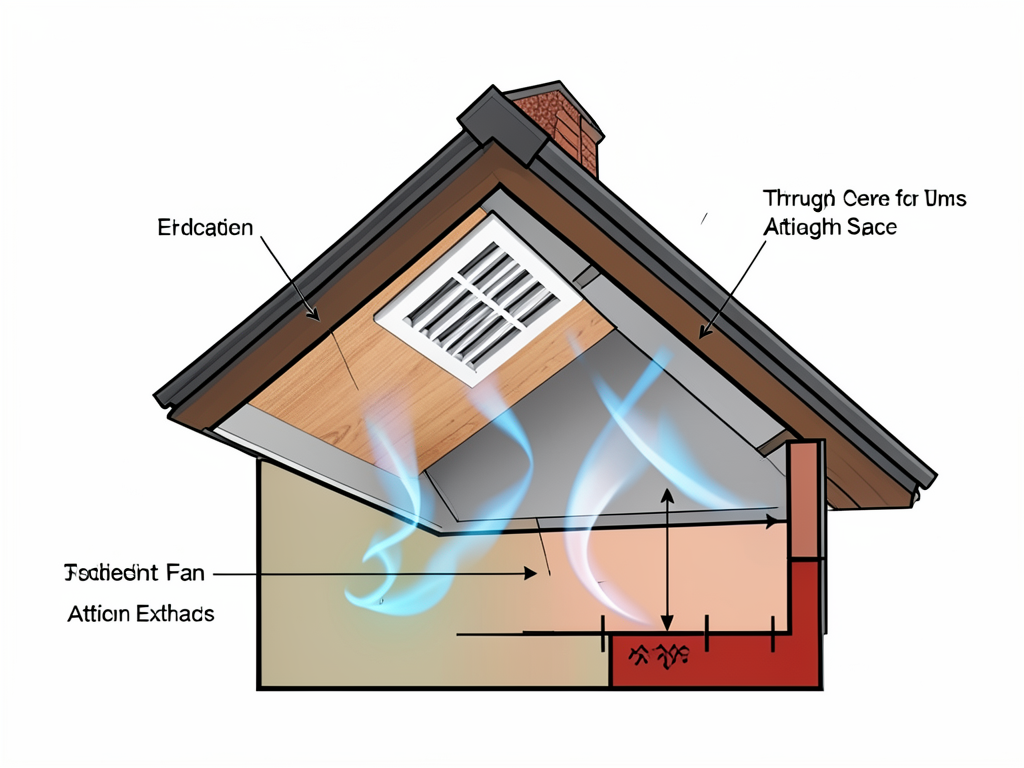
The Two Pillars: Intake vs. Exhaust Ventilation
Balanced ventilation requires both intake and exhaust vents working together. Soffit vents draw cool air in at the eaves while ridge vents or fans push hot air out at the peak. Without proper intake, exhaust vents create negative pressure that pulls conditioned air from your living space.
Blocked soffit vents are a common problem in Norcross homes. Insulation often falls into the soffit area, blocking airflow. Installing proper baffles keeps insulation away from the vent openings and maintains the air channel from soffit to ridge.
Common Types of Attic Exhaust Vents
Ridge vents run along the peak of your roof, creating continuous exhaust ventilation. They work silently and blend with your roofline. Box vents mount on the roof surface and require multiple units for adequate coverage. Turbine vents spin with wind to create airflow but provide inconsistent ventilation.
Power attic ventilators mount on the roof or gable and use electricity to move air. They provide strong airflow but consume energy and can create negative pressure if not properly balanced with intake vents. Solar-powered versions eliminate the electrical cost but depend on sunlight availability.
Common Types of Intake Vents
Soffit vents install under the roof overhang and provide the primary intake for your ventilation system. Continuous soffit vents offer more airflow than individual vents spaced along the soffit. Over-fascia vents work when soffits are too small for traditional soffit vents.
Gable vents mount on the end walls of your attic and can serve as both intake and exhaust depending on wind direction. However, they often create short-circuiting airflow patterns that reduce overall ventilation effectiveness. They work best in combination with ridge vents or power fans.
Passive vs. Active (Powered) Ventilation Systems
Passive systems use natural convection and wind to move air through your attic. Ridge vents, box vents, and turbine vents fall into this category. They require no electricity and provide continuous operation without mechanical failure risks.
Active systems use electric or solar-powered fans to force air movement. They provide stronger airflow and better temperature control but require maintenance and consume energy. In Atlanta’s humid climate, powered systems often remove more moisture than passive systems can handle.
How Much Ventilation Does Your Atlanta Home Need? (The 1/300 Rule)
The 1/300 rule requires 1 square foot of net free ventilation area for every 300 square feet of attic floor space. This area must be split evenly between intake and exhaust vents. For a 1,500 square foot attic, you need 5 square feet total ventilation or 2.5 square feet of intake and 2.5 square feet of exhaust.
Net free area ratings vary by vent type. A standard ridge vent provides 12-18 square inches of net free area per linear foot. Box vents typically offer 50-75 square inches each. Always check manufacturer specifications when calculating your ventilation needs.
The Impact of Atlanta’s Humidity on Your Roof’s Lifespan
Atlanta’s high humidity levels create perfect conditions for mold and mildew growth in poorly ventilated attics. When warm, moist air from your living space rises into the attic, it condenses on cooler surfaces during temperature changes. This moisture damage can rot roof decking and destroy insulation.
Proper ventilation removes this moisture before it can cause damage. In Norcross homes, where summer humidity often exceeds 70%, active ventilation systems typically perform better than passive systems at moisture removal. The constant air movement prevents condensation from forming on attic surfaces.
Ridge Vents vs Attic Fans: Cost-Benefit Analysis
| Feature | Ridge Vents | Attic Fans |
|---|---|---|
| Initial Cost | $300-600 per 20′ section | $200-400 per fan unit |
| Installation | Requires ridge cutting | Mounts on existing roof |
| Energy Use | None | 10-30 watts electric |
| Maintenance | Minimal (check for debris) | Motor replacement every 5-7 years |
| Noise Level | Silent | Low hum when running |
| Effectiveness in Humidity | Moderate | High |
Solar Powered Attic Fans vs Electric Fans
Solar attic fans eliminate electricity costs but depend on sunlight availability. They typically move 800-1,200 CFM of air and work best in direct sunlight. Electric fans provide consistent airflow regardless of weather conditions and often move 1,000-1,600 CFM.
In Atlanta’s climate, solar fans can struggle during cloudy summer afternoons when attic temperatures peak. Electric fans with humidistats automatically adjust operation based on moisture levels, providing better humidity control during Georgia’s frequent afternoon thunderstorms.
Installation Considerations for Norcross Homes
Norcross homes often feature traditional ranch and colonial styles with varying roof pitches. Low-pitched roofs may not provide adequate space for proper ridge vent installation. In these cases, a combination of box vents and powered fans often provides better ventilation.
Older Norcross homes built before 1990 may lack proper soffit ventilation. Adding intake vents requires careful planning to avoid creating new moisture problems. A professional assessment determines whether your home needs intake vents, exhaust vents, or both.
Maintenance Requirements for Different Vent Types
Ridge vents require minimal maintenance but should be checked annually for debris buildup and proper shingle coverage. Box vents need occasional cleaning to remove leaves and debris that can block airflow. Turbine vents require lubrication of bearings every few years.
Attic fans need more frequent maintenance. Electric fans require motor inspection and bearing lubrication annually. Solar fans need panel cleaning to maintain efficiency. Both types should have their thermostats and humidistats tested before summer heat arrives.
Energy Savings and Return on Investment
Proper attic ventilation can reduce cooling costs by 10-15% in Atlanta’s climate. The exact savings depend on your home’s insulation levels, attic size, and local energy rates. Most homeowners recover ventilation upgrade costs within 3-5 years through energy savings.
Beyond energy savings, proper ventilation extends roof life by preventing premature shingle deterioration. In Georgia’s intense summer heat, this can add 5-10 years to your roof’s lifespan, representing thousands in avoided replacement costs.
Common Ventilation Mistakes to Avoid
Mixing different vent types on the same roof plane creates airflow conflicts. Never combine ridge vents with gable vents or multiple types of exhaust vents. This creates short-circuiting where air flows between vents rather than through the entire attic space.
Undersizing your ventilation system is another common error. Many homeowners install the minimum required vents without accounting for their specific attic configuration or local climate conditions. In Atlanta’s humid environment, slightly oversizing your ventilation system often provides better results.
Professional Assessment and Installation
Determining the right ventilation system requires measuring your attic’s exact dimensions, evaluating existing ventilation, and considering your home’s specific needs. A professional assessment includes checking for moisture damage, measuring current airflow rates, and calculating your home’s ventilation requirements.
Proper installation is critical for ventilation effectiveness. Even the best vent system fails if not installed correctly. Professional installers ensure proper sealing, adequate intake-exhaust balance, and compliance with local building codes.
Making the Right Choice for Your Norcross Home
Choose ridge vents for low-maintenance, silent operation and homes with adequate roof pitch. Select attic fans for better moisture control and homes with complex roof designs or limited ridge length. Many Norcross homeowners find that a hybrid approach combining ridge vents with supplemental powered fans provides optimal results.
Consider your specific needs: if you struggle with high cooling bills, prioritize systems with proven energy savings. If moisture damage is your concern, focus on systems with superior humidity control. Your local climate, home design, and budget all factor into the best choice.
Frequently Asked Questions
Can I install attic ventilation myself?
Basic maintenance like cleaning vents is DIY-friendly, but proper installation requires roofing experience and knowledge of building codes. Incorrect installation can void roof warranties and create new problems. Roofing Dunwoody.
How do I know if my attic has enough ventilation?
Signs of inadequate ventilation include high attic temperatures, moisture on rafters, ice dam formation in winter, and excessive cooling costs. A professional can measure your current ventilation against code requirements.
Will better attic ventilation lower my energy bills?
Yes, proper ventilation typically reduces cooling costs by 10-15% in Atlanta’s climate. The exact savings depend on your home’s insulation, attic size, and local energy rates.
How long do attic ventilation systems last?
Ridge vents and passive vents last 15-20 years with minimal maintenance. Attic fan motors typically need replacement every 5-7 years. Solar panels on attic fans last 10-15 years.
Should I ventilate my garage attic?
Garage attics generally don’t require ventilation unless they share a common attic space with your living area. Unconditioned spaces like garages don’t benefit from the same ventilation requirements as living spaces.
Take Action Today
Don’t let poor attic ventilation cost you money and damage your home. Call (770) 610-9366 today to schedule your professional ventilation assessment. Our experts will evaluate your current system, recommend improvements, and provide a detailed quote for installation.
Pick up the phone and call (770) 610-9366 before the next heat wave hits. Proper attic ventilation isn’t just about comfort—it’s about protecting your investment and saving money on energy costs year after year. Protecting Your Historic Decatur Home with Specialty Roof Repairs.
Visit our website at First Choice Roofing Atlanta to learn more about our ventilation services and special offers for Norcross homeowners. For more information, visit Florida Building Code Residential.
{
“@context”: “https://schema.org”,
“@type”: “BlogPosting”,
“headline”: “Ridge Vents vs Attic Fans for Better Airflow in Norcross Homes”,
“description”: “Discover which attic ventilation system works best for Norcross homes. Compare ridge vents and attic fans for energy savings and moisture control in Atlanta’s humid climate.”,
“wordCount”: 1665,
“datePublished”: “2026-03-31T11:42:00.000Z”,
“dateModified”: “2026-03-31T11:42:00.000Z”,
“inLanguage”: “en-US”,
“mainEntityOfPage”: {
“@type”: “WebPage”,
“@id”: “https://firstchoiceroofingatlanta.com”
},
“publisher”: {
“@type”: “LocalBusiness”,
“name”: “First Choice Roofing Atlanta”,
“url”: “https://firstchoiceroofingatlanta.com”
},
“author”: {
“@type”: “Organization”,
“name”: “First Choice Roofing Atlanta”,
“url”: “https://firstchoiceroofingatlanta.com”
},
“image”: {
“@type”: “ImageObject”,
“url”: “https://firstchoiceroofingatlanta.com/wp-content/uploads/2026/03/ridge-vents-vs-attic-fans-for-better-airflow-in-no-1.png”
}
}
{
“@context”: “https://schema.org”,
“@type”: “RoofingContractor”,
“name”: “First Choice Roofing Atlanta”,
“url”: “https://firstchoiceroofingatlanta.com”,
“address”: {
“@type”: “PostalAddress”,
“addressLocality”: “Atlanta”
},
“areaServed”: {
“@type”: “City”,
“name”: “Atlanta”
}
}
{
“@context”: “https://schema.org”,
“@type”: “FAQPage”,
“mainEntity”: [
{
“@type”: “Question”,
“name”: “Can I install attic ventilation myself?”,
“acceptedAnswer”: {
“@type”: “Answer”,
“text”: “Basic maintenance like cleaning vents is DIY-friendly, but proper installation requires roofing experience and knowledge of building codes. Incorrect installation can void roof warranties and create new problems. Roofing Dunwoody.”
}
},
{
“@type”: “Question”,
“name”: “How do I know if my attic has enough ventilation?”,
“acceptedAnswer”: {
“@type”: “Answer”,
“text”: “Signs of inadequate ventilation include high attic temperatures, moisture on rafters, ice dam formation in winter, and excessive cooling costs. A professional can measure your current ventilation against code requirements.”
}
},
{
“@type”: “Question”,
“name”: “Will better attic ventilation lower my energy bills?”,
“acceptedAnswer”: {
“@type”: “Answer”,
“text”: “Yes, proper ventilation typically reduces cooling costs by 10-15% in Atlanta’s climate. The exact savings depend on your home’s insulation, attic size, and local energy rates.”
}
},
{
“@type”: “Question”,
“name”: “How long do attic ventilation systems last?”,
“acceptedAnswer”: {
“@type”: “Answer”,
“text”: “Ridge vents and passive vents last 15-20 years with minimal maintenance. Attic fan motors typically need replacement every 5-7 years. Solar panels on attic fans last 10-15 years.”
}
},
{
“@type”: “Question”,
“name”: “Should I ventilate my garage attic?”,
“acceptedAnswer”: {
“@type”: “Answer”,
“text”: “Garage attics generally don’t require ventilation unless they share a common attic space with your living area. Unconditioned spaces like garages don’t benefit from the same ventilation requirements as living spaces.”
}
}
]
}
{
“@context”: “https://schema.org”,
“@type”: “BreadcrumbList”,
“itemListElement”: [
{
“@type”: “ListItem”,
“position”: 1,
“name”: “Home”,
“item”: “https://firstchoiceroofingatlanta.com”
},
{
“@type”: “ListItem”,
“position”: 2,
“name”: “Blog”,
“item”: “https://firstchoiceroofingatlanta.com/blog”
},
{
“@type”: “ListItem”,
“position”: 3,
“name”: “Ridge Vents vs Attic Fans for Better Airflow in Norcross Homes”
}
]
}
{
“@context”: “https://schema.org”,
“@type”: “Service”,
“serviceType”: “Roofing”,
“provider”: {
“@type”: “LocalBusiness”,
“name”: “First Choice Roofing Atlanta”,
“url”: “https://firstchoiceroofingatlanta.com”
},
“areaServed”: {
“@type”: “City”,
“name”: “Atlanta”
},
“description”: “Discover which attic ventilation system works best for Norcross homes. Compare ridge vents and attic fans for energy savings and moisture control in Atlanta’s humid climate.”
}