
Does Your Roof Need a Lightning Rod in Fayetteville? (Separating Fact from Fiction)
Lightning strikes Atlanta homes every thunderstorm season and many Fayetteville homeowners wonder if they need protection. The truth is more nuanced than a simple yes or no. Your roof doesn’t necessarily need a lightning rod but your entire home might benefit from a complete lightning protection system if you meet certain risk factors.
Georgia ranks among the top states for lightning strikes with Fulton and DeKalb counties experiencing frequent thunderstorm activity. A properly designed system does more than just stick a rod on your roof. It creates a network that safely channels lightning energy to ground protecting your structure and electronics. Protecting Your Historic Decatur Home with Specialty Roof Repairs.
Lightning Risk in Atlanta’s Fayetteville Neighborhoods
Fayetteville sits in a region where summer thunderstorms build rapidly over the Piedmont Plateau. The combination of warm humid air from the Gulf and cooler air from the Appalachians creates ideal conditions for lightning formation. Homes in older Fayetteville subdivisions with tall trees or near open fields face higher strike probabilities.
According to National Weather Service data Fayette County experiences an average of 45 to 60 thunderstorm days annually. That frequency matters because lightning doesn’t just strike tall objects. It seeks the path of least resistance which could be your roof if your home lacks proper grounding or if your neighborhood has specific topographical features that channel electrical energy. National Weather Service Lightning Safety.
How Lightning Protection Systems Actually Work
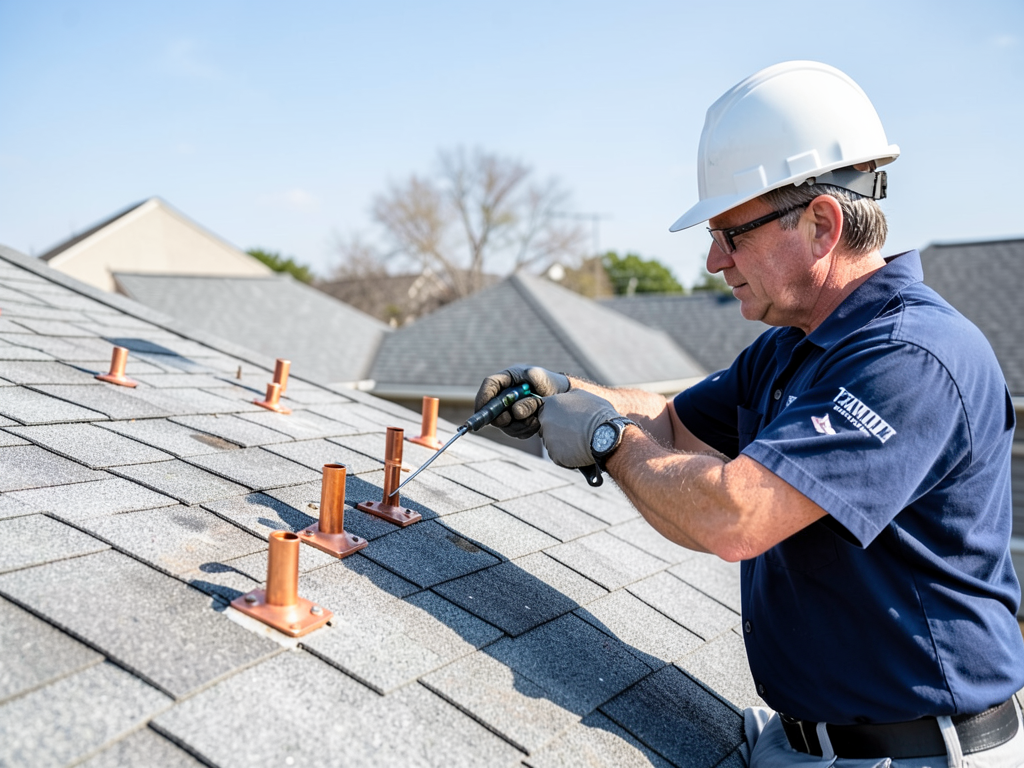
A lightning protection system is not just a rod on your roof. It is a complete Faraday cage that surrounds your home. The system includes air terminals (the visible rods) main conductors that create a continuous path and multiple grounding points that dissipate the energy safely into the earth.
The air terminals are strategically placed along roof ridges and around roof projections like chimneys. Main conductors made of copper or aluminum run along roof edges and down to ground rods. These conductors must maintain specific spacing and angles per NFPA 780 standards to ensure the lightning energy travels the intended path rather than through your home’s structure. NFPA 780 Standard for Lightning Protection Systems.
NFPA 780 Standards and Georgia Building Codes
Lightning protection installation in Georgia must comply with NFPA 780 the Standard for the Installation of Lightning Protection Systems. This code specifies conductor sizing grounding requirements and air terminal placement based on your roof’s dimensions and geometry. The Georgia State Minimum Standard Residential Code adopts these requirements for new construction and major renovations.
Local jurisdictions like Fayette County may have additional inspection requirements. A UL Master Label certification ensures your system meets all safety standards and provides documentation for insurance purposes. Without proper certification you might have a rod on your roof but not actual protection.
Metal Roofs vs Asphalt Shingles Protection Needs
| Roof Type | Lightning Risk Level | Protection Considerations | Installation Complexity |
|---|---|---|---|
| Asphalt Shingles | Medium | Requires full system with bonding | Standard |
| Metal Roofing | Low to Medium | May need fewer air terminals | Easier integration |
| Tile or Slate | Medium | Special mounting required | Complex |
| Flat Commercial | High | Perimeter protection needed | Industrial grade |
Metal roofs conduct electricity but do not attract lightning more than other materials. The key difference is how easily lightning energy travels across a metal surface. A metal roof might allow you to use fewer air terminals but you still need the complete conductor and grounding system. Asphalt shingles require the full complement of protection components since they provide no conductive path.. Read more about Will a Metal Roof Make Your Buckhead Home Too Noisy During an Atlanta Thunderstorm?.
Surge Protection Inside Your Home
External lightning protection only addresses the strike itself. Your electronics and appliances need internal surge protection. A direct lightning strike can induce voltages through power lines telephone lines and even plumbing creating a secondary threat inside your home.
Whole house surge protectors installed at your main electrical panel work with your external system. They clamp voltage spikes before they reach your devices. Point of use surge protectors for computers televisions and smart home systems provide additional layers of defense. Without this combination you might stop the fire risk but still lose thousands in damaged electronics.
Insurance Premiums and Lightning Protection
Many Atlanta area insurance carriers offer premium discounts for homes with certified lightning protection systems. The discount typically ranges from 5 to 15 percent depending on your carrier and the completeness of your system. You need documentation from a UL certified installer showing compliance with NFPA 780.
The investment calculation becomes straightforward when you factor both the potential damage from a strike and the annual premium savings. A typical residential system costs between $2000 and $5000 installed. If you save $200 annually on insurance and avoid a potential $20000 lightning damage claim the system pays for itself within 5 to 10 years.
Warning Signs Your Home Needs Protection
Your home might need lightning protection if you notice these conditions. Multiple overhead power lines run near your roof creating a direct path for lightning energy. Your neighborhood has tall trees that could be struck sending side flashes toward your home. You have a large antenna satellite dish or other metallic roof projections.
Older homes in Fayetteville often lack proper grounding for their electrical systems. If your home was built before 1980 and never had the electrical system upgraded you might have inadequate grounding for lightning protection. A qualified inspector can test your ground resistance and determine if your system meets current safety standards.
Professional Installation vs DIY Systems
Lightning protection is not a DIY project. The physics of lightning energy involves millions of volts and thousands of amps. Improper installation creates more hazards than it prevents. Connections must be exact conductor routing must follow specific paths and grounding must achieve low resistance measurements.
Professional installers use specialized tools to test ground resistance and verify conductor continuity. They coordinate with your roofing contractor to ensure proper mounting without compromising your roof warranty. They also provide the UL Master Label certification that insurance companies require for premium discounts. Roofing Dunwoody.
Maintenance and Inspection Requirements
Lightning protection systems require periodic inspection to maintain effectiveness. Ground rods can corrode connections can loosen and tree growth can alter strike probabilities. The Lightning Protection Institute recommends annual visual inspections and comprehensive testing every three to five years.
During an inspection technicians check all mechanical connections verify conductor continuity and test ground resistance. They look for signs of corrosion damage from wind or wildlife interference. A system that worked perfectly when installed might become ineffective if a large tree falls or if your neighbor builds a taller structure nearby.
Cost Factors for Fayetteville Homeowners
Several factors affect your lightning protection installation cost. Roof complexity increases labor time. A simple gable roof costs less to protect than a home with multiple dormers valleys and roof projections. Your soil type affects grounding requirements. Rocky or sandy soil may need additional ground rods to achieve proper resistance levels.
Home age matters because older homes might need electrical system upgrades before lightning protection can be properly installed. The height of your structure also affects cost since taller homes need more conductor material and additional air terminals to provide complete coverage per NFPA 780 spacing requirements.
Local Fayetteville Lightning Protection Experts
Fayetteville homeowners should work with contractors who understand local building codes and weather patterns. A contractor familiar with Fayette County inspections knows the specific requirements for grounding systems in Georgia’s clay soil conditions. They also understand the local thunderstorm patterns that affect system design.
Look for UL certified installers who provide detailed system drawings and can explain the protection radius for each air terminal. They should offer a written warranty and provide documentation for insurance purposes. Ask about their experience with homes similar to yours in age and construction style.
Emergency Response After Lightning Strikes
If lightning strikes your home you need immediate assessment even if you see no obvious damage. Lightning can travel through structural members causing hidden damage to wiring plumbing and framing. The strike might have compromised your grounding system making future strikes more dangerous.
Signs of strike damage include tripped breakers non functioning electronics and visible scorching around roof penetrations. You might also notice a ozone smell or hear buzzing sounds from damaged wiring. These symptoms require immediate professional inspection to prevent fire hazards and ensure your protection system still functions.
Combining Protection with Roof Replacement
The ideal time to install lightning protection is during roof replacement. Your roofing contractor can coordinate with the lightning protection installer to ensure proper mounting and avoid warranty conflicts. The protection system mounts to the roof deck before underlayment installation providing the most secure attachment.
This timing also allows you to upgrade your electrical grounding system if needed. Many Fayetteville homes built in the 1970s and 1980s have outdated grounding that cannot support modern lightning protection requirements. Addressing both systems simultaneously provides better protection and often costs less than separate projects.
Frequently Asked Questions
Do I really need a lightning rod if I have a new home?
New homes in Fayetteville must meet current building codes which include electrical grounding requirements. However these codes do not mandate lightning protection systems. Your need depends on your specific location risk factors and whether you want the added insurance protection and peace of mind that a complete system provides.
Can lightning protection prevent all lightning damage?
No system can guarantee complete protection from all lightning effects. A properly installed NFPA 780 compliant system dramatically reduces your risk of fire structural damage and equipment loss but cannot prevent all possible lightning induced effects. The system provides the highest level of protection available through engineering and proper installation.
How long does installation take?
A typical residential lightning protection system installation takes one to three days depending on roof complexity and grounding requirements. The process involves mounting air terminals running conductors and installing ground rods. Your roofing contractor should coordinate with the protection installer to minimize roof penetrations and maintain warranty coverage.
Will lightning protection affect my roof warranty?
Proper installation by a certified contractor should not void your roof warranty. In fact many roofing manufacturers require specific mounting procedures for any rooftop equipment. Your lightning protection installer should provide documentation showing their mounting methods meet both NFPA 780 and your roofing manufacturer’s requirements.
Take Action Before the Next Storm
Lightning does not wait for convenient timing. The next thunderstorm could bring a strike that damages your home electronics and peace of mind. Fayetteville homeowners who understand their risk factors and invest in proper protection avoid the stress and expense of lightning damage.
A complete lightning protection system provides more than just a rod on your roof. It creates a comprehensive shield that protects your structure electronics and family. The investment pays dividends through insurance savings damage prevention and the confidence that comes from knowing your home has industrial grade protection.
Call (770) 610-9366 today to schedule your lightning risk assessment. Our certified technicians will evaluate your specific situation explain your protection options and provide a detailed quote for a system that meets NFPA 780 standards. Do not wait for the next storm to discover your home needs protection.
Pick up the phone and call (770) 610-9366 before the next thunderstorm builds over the Piedmont Plateau. Your home deserves the same level of protection that commercial buildings and public facilities use every day. Lightning protection is not just for tall buildings it is for any home where safety and security matter.

[IMAGE_PLACEHOLDER_3>
{
“@context”: “https://schema.org”,
“@type”: “BlogPosting”,
“headline”: “Does Your Roof Need a Lightning Rod in Fayetteville? (Separating Fact from Fiction)”,
“description”: “Discover if lightning protection is right for your Fayetteville home. Learn about NFPA 780 compliance, Atlanta storm data, and when a lightning rod actually helps.”,
“wordCount”: 1904,
“datePublished”: “2026-04-13T09:42:00.000Z”,
“dateModified”: “2026-04-13T09:42:00.000Z”,
“inLanguage”: “en-US”,
“mainEntityOfPage”: {
“@type”: “WebPage”,
“@id”: “https://firstchoiceroofingatlanta.com”
},
“publisher”: {
“@type”: “LocalBusiness”,
“name”: “First Choice Roofing Atlanta”,
“url”: “https://firstchoiceroofingatlanta.com”
},
“author”: {
“@type”: “Organization”,
“name”: “First Choice Roofing Atlanta”,
“url”: “https://firstchoiceroofingatlanta.com”
},
“image”: {
“@type”: “ImageObject”,
“url”: “https://firstchoiceroofingatlanta.com/wp-content/uploads/2026/03/does-your-roof-need-a-lightning-rod-in-fayettevill-1.png”
}
}
{
“@context”: “https://schema.org”,
“@type”: “RoofingContractor”,
“name”: “First Choice Roofing Atlanta”,
“url”: “https://firstchoiceroofingatlanta.com”,
“address”: {
“@type”: “PostalAddress”,
“addressLocality”: “Atlanta”
},
“areaServed”: {
“@type”: “City”,
“name”: “Atlanta”
}
}
{
“@context”: “https://schema.org”,
“@type”: “FAQPage”,
“mainEntity”: [
{
“@type”: “Question”,
“name”: “Do I really need a lightning rod if I have a new home?”,
“acceptedAnswer”: {
“@type”: “Answer”,
“text”: “New homes in Fayetteville must meet current building codes which include electrical grounding requirements. However these codes do not mandate lightning protection systems. Your need depends on your specific location risk factors and whether you want the added insurance protection and peace of mind that a complete system provides.”
}
},
{
“@type”: “Question”,
“name”: “Can lightning protection prevent all lightning damage?”,
“acceptedAnswer”: {
“@type”: “Answer”,
“text”: “No system can guarantee complete protection from all lightning effects. A properly installed NFPA 780 compliant system dramatically reduces your risk of fire structural damage and equipment loss but cannot prevent all possible lightning induced effects. The system provides the highest level of protection available through engineering and proper installation.”
}
},
{
“@type”: “Question”,
“name”: “How long does installation take?”,
“acceptedAnswer”: {
“@type”: “Answer”,
“text”: “A typical residential lightning protection system installation takes one to three days depending on roof complexity and grounding requirements. The process involves mounting air terminals running conductors and installing ground rods. Your roofing contractor should coordinate with the protection installer to minimize roof penetrations and maintain warranty coverage.”
}
}
]
}
{
“@context”: “https://schema.org”,
“@type”: “BreadcrumbList”,
“itemListElement”: [
{
“@type”: “ListItem”,
“position”: 1,
“name”: “Home”,
“item”: “https://firstchoiceroofingatlanta.com”
},
{
“@type”: “ListItem”,
“position”: 2,
“name”: “Blog”,
“item”: “https://firstchoiceroofingatlanta.com/blog”
},
{
“@type”: “ListItem”,
“position”: 3,
“name”: “Does Your Roof Need a Lightning Rod in Fayetteville? (Separating Fact from Fiction)”
}
]
}
{
“@context”: “https://schema.org”,
“@type”: “Service”,
“serviceType”: “Roofing”,
“provider”: {
“@type”: “LocalBusiness”,
“name”: “First Choice Roofing Atlanta”,
“url”: “https://firstchoiceroofingatlanta.com”
},
“areaServed”: {
“@type”: “City”,
“name”: “Atlanta”
},
“description”: “Discover if lightning protection is right for your Fayetteville home. Learn about NFPA 780 compliance, Atlanta storm data, and when a lightning rod actually helps.”
}