Dealing with Acidic Rain and Pollution Buildup on Rooftops in Downtown Atlanta
Atlanta’s urban environment creates unique challenges for rooftop systems. The combination of industrial emissions vehicle exhaust and acid rain accelerates material degradation in ways that suburban properties rarely experience. Downtown Atlanta rooftops face constant exposure to nitrogen oxides sulfur compounds and particulate matter that settle on surfaces and react with moisture to form corrosive compounds. Atlanta Regional Commission.
The city’s high humidity amplifies these effects. When pollutants mix with Atlanta’s frequent summer thunderstorms they create a chemical reaction that eats away at roofing materials. Metal flashing corrodes faster asphalt shingles lose their protective granules prematurely and flat roof membranes develop weak spots that lead to leaks. City of Atlanta Official Website.
Understanding these urban-specific threats is the first step toward protecting your investment. Whether you manage a commercial building in Midtown or own a home near Centennial Olympic Park recognizing the signs of pollution damage early can prevent costly repairs later. Protecting Your Historic Decatur Home with Specialty Roof Repairs.
Types of Pollutants Affecting Atlanta Rooftops
Atlanta’s air quality issues stem from multiple sources concentrated in the downtown area. Interstate 85 and 75 create a constant stream of vehicle emissions that carry microscopic particles upward. The city’s industrial zones release sulfur dioxide and nitrogen oxides that combine with atmospheric moisture to form acid rain.
Jet fuel fallout from Hartsfield-Jackson International Airport affects properties within a five-mile radius of downtown. These hydrocarbon compounds settle on rooftops and create a sticky film that traps additional pollutants. During Atlanta’s pollen season this film becomes even more problematic as it binds with tree pollen to create a stubborn residue.
Construction dust from ongoing downtown development projects adds another layer of particulate matter. These fine particles penetrate microscopic cracks in roofing materials and accelerate deterioration through freeze-thaw cycles that Atlanta experiences each winter.
Common pollutant types affecting downtown rooftops:
- Particulate matter (PM2.5) from vehicle exhaust and industrial processes
- Nitrogen dioxide and sulfur dioxide that form acid compounds
- Hydrocarbon fallout from airport operations
- Construction dust and silica particles
- Pollen and organic debris that trap moisture
Identifying Pollution Damage vs. Natural Wear
Distinguishing pollution damage from normal weathering requires understanding specific visual and physical indicators. Natural wear typically shows uniform fading and gradual granule loss across the entire roof surface. Pollution damage creates concentrated patterns that follow Atlanta’s wind patterns and rainfall distribution.
Dark streaking on shingles often indicates carbon buildup from vehicle exhaust. These streaks run vertically down the roof face and are most pronounced on the windward side of buildings. Unlike algae growth which appears as green or black patches carbon streaks have a grayish tint and feel gritty to the touch.
Metal components show distinct corrosion patterns from pollution exposure. Aluminum flashing develops white powdery oxidation that spreads rapidly in Atlanta’s humid conditions. Copper components turn green but then develop dark spots where acidic compounds concentrate. Steel fasteners rust through completely when exposed to sulfur compounds over time.. Read more about Using Zinc and Copper Strips to Stop Green Algae from Returning to Your Shaded Morningside Roof.
Flat roof membranes develop surface etching where pollutants pool during rainfall. These etched areas feel rough compared to surrounding surfaces and often trap dirt creating visible dark spots that worsen with each rain event.
Atlanta-Specific Risk Factors
Downtown Atlanta’s unique geography creates pollution concentration zones that affect certain neighborhoods more severely than others. The I-85 corridor from Midtown through Downtown acts as a pollution highway carrying emissions from vehicles stuck in Atlanta’s notorious traffic.
Buildings near the Georgia World Congress Center and Mercedes-Benz Stadium experience higher pollution levels due to event traffic and construction activity. The area around Centennial Olympic Park serves as a collection point for airborne particles carried by prevailing southwest winds. Georgia Environmental Protection Division.
Atlanta’s urban heat island effect intensifies pollution damage. The city’s concrete and asphalt absorb heat during the day creating temperature differentials that cause roofing materials to expand and contract more dramatically than in surrounding areas. This thermal cycling accelerates the breakdown of protective coatings and sealants.
The city’s high humidity averaging 70% during summer months keeps pollutants in a semi-liquid state that allows them to penetrate roofing materials more easily. When temperatures drop at night this moisture expands as it freezes creating microscopic cracks that worsen over time.
Risk factors by Atlanta neighborhood:
| Area | Primary Pollutant Source | Roofing Impact |
|---|---|---|
| Midtown | Traffic corridor (I-85) | Accelerated granule loss on shingles |
| Downtown | Construction dust | Surface etching on membranes |
| Centennial Park | Pollen + pollution mix | Stubborn residue buildup |
| Near Airport | Jet fuel fallout | Hydrocarbon film formation |
Maintenance and Prevention Strategies
Regular maintenance becomes critical for downtown Atlanta properties facing pollution exposure. Professional cleaning every 18-24 months removes accumulated pollutants before they cause permanent damage. This process requires specific techniques that avoid damaging roofing materials while effectively removing stubborn residues.
Low-pressure washing with specialized cleaning solutions breaks down pollutant bonds without forcing water under shingles or into membrane seams. The cleaning solution must have a neutral pH to avoid creating additional chemical reactions with existing pollutants.
Protective coatings offer long-term defense against pollution damage. Ceramic-based roof coatings create a hydrophobic barrier that prevents pollutants from adhering to surfaces. These coatings also reflect UV radiation reducing the heat absorption that accelerates chemical reactions.
For commercial properties installing pollution-resistant materials during replacement projects provides the best long-term value. TPO membranes with enhanced chemical resistance withstand Atlanta’s urban pollutants better than standard materials. Metal roofing with factory-applied protective finishes resists corrosion from sulfur compounds.
Prevention checklist for Atlanta property owners:
- Schedule professional roof cleaning every 18-24 months
- Apply protective coating within one year of installation
- Inspect flashing and fasteners quarterly for corrosion
- Clean gutters and downspouts monthly during pollen season
- Document roof condition with photos annually
Professional Inspection: The Only Way to Quantify Damage
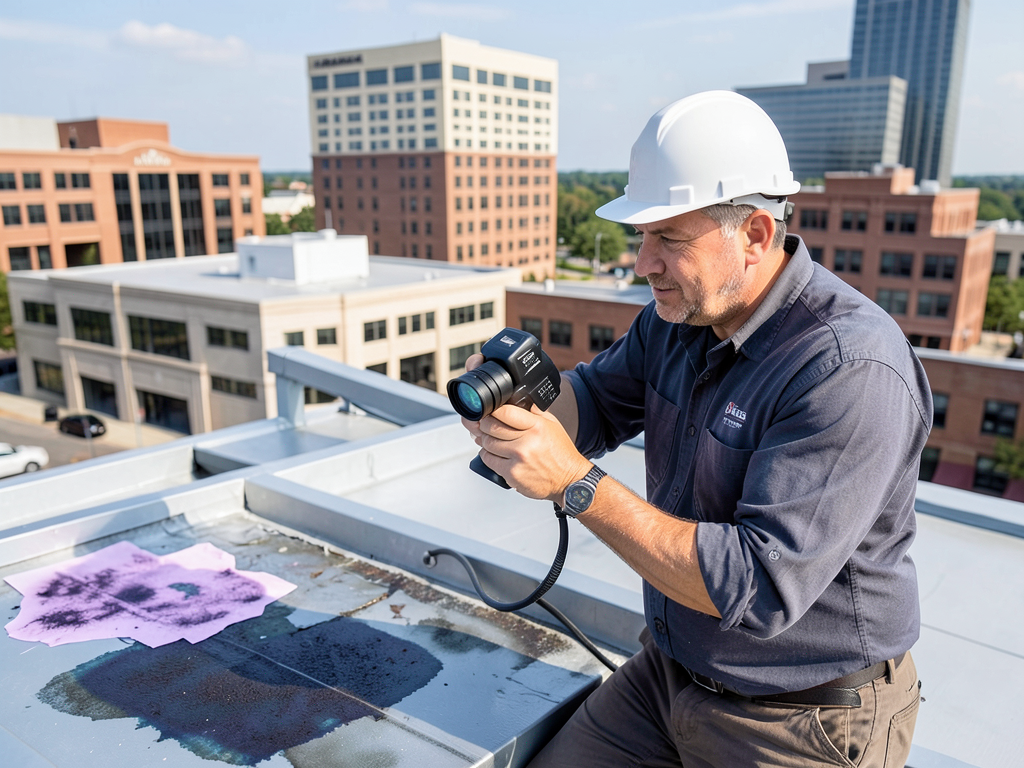
Surface-level cleaning addresses immediate appearance issues but doesn’t reveal the extent of underlying damage. Professional inspection using moisture meters and infrared scanning detects water infiltration that pollution damage creates. These tools identify areas where pollutants have compromised the roof’s waterproof barrier.
Core sampling provides definitive evidence of material degradation. A small sample cut from the roof reveals the depth of pollutant penetration and whether the substrate remains structurally sound. This testing follows ASTM standards for roofing material evaluation.
Atlanta’s building code requires specific documentation for commercial properties undergoing roof replacement. The Georgia State Minimum Standard Residential Code (IRC with GA amendments) mandates that damaged areas be properly remediated before new materials are installed. This prevents covering up pollution damage that could lead to premature failure of the new roof.
Insurance claims for pollution-related damage require professional documentation. Most policies exclude gradual deterioration but may cover sudden damage from specific pollution events. A certified inspection provides the evidence needed to support a claim if coverage applies.
Professional inspectors evaluate multiple factors beyond visible damage. They assess ventilation systems that affect moisture accumulation drainage patterns that concentrate pollutants and nearby sources that contribute to ongoing exposure. This comprehensive approach identifies both immediate repairs needed and long-term prevention strategies.
Professional inspection services include:
- Moisture mapping using infrared thermal imaging
- Core sampling to assess material integrity
- Ventilation system evaluation
- Drainage pattern analysis
- Documentation for insurance or code compliance
When to Consider Roof Replacement
Severe pollution damage sometimes necessitates complete roof replacement rather than repair. Signs that replacement becomes the most cost-effective option include widespread corrosion of metal components extensive granule loss on shingles or multiple leak points indicating membrane failure.. Read more about Spotting the Signs of Rusted Valley Flashing Before it Floods Your Druid Hills Kitchen.
The age of the roof factors significantly into this decision. Most asphalt shingle roofs in Atlanta’s urban environment last 15-20 years rather than the 25-30 years typical in suburban areas. The accelerated degradation from pollution exposure reduces the economic life of roofing materials.
Material selection for replacement projects should consider Atlanta’s specific challenges. TPO membranes with enhanced chemical resistance provide excellent protection against urban pollutants. Metal roofing with factory-applied protective coatings resists corrosion from sulfur compounds. These premium materials cost more initially but reduce long-term maintenance expenses.
Installation timing affects roof longevity. Scheduling replacement during Atlanta’s drier months (October through April) allows proper sealing and curing of materials before summer humidity arrives. This timing prevents moisture entrapment that could lead to early failure.
Energy efficiency improvements during replacement provide additional benefits. Cool roof coatings reflect heat and reduce cooling costs which are significant in Atlanta’s climate. Improved insulation and ventilation systems work together to manage moisture and prevent the condensation that accelerates pollution damage.
Cost Factors for Pollution-Related Repairs
Repair costs for pollution-damaged roofs vary based on several factors specific to Atlanta properties. Accessibility affects pricing significantly. Downtown buildings with limited roof access or surrounding trees require additional equipment and labor time.
The extent of damage determines whether spot repairs or complete replacement makes economic sense. Minor pollution damage affecting less than 20% of the roof surface typically justifies repair. Damage exceeding this threshold often indicates systemic issues requiring comprehensive replacement.
Material selection impacts both initial costs and long-term value. Standard asphalt shingles cost less but require more frequent replacement in polluted environments. Premium materials with enhanced chemical resistance cost more upfront but reduce lifecycle expenses through extended durability.
Professional cleaning services range from $0.15 to $0.30 per square foot for basic washing to $0.50 to $1.00 per square foot for comprehensive pollution removal including protective coating application. These services should be performed by certified contractors familiar with Atlanta’s specific pollution challenges.
Insurance coverage varies for pollution-related damage. Most policies exclude gradual deterioration but may cover sudden damage from specific events. Documentation from professional inspections becomes crucial for claim approval.
Cost comparison by repair type:
| Repair Type | Cost Range (per sq ft) | Typical Lifespan Extension |
|---|---|---|
| Basic cleaning | $0.15 – $0.30 | 2-3 years |
| Pollution removal + coating | $0.50 – $1.00 | 5-7 years |
| Spot repairs | $2.00 – $4.00 | 5-10 years |
| Partial replacement | $4.00 – $6.00 | 15-20 years |
| Complete replacement | $5.00 – $8.00 | 20-25 years |
Environmental Regulations and Compliance
Atlanta property owners must navigate specific environmental regulations when addressing pollution-related roof damage. The Georgia Environmental Protection Division monitors air quality and sets standards for emissions that affect roofing materials. Compliance with these regulations affects both repair methods and material choices.
Stormwater management regulations require proper containment of cleaning runoff from roof washing. The City of Atlanta mandates that pollutants collected during cleaning be captured and disposed of according to hazardous waste guidelines. This prevents contaminated water from entering the municipal drainage system.
The EPA’s Clean Water Act influences how roof cleaning and repair projects must be conducted. Pressure washing equipment must include containment systems to prevent chemical runoff. Professional contractors must maintain certification in proper handling and disposal of contaminated materials.
Building codes in Atlanta have specific requirements for roof replacement projects. The Georgia State Minimum Standard Residential Code (IRC with GA amendments) Section R905.2.5 requires that damaged roof decks be repaired or replaced before new roofing materials are installed. This prevents covering up damage that could lead to premature failure.
Commercial properties face additional requirements under Atlanta’s Energy Code. Cool roof standards mandate minimum solar reflectance for flat roof replacements. These requirements reduce heat island effects and improve energy efficiency providing additional benefits beyond pollution resistance.
Long-Term Protection Strategies
Protecting your roof from Atlanta’s urban pollutants requires a comprehensive approach that combines immediate repairs with long-term prevention. Regular maintenance schedules prevent minor issues from becoming major problems. Professional inspections identify developing issues before they cause significant damage.
Vegetation management around the building reduces organic debris accumulation. Trees near the building drop leaves and pollen that combine with pollutants to create stubborn residues. Strategic pruning and landscaping minimize this source of contamination.
Ventilation system improvements reduce moisture accumulation that accelerates pollution damage. Proper attic ventilation prevents condensation that creates the moist environment where pollutants cause the most damage. This improvement also enhances energy efficiency and prevents ice dam formation during occasional winter freezes.
Documentation of roof condition provides valuable information for future maintenance decisions. Annual photo documentation and inspection reports create a history that helps predict when major repairs or replacement become necessary. This information also supports insurance claims if sudden damage occurs.
Emergency response planning prepares property owners for sudden pollution events. Having contact information for professional roofing contractors and understanding insurance coverage ensures rapid response when damage occurs. Quick action prevents minor issues from escalating into major problems. Who to Call for Urgent Emergency Roof Repairs in Buckhead.
Community involvement in pollution reduction benefits all property owners. Supporting local initiatives to improve air quality reduces the overall pollution load that affects roofing materials. This collective approach creates a healthier environment for buildings and the people who occupy them.
Call (770) 610-9366 today to schedule your inspection. Our Atlanta-based team understands the unique challenges that urban pollution creates for roofing systems. We provide comprehensive assessments that identify both immediate repair needs and long-term protection strategies. Don’t wait until minor damage becomes a major problem.
Frequently Asked Questions
How often should I have my downtown Atlanta roof cleaned?
Most downtown Atlanta properties benefit from professional cleaning every 18-24 months. Properties near high-traffic areas or construction zones may need annual cleaning to prevent pollutant buildup that damages roofing materials.
Can pollution damage void my roof warranty?
Standard warranties typically exclude damage from environmental factors including pollution. However some manufacturers offer enhanced warranties that cover pollution-related damage when specific maintenance procedures are followed. Check your warranty documentation for details.
What’s the difference between algae growth and pollution staining?
Algae growth appears as green or black patches and often has a fuzzy texture. Pollution staining creates dark streaks or spots with a gritty texture and tends to follow wind patterns and drainage paths across the roof surface.
Are there roofing materials specifically designed for urban environments?
Yes several manufacturers offer pollution-resistant materials including TPO membranes with enhanced chemical resistance metal roofing with factory-applied protective coatings and asphalt shingles with advanced granule technology that resists staining and degradation.
How does Atlanta’s humidity affect pollution damage?
High humidity keeps pollutants in a semi-liquid state that allows deeper penetration into roofing materials. When temperatures drop this moisture expands as it freezes creating microscopic cracks that worsen over time. The combination accelerates material degradation significantly.
Pick up the phone and call (770) 610-9366 before the next storm hits. Atlanta’s unique urban environment creates challenges that require specialized knowledge and experience. Our team provides the comprehensive solutions that protect your investment from pollution damage while extending your roof’s useful life.
{
“@context”: “https://schema.org”,
“@type”: “BlogPosting”,
“headline”: “Dealing with Acidic Rain and Pollution Buildup on Rooftops in Downtown Atlanta”,
“description”: “Protect your Atlanta rooftop from acidic rain and pollution damage. Learn about urban-specific threats and prevention strategies for downtown properties.”,
“wordCount”: 2390,
“datePublished”: “2026-05-24T06:41:00.000Z”,
“dateModified”: “2026-05-24T06:41:00.000Z”,
“inLanguage”: “en-US”,
“mainEntityOfPage”: {
“@type”: “WebPage”,
“@id”: “https://firstchoiceroofingatlanta.com”
},
“publisher”: {
“@type”: “LocalBusiness”,
“name”: “First Choice Roofing Atlanta”,
“url”: “https://firstchoiceroofingatlanta.com”
},
“author”: {
“@type”: “Organization”,
“name”: “First Choice Roofing Atlanta”,
“url”: “https://firstchoiceroofingatlanta.com”
},
“image”: {
“@type”: “ImageObject”,
“url”: “https://firstchoiceroofingatlanta.com/wp-content/uploads/2026/03/dealing-with-acidic-rain-and-pollution-buildup-on-1.png”
}
}
{
“@context”: “https://schema.org”,
“@type”: “RoofingContractor”,
“name”: “First Choice Roofing Atlanta”,
“url”: “https://firstchoiceroofingatlanta.com”,
“address”: {
“@type”: “PostalAddress”,
“addressLocality”: “Atlanta”
},
“areaServed”: {
“@type”: “City”,
“name”: “Atlanta”
}
}
{
“@context”: “https://schema.org”,
“@type”: “FAQPage”,
“mainEntity”: [
{
“@type”: “Question”,
“name”: “How often should I have my downtown Atlanta roof cleaned?”,
“acceptedAnswer”: {
“@type”: “Answer”,
“text”: “Most downtown Atlanta properties benefit from professional cleaning every 18-24 months. Properties near high-traffic areas or construction zones may need annual cleaning to prevent pollutant buildup that damages roofing materials.”
}
},
{
“@type”: “Question”,
“name”: “Can pollution damage void my roof warranty?”,
“acceptedAnswer”: {
“@type”: “Answer”,
“text”: “Standard warranties typically exclude damage from environmental factors including pollution. However some manufacturers offer enhanced warranties that cover pollution-related damage when specific maintenance procedures are followed. Check your warranty documentation for details.”
}
},
{
“@type”: “Question”,
“name”: “What’s the difference between algae growth and pollution staining?”,
“acceptedAnswer”: {
“@type”: “Answer”,
“text”: “Algae growth appears as green or black patches and often has a fuzzy texture. Pollution staining creates dark streaks or spots with a gritty texture and tends to follow wind patterns and drainage paths across the roof surface.”
}
},
{
“@type”: “Question”,
“name”: “Are there roofing materials specifically designed for urban environments?”,
“acceptedAnswer”: {
“@type”: “Answer”,
“text”: “Yes several manufacturers offer pollution-resistant materials including TPO membranes with enhanced chemical resistance metal roofing with factory-applied protective coatings and asphalt shingles with advanced granule technology that resists staining and degradation.”
}
},
{
“@type”: “Question”,
“name”: “How does Atlanta’s humidity affect pollution damage?”,
“acceptedAnswer”: {
“@type”: “Answer”,
“text”: “High humidity keeps pollutants in a semi-liquid state that allows deeper penetration into roofing materials. When temperatures drop this moisture expands as it freezes creating microscopic cracks that worsen over time. The combination accelerates material degradation significantly.”
}
}
]
}
{
“@context”: “https://schema.org”,
“@type”: “BreadcrumbList”,
“itemListElement”: [
{
“@type”: “ListItem”,
“position”: 1,
“name”: “Home”,
“item”: “https://firstchoiceroofingatlanta.com”
},
{
“@type”: “ListItem”,
“position”: 2,
“name”: “Blog”,
“item”: “https://firstchoiceroofingatlanta.com/blog”
},
{
“@type”: “ListItem”,
“position”: 3,
“name”: “Dealing with Acidic Rain and Pollution Buildup on Rooftops in Downtown Atlanta”
}
]
}
{
“@context”: “https://schema.org”,
“@type”: “Service”,
“serviceType”: “Roofing”,
“provider”: {
“@type”: “LocalBusiness”,
“name”: “First Choice Roofing Atlanta”,
“url”: “https://firstchoiceroofingatlanta.com”
},
“areaServed”: {
“@type”: “City”,
“name”: “Atlanta”
},
“description”: “Protect your Atlanta rooftop from acidic rain and pollution damage. Learn about urban-specific threats and prevention strategies for downtown properties.”
}