
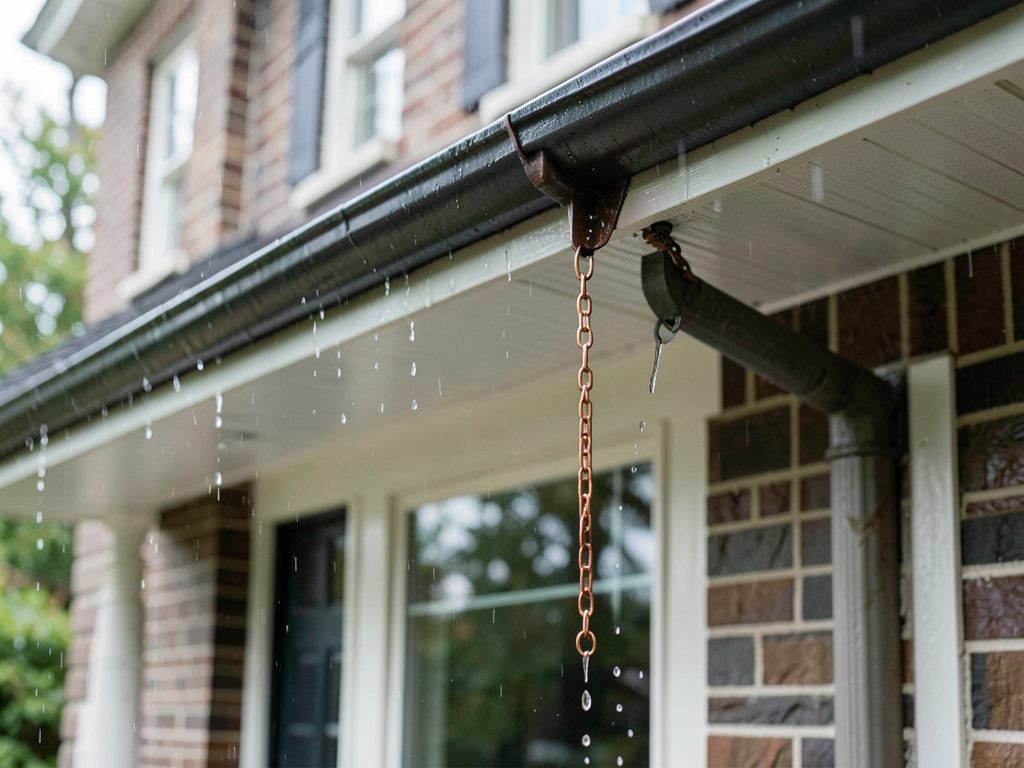
Why Rain Chains are Replacing Traditional Downspouts in Inman Park and Candler Park
Rain chains are becoming a popular alternative to traditional downspouts in Atlanta’s historic neighborhoods, particularly in Inman Park and Candler Park. These decorative water features offer both aesthetic appeal and functional drainage for homes with craftsman and bungalow architecture. However, Atlanta’s heavy rainfall and unique soil conditions create specific challenges that homeowners must understand before making the switch. Protecting Your Historic Decatur Home with Specialty Roof Repairs.
Traditional downspouts channel water through enclosed pipes, while rain chains guide water visibly down a series of cups or links. Inman Park’s tree-lined streets and historic homes create a perfect setting for rain chains, but the decision involves more than just appearance. The choice affects how water moves away from your foundation, impacts your landscaping, and handles Atlanta’s intense summer thunderstorms.
How Rain Chains Work in Atlanta’s Climate
Rain chains operate by breaking the fall of water from your gutter system and directing it toward the ground. Unlike enclosed downspouts that handle hundreds of gallons per minute, rain chains disperse water through multiple contact points. This creates a waterfall effect that many homeowners find soothing, but it also means rain chains handle significantly less water volume than traditional systems.
Atlanta receives approximately 50 inches of rainfall annually, with most precipitation occurring during intense summer thunderstorms. These storms can dump several inches of rain in less than an hour, creating drainage challenges that rain chains must be designed to handle. The Georgia State Minimum Standard Residential Code requires proper water management away from foundations, making the drainage basin beneath rain chains critical for code compliance. Georgia building codes.
The splashing effect of rain chains can actually benefit Atlanta’s foundation protection when properly installed. Water dispersed over a larger area reduces the concentrated pressure that traditional downspouts create against foundation walls. However, this same splashing can cause erosion in Georgia’s red clay soil, requiring additional measures like gravel beds or French drains beneath the chain terminus.
Traditional Downspouts: The Reliable Standard
Traditional downspouts remain the gold standard for water volume management in Atlanta homes. These enclosed systems can handle 150-200 gallons per minute during peak rainfall, compared to rain chains that manage only 10-30 gallons per minute depending on design. This capacity difference becomes critical during Atlanta’s frequent thunderstorms when rainfall rates exceed 2 inches per hour.
Seamless aluminum downspouts dominate the Atlanta market due to their durability against our humidity and temperature fluctuations. The aluminum resists the algae and moss growth common in Georgia’s warm, wet climate. These systems direct water through underground drainage pipes or splash blocks, keeping foundations dry and preventing the soil saturation that leads to foundation movement in expansive clay soils.
Installation of traditional downspouts requires precise calculations for roof area, pitch, and local rainfall intensity. A 2,000 square foot roof in Atlanta generates approximately 1,250 gallons of water from just one inch of rainfall. This volume calculation drives the sizing of downspouts, with most Atlanta homes requiring 6-inch K-style gutters and 3×4-inch downspouts to handle peak flow rates.
Rain Chains: Beauty Meets Function
Rain chains transform the mundane task of water drainage into a visual and auditory experience. The copper varieties develop a natural patina over time, complementing the historic architecture of Inman Park’s craftsman bungalows and Candler Park’s early 20th-century homes. The gentle sound of water cascading through the chain creates a meditative atmosphere during Atlanta’s frequent summer rains.
Installation requires specific hardware that attaches to existing gutter outlets. The chain connects through a V-hook or similar mounting that allows for seasonal removal if needed. Most Atlanta homeowners choose chains between 8-12 feet long, depending on their roof height and desired water dispersion pattern.
The aesthetic appeal of rain chains extends beyond simple water movement. During dry periods, the chains serve as architectural elements that draw the eye upward to rooflines and gables. Many homeowners in Inman Park’s historic district appreciate how rain chains maintain the craftsman aesthetic while providing modern drainage functionality.
Drainage Capacity Comparison
Understanding the technical differences between rain chains and downspouts requires examining actual water volume capacity. A standard 2-inch by 3-inch downspout can handle approximately 180 gallons per minute during peak flow. Rain chains vary significantly based on design, with cup-style chains managing 15-25 gallons per minute and link-style chains handling only 10-15 gallons per minute.
This capacity difference means rain chains work best on smaller roof areas or as secondary drainage for porches and bay windows. For main roof drainage, Atlanta’s rainfall intensity often overwhelms rain chains during summer thunderstorms. The Georgia Building Code Section R903.3 requires roof drainage systems to handle the 100-year, 1-hour rainfall event specific to each county.
Debris management presents another consideration in Atlanta’s pine-rich environment. Rain chains can trap leaves and pine needles, potentially blocking water flow during heavy rains. Traditional downspouts with leaf guards handle debris more effectively, though they require periodic cleaning to prevent clogs that cause overflow and foundation damage.
Foundation Protection Strategies
Atlanta’s expansive red clay soil creates unique foundation challenges that influence drainage system selection. When clay becomes saturated, it expands and exerts pressure against foundation walls. When it dries, it contracts and creates gaps that allow water infiltration. Both rain chains and downspouts must direct water at least 6 feet away from foundations to prevent these soil movement issues.. Read more about Caring for the Unique Low-Slope Roof on Your Mid-Century Modern Home in Northcrest.
Rain chains require strategic placement of drainage basins to prevent erosion. Common solutions include gravel beds extending 3-4 feet from the chain terminus, underground French drains that channel water away, or concrete splash blocks that disperse flow. The choice depends on your landscaping, soil conditions, and local HOA requirements in historic districts.
Traditional downspouts offer more flexibility for foundation protection through underground drainage systems. These buried pipes can extend 20-30 feet from the house, connecting to storm drains or daylight outlets. This approach keeps roof water completely separate from foundation areas, which is particularly important in Atlanta’s older neighborhoods where soil expansion has already caused foundation issues. EPA soil erosion guidelines.
Material Selection and Durability
Material choice significantly impacts the longevity and performance of both rain chains and downspouts in Atlanta’s climate. Copper rain chains develop a protective patina that resists corrosion, lasting 20-30 years in our humid environment. Aluminum chains offer a more affordable option but may oxidize over time, developing a dull gray finish.
Traditional downspouts commonly use aluminum, galvanized steel, or copper. Aluminum dominates due to its resistance to Atlanta’s humidity and moderate cost. Galvanized steel offers greater strength for high-wind areas but requires more maintenance to prevent rust. Copper downspouts provide unmatched durability and aesthetic appeal but cost 3-4 times more than aluminum.
The hardware connecting rain chains to gutters must withstand Atlanta’s temperature fluctuations and wind loads. Stainless steel mounting brackets prevent the galvanic corrosion that occurs when copper chains contact aluminum gutters. This compatibility issue affects long-term performance and may void manufacturer warranties if incorrect materials are mixed.
Installation Considerations for Historic Homes
Inman Park and Candler Park homes often fall under historic district guidelines that affect drainage system modifications. The Atlanta Urban Design Commission requires approval for exterior changes visible from public rights-of-way. Rain chains generally receive approval more readily than modern downspout designs due to their historic precedent in craftsman architecture.
Installation on historic homes requires careful assessment of existing fascia condition and roof pitch. Many early 20th-century homes have undersized or deteriorated fascia boards that cannot support modern drainage loads. A thorough inspection reveals whether structural reinforcement is needed before installing any drainage system.
The roof pitch also influences drainage system selection. Steeper pitches generate higher water velocities during rainfall, potentially overwhelming rain chains. A 12:12 pitch roof in Atlanta can produce water flow rates exceeding 200 gallons per minute at the gutter outlet, far beyond what most rain chains can handle effectively.
Cost Analysis and Long-Term Value
Initial installation costs vary significantly between rain chains and traditional downspouts. Basic aluminum rain chains cost $50-150 per linear foot installed, while copper varieties range from $150-300 per foot. Traditional seamless aluminum downspouts cost $15-25 per linear foot installed, making them substantially more economical for whole-house drainage.
However, the total cost comparison must include long-term maintenance and potential foundation repairs. Rain chains may require more frequent cleaning in Atlanta’s debris-heavy environment. Traditional downspouts might need less maintenance but could contribute to foundation issues if not properly installed with adequate drainage away from the house.
Property value impact varies by neighborhood and buyer preferences. In Inman Park’s historic district, rain chains often enhance curb appeal and may increase marketability to buyers seeking craftsman authenticity. In more modern areas of Candler Park, traditional downspouts might be preferred for their reliability and lower maintenance requirements.
The Hybrid Approach: Best of Both Worlds
Many Atlanta homeowners achieve optimal results by combining rain chains and traditional downspouts. This hybrid approach uses rain chains for aesthetic areas like front porches and bay windows while maintaining traditional downspouts for main roof drainage. This strategy provides visual appeal where it matters most while ensuring adequate water capacity during severe storms.
The hybrid system typically dedicates 20-30% of roof drainage to rain chains, with the remainder handled by traditional downspouts. This ratio ensures that Atlanta’s heaviest rainfall still moves safely away from the foundation while maintaining the decorative elements that enhance curb appeal and property value.
Installation timing also influences system selection. Many homeowners upgrade to rain chains during roof replacement when gutters are already being modified. This coordination reduces labor costs and ensures proper integration between the new drainage system and existing roof structure.
Winter Performance and Freezing Concerns
Atlanta’s occasional winter freezes create specific challenges for rain chains that traditional downspouts handle more effectively. Water trapped in rain chain cups can freeze and create ice dams that damage gutters and fascia. The additional weight of ice can pull chains away from mounting brackets, requiring repairs in spring.
Traditional downspouts allow water to flow continuously to the ground, where it can drain away before freezing becomes problematic. However, they are not immune to winter issues, as ice can still form in downspout outlets and cause backups that lead to gutter overflow and icicle formation.
Prevention strategies include installing heat cables along rain chains, using larger drainage basins to accommodate ice expansion, and ensuring proper gutter slope to prevent water pooling. These measures add to installation costs but protect your investment during Atlanta’s occasional winter weather events.
Maintenance Requirements and Best Practices
Rain chains require more frequent maintenance than traditional downspouts in Atlanta’s environment. Pine needles, oak leaves, and other debris can accumulate in chain cups or wrap around links, reducing water flow capacity. Monthly inspections during fall and bi-monthly checks during other seasons help prevent blockages that cause overflow.
Traditional downspouts benefit from annual cleaning and inspection, though they generally require less frequent attention than rain chains. Leaf guards can reduce maintenance needs but add initial cost and may not be compatible with all rain chain designs if you plan a hybrid system.
Foundation drainage maintenance is critical regardless of which system you choose. French drains beneath rain chains need periodic flushing to prevent sediment buildup. Underground drainage pipes from traditional downspouts require occasional inspection to ensure they remain clear and properly sloped away from the foundation.
Making the Right Choice for Your Home
The decision between rain chains and traditional downspouts ultimately depends on your specific situation, priorities, and Atlanta’s unique climate challenges. Rain chains offer unmatched aesthetic appeal and can enhance your home’s character, particularly in historic neighborhoods. However, they require careful planning to ensure adequate drainage capacity and foundation protection.
Traditional downspouts provide reliable, high-capacity drainage that handles Atlanta’s intense rainfall without the maintenance concerns of rain chains. They may lack the visual appeal of rain chains but offer peace of mind during severe weather events when water volume becomes critical.
Consider your roof size, local rainfall patterns, soil conditions, and aesthetic preferences when making this decision. Many Atlanta homeowners find that a hybrid approach provides the best balance of form and function, allowing them to enjoy rain chains’ beauty while maintaining traditional downspouts’ reliability.
Professional Installation Matters
Proper installation determines whether your drainage system succeeds or fails. Rain chains require precise mounting height, proper drainage basin design, and integration with existing gutter systems. Traditional downspouts need accurate calculations for water volume, proper slope for drainage, and secure mounting to withstand Atlanta’s wind loads. Getting a Fast and Accurate Roof Replacement Estimate in Johns Creek.
Professional assessment includes evaluating your roof’s drainage area, calculating peak flow rates during Atlanta’s heaviest storms, and designing a system that meets both Georgia building codes and your aesthetic preferences. This expertise prevents costly mistakes like undersized drainage that causes foundation damage or improper mounting that leads to system failure.
Call (770) 610-9366 today to schedule your inspection and get expert advice on the best drainage solution for your Inman Park or Candler Park home. Our team understands Atlanta’s unique climate challenges and can design a system that protects your foundation while enhancing your home’s beauty.
Frequently Asked Questions
Can rain chains handle Atlanta’s heavy rainfall?
Rain chains handle significantly less water volume than traditional downspouts. While they work well for light to moderate rain, Atlanta’s intense summer thunderstorms can overwhelm most rain chain systems. Consider a hybrid approach or ensure proper drainage basins are installed beneath chains.
Do rain chains meet Atlanta building codes?
Yes, rain chains can meet building codes when properly installed with adequate drainage away from foundations. The Georgia State Minimum Standard Residential Code requires proper water management, which rain chains can achieve with appropriate drainage basins, gravel beds, or French drains.
How much do rain chains cost compared to downspouts?
Rain chains cost significantly more than traditional downspouts. Basic aluminum chains run $50-150 per foot installed, while copper varieties cost $150-300 per foot. Traditional seamless aluminum downspouts cost only $15-25 per foot installed, making them more economical for whole-house drainage.
Will rain chains work on my historic Inman Park home?
Rain chains often complement historic craftsman architecture and may receive approval from the Atlanta Urban Design Commission more readily than modern downspout designs. However, approval depends on your specific home’s design and the visibility of the installation from public areas.
How do I prevent erosion with rain chains?
Prevent erosion by installing proper drainage basins beneath rain chains. Options include gravel beds extending 3-4 feet from the chain terminus, concrete splash blocks, or underground French drains. These solutions disperse water over a larger area, preventing the concentrated flow that causes soil erosion in Georgia’s red clay.
Can I install rain chains myself?
While DIY installation is possible, professional installation ensures proper mounting, adequate drainage capacity, and compliance with building codes. Professional assessment also identifies potential issues like inadequate fascia support or improper drainage that could cause foundation damage.
{
“@context”: “https://schema.org”,
“@type”: “BlogPosting”,
“headline”: “Why Rain Chains are Replacing Traditional Downspouts in Inman Park and Candler Park”,
“description”: “Discover why Atlanta homeowners in Inman Park and Candler Park are swapping traditional downspouts for rain chains. Learn about drainage, aesthetics, and installation for historic homes.”,
“wordCount”: 2475,
“datePublished”: “2026-06-04T11:20:00.000Z”,
“dateModified”: “2026-06-04T11:20:00.000Z”,
“inLanguage”: “en-US”,
“mainEntityOfPage”: {
“@type”: “WebPage”,
“@id”: “https://firstchoiceroofingatlanta.com”
},
“publisher”: {
“@type”: “LocalBusiness”,
“name”: “First Choice Roofing Atlanta”,
“url”: “https://firstchoiceroofingatlanta.com”
},
“author”: {
“@type”: “Organization”,
“name”: “First Choice Roofing Atlanta”,
“url”: “https://firstchoiceroofingatlanta.com”
},
“image”: {
“@type”: “ImageObject”,
“url”: “https://firstchoiceroofingatlanta.com/wp-content/uploads/2026/03/why-rain-chains-are-replacing-traditional-downspou-1.png”
}
}
{
“@context”: “https://schema.org”,
“@type”: “RoofingContractor”,
“name”: “First Choice Roofing Atlanta”,
“url”: “https://firstchoiceroofingatlanta.com”,
“address”: {
“@type”: “PostalAddress”,
“addressLocality”: “Atlanta”
},
“areaServed”: {
“@type”: “City”,
“name”: “Atlanta”
}
}
{
“@context”: “https://schema.org”,
“@type”: “FAQPage”,
“mainEntity”: [
{
“@type”: “Question”,
“name”: “Can rain chains handle Atlanta’s heavy rainfall?”,
“acceptedAnswer”: {
“@type”: “Answer”,
“text”: “Rain chains handle significantly less water volume than traditional downspouts. While they work well for light to moderate rain, Atlanta’s intense summer thunderstorms can overwhelm most rain chain systems. Consider a hybrid approach or ensure proper drainage basins are installed beneath chains.”
}
},
{
“@type”: “Question”,
“name”: “Do rain chains meet Atlanta building codes?”,
“acceptedAnswer”: {
“@type”: “Answer”,
“text”: “Yes, rain chains can meet building codes when properly installed with adequate drainage away from foundations. The Georgia State Minimum Standard Residential Code requires proper water management, which rain chains can achieve with appropriate drainage basins, gravel beds, or French drains.”
}
},
{
“@type”: “Question”,
“name”: “How much do rain chains cost compared to downspouts?”,
“acceptedAnswer”: {
“@type”: “Answer”,
“text”: “Rain chains cost significantly more than traditional downspouts. Basic aluminum chains run $50-150 per foot installed, while copper varieties cost $150-300 per foot. Traditional seamless aluminum downspouts cost only $15-25 per foot installed, making them more economical for whole-house drainage.”
}
},
{
“@type”: “Question”,
“name”: “Will rain chains work on my historic Inman Park home?”,
“acceptedAnswer”: {
“@type”: “Answer”,
“text”: “Rain chains often complement historic craftsman architecture and may receive approval from the Atlanta Urban Design Commission more readily than modern downspout designs. However, approval depends on your specific home’s design and the visibility of the installation from public areas.”
}
},
{
“@type”: “Question”,
“name”: “How do I prevent erosion with rain chains?”,
“acceptedAnswer”: {
“@type”: “Answer”,
“text”: “Prevent erosion by installing proper drainage basins beneath rain chains. Options include gravel beds extending 3-4 feet from the chain terminus, concrete splash blocks, or underground French drains. These solutions disperse water over a larger area, preventing the concentrated flow that causes soil erosion in Georgia’s red clay.”
}
},
{
“@type”: “Question”,
“name”: “Can I install rain chains myself?”,
“acceptedAnswer”: {
“@type”: “Answer”,
“text”: “While DIY installation is possible, professional installation ensures proper mounting, adequate drainage capacity, and compliance with building codes. Professional assessment also identifies potential issues like inadequate fascia support or improper drainage that could cause foundation damage.”
}
}
]
}
{
“@context”: “https://schema.org”,
“@type”: “BreadcrumbList”,
“itemListElement”: [
{
“@type”: “ListItem”,
“position”: 1,
“name”: “Home”,
“item”: “https://firstchoiceroofingatlanta.com”
},
{
“@type”: “ListItem”,
“position”: 2,
“name”: “Blog”,
“item”: “https://firstchoiceroofingatlanta.com/blog”
},
{
“@type”: “ListItem”,
“position”: 3,
“name”: “Why Rain Chains are Replacing Traditional Downspouts in Inman Park and Candler Park”
}
]
}
{
“@context”: “https://schema.org”,
“@type”: “Service”,
“serviceType”: “Roofing”,
“provider”: {
“@type”: “LocalBusiness”,
“name”: “First Choice Roofing Atlanta”,
“url”: “https://firstchoiceroofingatlanta.com”
},
“areaServed”: {
“@type”: “City”,
“name”: “Atlanta”
},
“description”: “Discover why Atlanta homeowners in Inman Park and Candler Park are swapping traditional downspouts for rain chains. Learn about drainage, aesthetics, and installation for historic homes.”
}