
Repairing Slate and Tile Roofs on Historic Homes in Druid Hills
Historic homes in Druid Hills require specialized care when their slate or tile roofs need repair. The combination of Atlanta’s severe weather patterns and the age of these architectural treasures creates unique challenges that demand experienced craftsmanship. This guide walks you through the critical aspects of maintaining these distinctive roofing systems while preserving your home’s historic character. EPA Stormwater Management Guidelines.
Understanding Slate and Tile Roofing Systems in Historic Druid Hills
Slate and tile roofs dominate many of Druid Hills’ most prestigious properties, particularly those built between 1920 and 1940. These materials offer unmatched longevity but require specific expertise when repairs become necessary. The mature oak canopy throughout the neighborhood creates additional complications, as falling branches and accumulated debris can damage these delicate surfaces.. Read more about Why Most Roof Leaks in Peachtree Hills Actually Start at the Chimney.
The weight of slate and tile roofing systems places significant structural demands on historic homes. Many Druid Hills properties feature roof decks built to different standards than modern construction, requiring careful assessment before any repair work begins. The expansion and contraction cycles caused by Atlanta’s humidity fluctuations can loosen fasteners over decades, creating vulnerabilities that only become apparent during severe weather events. Protecting Your Historic Decatur Home with Specialty Roof Repairs.
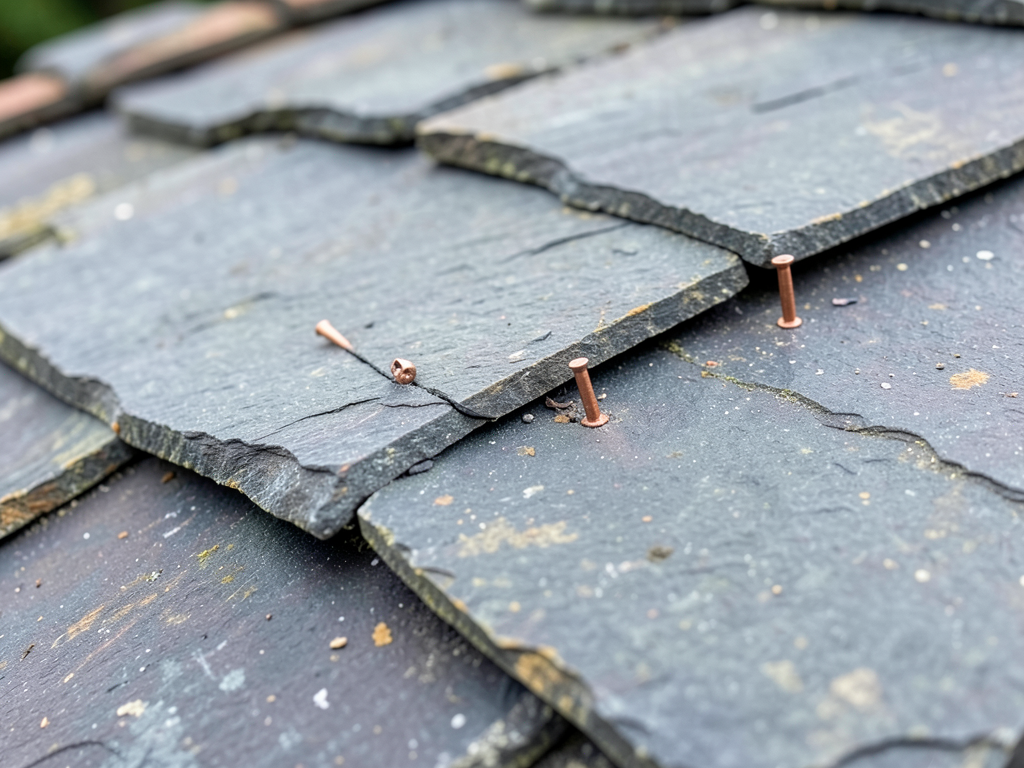
Close-up view of damaged slate tiles on a historic Druid Hills roof showing cracked edges and displaced pieces from storm impact
Common Damage Patterns in Druid Hills’ Slate and Tile Roofs
Storm damage represents the most frequent repair need for historic slate and tile roofs in the area. Atlanta’s severe thunderstorms, particularly those affecting the Emory University corridor and Fernbank Museum vicinity, generate wind speeds that can exceed 60 mph. These conditions cause slate tiles to crack along their natural cleavage planes or dislodge entirely when fastening systems fail.
Tree canopy damage creates another significant repair category. The massive oaks throughout Lullwater Road and Ponce de Leon Avenue drop branches during high-wind events, often impacting slate surfaces with enough force to fracture multiple tiles in a concentrated area. The resulting damage frequently extends beyond visible cracks, as underlying felt paper and decking may sustain hidden moisture damage.
Freeze-thaw cycles during occasional winter storms affect the mortar beds that secure many historic tile installations. Water penetrates hairline cracks, freezes, and expands, gradually deteriorating the bedding material. This process accelerates in shaded areas where sunlight cannot evaporate moisture quickly, creating persistent problem spots along north-facing roof slopes.
Diagnostic Assessment Process for Historic Roof Repairs
Professional assessment begins with a thorough inspection of the roof’s structural integrity. Technicians check for soft spots in the decking by walking the roof surface carefully and noting any deflection under foot traffic. This diagnostic step reveals areas where moisture has compromised the underlying structure without visible external signs.
Flashing systems around chimneys, dormers, and valleys receive particular attention during assessments. Many historic homes in the 30306 and 30322 zip codes feature copper flashing that has developed a protective patina over decades. While this oxidation layer provides corrosion resistance, the metal can become brittle and develop hairline cracks that allow water infiltration. Chimney Leak Emergency Repair.
Moisture meter readings taken at multiple depths help identify hidden water damage in the roof deck. These readings prove especially valuable when assessing areas beneath visible damage, as water often travels along rafters before manifesting as ceiling stains inside the home. The testing process follows protocols established in the International Residential Code for moisture detection in roofing assemblies. Roofing Dunwoody.
Repair Techniques for Slate Roofing Systems
Slate repair requires matching the original material’s thickness, color, and texture precisely. Many historic Druid Hills homes feature Vermont slate with specific color variations that became unavailable decades ago. When exact matches prove impossible, skilled craftsmen create custom slate pieces that blend seamlessly with existing materials while maintaining the roof’s historical accuracy.
Fastener selection proves critical for slate repairs. Traditional copper nails remain the preferred choice for historic applications, as they resist corrosion and allow the slate to expand and contract naturally. Stainless steel alternatives work for modern installations but may not meet historic district preservation guidelines in certain Druid Hills neighborhoods.
Replacement patterns follow the original installation’s layout meticulously. Skilled technicians maintain consistent headlap distances and side-lap spacing to ensure proper water shedding. This attention to detail prevents future leaks and preserves the roof’s architectural appearance from street level.
Tile Roofing Repair Methods and Considerations
Clay and concrete tile repairs require different approaches than slate systems. Many historic homes in the area feature mission-style barrel tiles or flat interlocking designs. These systems rely on overlapping patterns and interlocking edges rather than individual fasteners for many tiles, creating unique repair challenges.
Broken tile replacement involves carefully removing surrounding pieces to access the damaged unit. Technicians use specialized tools to avoid chipping adjacent tiles during removal. The replacement process often requires temporarily supporting the surrounding tiles while bedding the new piece in mortar or securing it with compatible fasteners.
Underlayment replacement becomes necessary when tile repairs expose deteriorated felt paper. Modern synthetic underlayments offer superior moisture protection but may not meet historic preservation standards. In these cases, contractors use #30 felt paper that matches the original installation’s specifications while providing adequate protection.
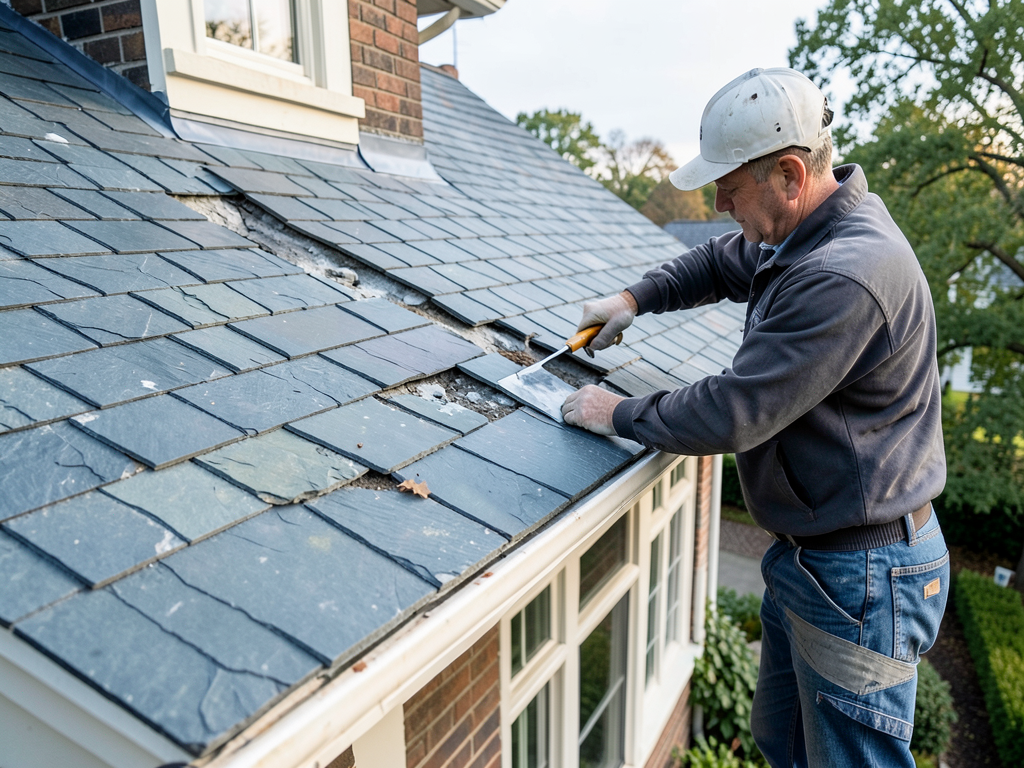
Technician demonstrating proper slate tile installation technique on a historic roof showing correct overlap patterns and fastening methods
Historic District Compliance Requirements
Druid Hills falls under multiple historic district regulations, including DeKalb County overlay districts and specific guidelines for properties near Emory University. These regulations govern material selection, repair techniques, and even the appearance of repaired areas from public vantage points. Compliance requires documentation and sometimes approval from historic preservation boards before work begins.
Material salvage represents a critical compliance requirement. Many historic district guidelines mandate that damaged materials be preserved when possible, even if replacement would be more cost-effective. This requirement extends to fasteners, flashing components, and even the original underlayment in some cases.
Color matching for repairs must meet strict standards. Replacement slate or tile must match existing materials within specified tolerances for color variation, surface texture, and weathering characteristics. Digital color matching systems help technicians achieve compliance with these requirements while maintaining the roof’s historical authenticity.
Weather Considerations for Atlanta’s Climate
Atlanta’s climate creates specific challenges for slate and tile roof repairs. Summer temperatures regularly exceed 90 degrees Fahrenheit, causing roofing materials to expand significantly. This thermal movement can stress repair areas if materials aren’t properly acclimated before installation. Technicians often schedule repairs during moderate temperature periods to minimize these effects.. Read more about High-End Luxury Roofing Options for Estates in Vinings.
High humidity levels throughout the year affect mortar curing times and adhesive performance. Portland cement mortars used for tile bedding require extended curing periods in humid conditions to achieve full strength. Rushing these timelines can result in premature failure of repaired areas.
Severe weather preparation becomes critical after repairs complete. Atlanta experiences frequent thunderstorms with wind gusts that can exceed 70 mph during summer months. Properly secured repairs must withstand these conditions while maintaining the roof’s weather-tight integrity.
Cost Factors and Investment Considerations
Historic slate and tile roof repairs typically cost more than standard asphalt shingle repairs due to material costs and specialized labor requirements. Slate tiles often cost $5-15 per square foot, while clay tiles range from $8-20 per square foot depending on quality and availability. These materials require skilled craftsmen who understand historic roofing systems, further increasing labor costs.
Insurance considerations affect repair decisions for many homeowners. Some policies provide enhanced coverage for historic materials, while others may require specific documentation or inspections before approving claims for slate or tile damage. Understanding these requirements helps homeowners navigate the claims process more effectively.
Long-term value preservation represents a significant factor in repair decisions. Properly maintained slate and tile roofs can last 75-100 years or more, making them sound investments despite higher initial repair costs. This longevity often justifies the premium pricing for specialized repair services.
Finding Qualified Roofing Contractors
Selecting contractors with specific experience in historic slate and tile repairs proves essential for successful outcomes. Look for professionals who understand the unique requirements of historic preservation, including familiarity with local historic district guidelines and experience working with period-appropriate materials and techniques.
Certifications from roofing material manufacturers indicate specialized training in installation and repair methods. GAF Master Elite contractors and similar certifications demonstrate commitment to ongoing education and adherence to industry best practices for historic roofing systems.
References from other historic home owners in the Druid Hills area provide valuable insights into a contractor’s capabilities. Ask specifically about experience with slate and tile repairs, familiarity with local historic district requirements, and success in matching existing materials for repairs.
Maintenance Strategies for Long-Term Preservation
Regular maintenance extends the life of slate and tile roofs significantly. Annual inspections identify loose tiles, deteriorating flashing, and early signs of moisture damage before they become major problems. These inspections should include checking attic spaces for signs of water infiltration that may not be visible from the roof surface. Attic Ventilation Systems.
Debris removal from roof valleys and around chimneys prevents water backup and ice dam formation during winter months. The heavy tree canopy in Druid Hills creates significant debris accumulation, particularly during fall seasons when oak leaves fall in large quantities.
Gutter maintenance directly impacts roof performance. Properly functioning gutters prevent water from backing up under roofing materials at eaves and valleys. Many historic homes feature custom-fabricated gutters that require specialized maintenance to preserve their functionality and appearance.. Read more about Dealing with Clogged Gutters from Inman Park’s Oak Trees (Is Gutter Protection Worth It?).
Emergency Repair Protocols
Storm damage requires immediate attention to prevent interior water damage. Emergency tarping services provide temporary protection while permanent repairs are scheduled. The process involves securing heavy-duty tarps over damaged areas without causing additional harm to surrounding roofing materials. Who to Call for Urgent Emergency Roof Repairs in Buckhead.
Documentation for insurance claims should begin immediately after damage occurs. Photographs from multiple angles, measurements of damaged areas, and notes about the storm event help support claims processing. Many contractors provide this documentation as part of their emergency response services.
Priority scheduling for emergency repairs depends on damage severity and weather forecasts. Active leaks threatening interior damage receive immediate attention, while less critical damage may be scheduled based on availability and weather conditions that could cause further harm.
Before and after comparison of slate roof repair showing damaged section with missing tiles and completed repair with new slate installed to match existing pattern
Frequently Asked Questions
How long do slate and tile roof repairs typically take?
Most slate and tile roof repairs in historic Druid Hills homes require 2-5 days depending on the extent of damage and weather conditions. Complex repairs involving structural deck replacement or extensive flashing work may extend to 7-10 days.
Will my homeowner’s insurance cover slate and tile roof repairs?
Most standard homeowner’s insurance policies cover damage from storms, falling trees, and other sudden events. However, coverage for wear-and-tear or gradual deterioration varies by policy. Many historic district homes qualify for specialized coverage that better addresses the unique needs of slate and tile roofing systems.
How can I tell if my historic roof needs repairs?
Signs include cracked or missing tiles, water stains on interior ceilings, visible sagging in the roof deck, and damaged or missing flashing around chimneys and vents. Annual professional inspections can identify problems before they cause significant damage.
Are there specific building codes for historic roof repairs in Druid Hills?
Yes, repairs must comply with both modern building codes and historic district guidelines. The DeKalb County Historic Preservation Ordinance and specific neighborhood overlay districts establish requirements for material preservation, repair techniques, and visual compatibility with existing structures.
What makes slate and tile roof repairs more expensive than standard roofing?
The specialized skills required, the cost of matching historic materials, and the careful techniques needed to preserve surrounding materials all contribute to higher costs. Additionally, compliance with historic preservation requirements often involves extra steps that standard roofing repairs don’t require.
Protecting Your Historic Investment
Historic homes in Druid Hills represent significant architectural and financial investments that deserve specialized care when roofing repairs become necessary. The combination of Atlanta’s challenging climate and the age of these structures creates repair scenarios that demand expertise beyond standard roofing services.
Successful slate and tile roof repairs require understanding both the technical aspects of roofing systems and the historical context of the structures they protect. This knowledge ensures repairs preserve both the functionality and the architectural integrity of these irreplaceable homes.
When damage occurs, prompt professional assessment prevents minor issues from escalating into major problems. The right contractor brings not just roofing expertise but also understanding of historic preservation requirements and local building codes that govern work in Druid Hills.
Quality repairs protect your home’s value while maintaining its historical character for future generations. The investment in proper repair techniques pays dividends through extended roof life, preserved architectural integrity, and maintained property values in this prestigious Atlanta neighborhood.
- Contact Our Office
Call (770) 610-9366 during business hours or use our online scheduling system to request an inspection appointment.
- Property Assessment
Our technician will evaluate your roof’s condition, identify specific repair needs, and document any damage with photos and measurements.
- Detailed Proposal
Receive a comprehensive written estimate outlining repair options, material requirements, and projected timelines for completion.
- Permit Acquisition
We handle all necessary permits and historic district approvals before beginning any repair work on your property.
- Professional Repairs
Our skilled craftsmen complete repairs using period-appropriate materials and techniques that preserve your home’s historic character.
Don’t wait for minor roof damage to become a major problem. Call (770) 610-9366 today to schedule your professional roof inspection and protect your historic Druid Hills home from Atlanta’s challenging weather conditions.
Pick up the phone and call (770) 610-9366 before the next storm hits. Our emergency repair services are available 24/7 for urgent situations affecting your historic slate or tile roof. For more information, visit Georgia State Minimum Standard Residential Code.
You may also find this helpful. Why Your Morningside Attic is So Hot and How it’s Killing Your Roof.
{
“@context”: “https://schema.org”,
“@type”: “BlogPosting”,
“headline”: “Repairing Slate and Tile Roofs on Historic Homes in Druid Hills”,
“description”: “Expert slate and tile roof repair for historic Druid Hills homes. Licensed Atlanta roofers specializing in preservation, code compliance, and weather damage restoration.”,
“wordCount”: 2304,
“datePublished”: “2026-03-04T15:25:00.000Z”,
“dateModified”: “2026-03-04T15:25:00.000Z”,
“inLanguage”: “en-US”,
“mainEntityOfPage”: {
“@type”: “WebPage”,
“@id”: “https://firstchoiceroofingatlanta.com”
},
“publisher”: {
“@type”: “LocalBusiness”,
“name”: “First Choice Roofing Atlanta”,
“url”: “https://firstchoiceroofingatlanta.com”
},
“author”: {
“@type”: “Organization”,
“name”: “First Choice Roofing Atlanta”,
“url”: “https://firstchoiceroofingatlanta.com”
},
“image”: {
“@type”: “ImageObject”,
“url”: “https://firstchoiceroofingatlanta.com/wp-content/uploads/2026/03/repairing-slate-and-tile-roofs-on-historic-homes-i-1.png”
}
}
{
“@context”: “https://schema.org”,
“@type”: “RoofingContractor”,
“name”: “First Choice Roofing Atlanta”,
“url”: “https://firstchoiceroofingatlanta.com”,
“address”: {
“@type”: “PostalAddress”,
“addressLocality”: “Atlanta”
},
“areaServed”: {
“@type”: “City”,
“name”: “Atlanta”
}
}
{
“@context”: “https://schema.org”,
“@type”: “FAQPage”,
“mainEntity”: [
{
“@type”: “Question”,
“name”: “How long do slate and tile roof repairs typically take?”,
“acceptedAnswer”: {
“@type”: “Answer”,
“text”: “Most slate and tile roof repairs in historic Druid Hills homes require 2-5 days depending on the extent of damage and weather conditions. Complex repairs involving structural deck replacement or extensive flashing work may extend to 7-10 days.”
}
},
{
“@type”: “Question”,
“name”: “Will my homeowner’s insurance cover slate and tile roof repairs?”,
“acceptedAnswer”: {
“@type”: “Answer”,
“text”: “Most standard homeowner’s insurance policies cover damage from storms, falling trees, and other sudden events. However, coverage for wear-and-tear or gradual deterioration varies by policy. Many historic district homes qualify for specialized coverage that better addresses the unique needs of slate and tile roofing systems.”
}
},
{
“@type”: “Question”,
“name”: “How can I tell if my historic roof needs repairs?”,
“acceptedAnswer”: {
“@type”: “Answer”,
“text”: “Signs include cracked or missing tiles, water stains on interior ceilings, visible sagging in the roof deck, and damaged or missing flashing around chimneys and vents. Annual professional inspections can identify problems before they cause significant damage.”
}
},
{
“@type”: “Question”,
“name”: “Are there specific building codes for historic roof repairs in Druid Hills?”,
“acceptedAnswer”: {
“@type”: “Answer”,
“text”: “Yes, repairs must comply with both modern building codes and historic district guidelines. The DeKalb County Historic Preservation Ordinance and specific neighborhood overlay districts establish requirements for material preservation, repair techniques, and visual compatibility with existing structures.”
}
},
{
“@type”: “Question”,
“name”: “What makes slate and tile roof repairs more expensive than standard roofing?”,
“acceptedAnswer”: {
“@type”: “Answer”,
“text”: “The specialized skills required, the cost of matching historic materials, and the careful techniques needed to preserve surrounding materials all contribute to higher costs. Additionally, compliance with historic preservation requirements often involves extra steps that standard roofing repairs don’t require.”
}
}
]
}
{
“@context”: “https://schema.org”,
“@type”: “HowTo”,
“name”: “How to Schedule Your Roof Inspection”,
“step”: [
{
“@type”: “HowToStep”,
“position”: 1,
“name”: “Contact Our Office”,
“text”: “Call (770) 610-9366 during business hours or use our online scheduling system to request an inspection appointment.”
},
{
“@type”: “HowToStep”,
“position”: 2,
“name”: “Property Assessment”,
“text”: “Our technician will evaluate your roof’s condition, identify specific repair needs, and document any damage with photos and measurements.”
},
{
“@type”: “HowToStep”,
“position”: 3,
“name”: “Detailed Proposal”,
“text”: “Receive a comprehensive written estimate outlining repair options, material requirements, and projected timelines for completion.”
},
{
“@type”: “HowToStep”,
“position”: 4,
“name”: “Permit Acquisition”,
“text”: “We handle all necessary permits and historic district approvals before beginning any repair work on your property.”
},
{
“@type”: “HowToStep”,
“position”: 5,
“name”: “Professional Repairs”,
“text”: “Our skilled craftsmen complete repairs using period-appropriate materials and techniques that preserve your home’s historic character.”
}
],
“image”: “https://firstchoiceroofingatlanta.com/wp-content/uploads/2026/03/repairing-slate-and-tile-roofs-on-historic-homes-i-1.png”
}
{
“@context”: “https://schema.org”,
“@type”: “BreadcrumbList”,
“itemListElement”: [
{
“@type”: “ListItem”,
“position”: 1,
“name”: “Home”,
“item”: “https://firstchoiceroofingatlanta.com”
},
{
“@type”: “ListItem”,
“position”: 2,
“name”: “Blog”,
“item”: “https://firstchoiceroofingatlanta.com/blog”
},
{
“@type”: “ListItem”,
“position”: 3,
“name”: “Repairing Slate and Tile Roofs on Historic Homes in Druid Hills”
}
]
}
{
“@context”: “https://schema.org”,
“@type”: “Service”,
“serviceType”: “Roofing”,
“provider”: {
“@type”: “LocalBusiness”,
“name”: “First Choice Roofing Atlanta”,
“url”: “https://firstchoiceroofingatlanta.com”
},
“areaServed”: {
“@type”: “City”,
“name”: “Atlanta”
},
“description”: “Expert slate and tile roof repair for historic Druid Hills homes. Licensed Atlanta roofers specializing in preservation, code compliance, and weather damage restoration.”
}