
Understanding Ghost Leaks and Attic Condensation in Shaded Marietta Neighborhoods
When Marietta homeowners notice water stains on their ceilings but haven’t seen a drop of rain, they’re often dealing with what we call a “ghost leak.” This mysterious moisture problem isn’t a roof failure at all—it’s attic condensation, a common issue in shaded neighborhoods where poor ventilation meets Georgia’s high humidity. Understanding the difference between a true roof leak and attic condensation can save you thousands in unnecessary repairs and prevent serious mold problems. EPA Mold Information.
What Makes Marietta Homes Vulnerable to Ghost Leaks
Marietta’s older neighborhoods like East Cobb and West Side feature beautiful mature trees that create significant shade. While these trees lower cooling costs in summer, they also contribute to moisture problems by blocking sunlight that would normally dry out roof surfaces. The combination of dense tree canopy, Georgia’s 70%+ relative humidity, and older attic ventilation systems creates perfect conditions for condensation to form on the underside of roof decks. Attic Ventilation Systems.
The problem intensifies during seasonal temperature swings common in North Georgia. When warm, humid air from your living space rises into a cooler attic space, moisture condenses on cold surfaces just like water droplets form on a cold glass of sweet tea. This condensation then drips onto insulation, drywall, and wood framing, creating water stains that look identical to active roof leaks.
Identifying Attic Condensation: The “Internal” Moisture Problem
Attic condensation typically shows distinct patterns that help differentiate it from actual roof leaks. You’ll notice dark spots on multiple rafters or roof sheathing that appear in clusters rather than isolated locations. The moisture often feels cool to the touch and may have a musty smell. During cold snaps, you might even see frost buildup on the underside of your roof deck—a clear sign of condensation.. Read more about Why Shingle Blistering is Often Mistaken for Hail Damage in Brookhaven.
Common causes include bathroom or kitchen exhaust fans venting directly into the attic instead of outdoors, inadequate soffit ventilation, missing or damaged ridge vents, and high indoor humidity from daily activities like cooking and showering. In Marietta’s older homes, original insulation may have settled, creating cold spots where condensation forms more readily.
Key signs of attic condensation:
- Moisture appears during cold weather or temperature swings, not just during rain
- Water stains appear on multiple rafters in a pattern
- Insulation feels damp but isn’t wet through to the ceiling below
- No active dripping during rainfall
- White mold or mildew growth on wood surfaces
Identifying a True Roof Leak: The “External” Moisture Problem
A genuine roof leak behaves differently and has distinct characteristics. Water from a roof leak typically appears as isolated stains that follow the path of gravity through your home’s structure. You’ll notice staining directly below specific roof penetrations like chimneys, vent pipes, or valleys. The moisture feels warmer if it’s from active rain and often appears as actual dripping during storms. Chimney Leak Emergency Repair.
Common leak sources include damaged or missing shingles, failed pipe boots, cracked flashing around chimneys or skylights, and ice damming (though rare in Georgia). In Marietta’s older neighborhoods, many homes have reached the 20-25 year mark where asphalt shingles naturally begin to fail, especially on south-facing slopes that receive the most sun exposure.
Key signs of a roof leak:
- Moisture appears during or immediately after rainfall
- Water stains are isolated to specific locations below roof penetrations
- Wood rot or deterioration around chimneys, vents, or valleys
- Missing, cracked, or curling shingles visible from ground level
- Damp spots that feel warm to the touch during active leaks
The 5-Point Comparison Checklist
Use this checklist to quickly determine whether you’re dealing with condensation or a true leak:
| Factor | Attic Condensation | Roof Leak |
|---|---|---|
| Timing | Appears during cold snaps or humidity spikes | Appears during or after rainfall |
| Location | Widespread on multiple rafters | Isolated near roof penetrations |
| Visual Appearance | Dark spots, white mold, frost buildup | Isolated stains, active dripping |
| Temperature | Cool to the touch | Warm during active rain |
| Smell | Musty or mildew odor | Earthy or no distinct smell |
Atlanta-Specific Considerations for Marietta Homes
Marietta’s climate creates unique challenges for moisture management. Georgia’s Building Code requires minimum ventilation ratios of 1 square foot of net free ventilation area per 150 square feet of attic space, but many older Marietta homes were built before these standards existed. The Georgia State Minimum Standard Residential Code (IRC with GA amendments) specifically addresses ventilation requirements in Section R806, which many pre-2000 homes don’t meet.. Read more about Hip Roof vs Gable Roof — Which Shape Protects Your Marietta Home Better Against High Winds?.
The high dew point in Georgia summers—often exceeding 70°F—means moisture-laden air is constantly trying to escape into cooler attic spaces. Marietta’s mature tree canopy, while beautiful, creates additional problems by preventing sunlight from drying roof surfaces and by dropping leaves and debris that can clog gutters and create water backup points.. Read more about Why Your Roof Decking Might Be Wavy (And What it Means for Your Shingles) in Chamblee.
Pine straw buildup in gutters is particularly problematic in Marietta’s wooded neighborhoods. This organic debris holds moisture against roof edges and can create ice dams during rare freezing events, forcing water under shingles. The combination of pine straw, Georgia humidity, and temperature fluctuations creates a perfect storm for both condensation and actual leaks.
The Moisture Meter Test: Diagnosing Your Problem
Before calling a roofer, you can perform a simple moisture meter test to help identify the source of your problem. A moisture meter reads the percentage of water in building materials. For attic condensation, readings will be highest near the roof deck and decrease as you move downward through insulation. For roof leaks, readings will be concentrated in specific areas directly below suspected leak points.
Take readings at multiple depths: surface of the ceiling drywall, top of insulation, and attic side of the roof deck. Condensation typically shows higher readings at the roof deck level with decreasing moisture as you move down. A leak shows the opposite pattern—highest readings at the ceiling level with decreasing moisture upward.
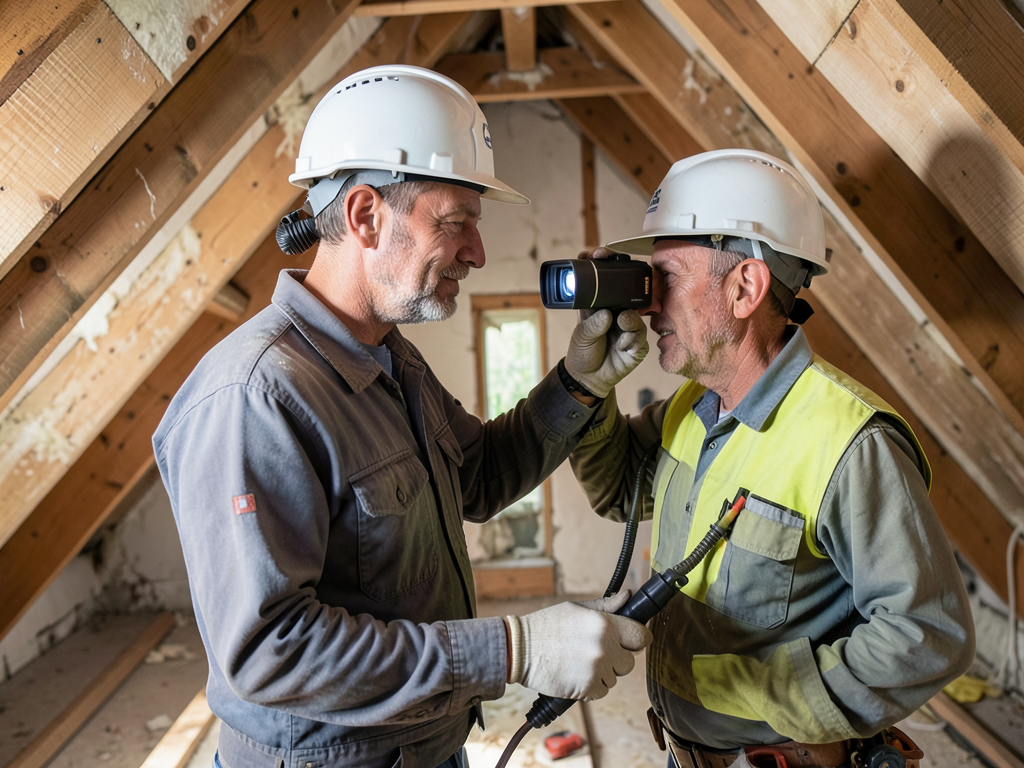
Professional roofers use thermal imaging cameras to detect temperature differences that indicate moisture problems. Condensation appears as cool spots on thermal scans, while active leaks show as warm spots during cold weather or cool spots during warm weather when compared to surrounding dry areas.
Professional Solutions for Both Problems
If you’re dealing with attic condensation, solutions focus on moisture control and ventilation improvement. This might include installing additional soffit vents, adding a ridge vent system, repairing or replacing bathroom exhaust fans that vent into the attic, and improving attic insulation to prevent temperature differentials. In some cases, installing a powered attic ventilator can help manage extreme humidity conditions. Repairing Slate and Tile Roofs on Historic Homes in Druid Hills.
For true roof leaks, repairs depend on the source. Failed pipe boots require replacing the rubber seal around plumbing vents. Damaged flashing needs removal and replacement with new metal flashing properly sealed. Missing or damaged shingles require patching or full replacement of affected roof sections. In older Marietta homes, a full roof replacement might be more cost-effective than repeated spot repairs.
Sometimes both problems exist simultaneously. A minor leak can create enough moisture to cause condensation issues, while poor ventilation can make a small leak appear much worse by preventing proper drying. A comprehensive inspection by a qualified roofing contractor can identify all contributing factors. Roofing Dunwoody.
Preventing Future Moisture Problems
Prevention starts with regular maintenance. Clean your gutters at least twice yearly, especially important in Marietta where pine straw and oak leaves accumulate rapidly. Check your attic annually for signs of moisture, paying special attention to areas around chimneys, vents, and in the corners where air circulation is poorest.
Install bathroom and kitchen exhaust fans that vent directly outdoors rather than into the attic. Use humidity monitors in your home to keep indoor relative humidity between 30-50%. During extreme humidity events, consider using a whole-house dehumidifier to reduce the moisture load on your attic space.
For new construction or major renovations in Marietta, consider upgrading to modern ventilation systems that exceed minimum code requirements. The additional cost is minimal compared to the potential damage from moisture problems. Some homeowners install smart attic monitors that alert them to temperature and humidity spikes before condensation becomes visible.
When to Call a Professional
Don’t wait until you see visible mold growth or extensive wood rot. If you notice recurring moisture stains, musty odors in your attic, or if your moisture meter readings consistently show elevated levels, it’s time for professional inspection. The cost of inspection is minimal compared to the potential expense of mold remediation, which can easily exceed $10,000 in severe cases.
Choose a contractor who specializes in both roofing and attic ventilation systems. Many general roofers only address surface issues without understanding the building science behind moisture problems. Look for certifications from organizations like the Building Performance Institute (BPI) or manufacturers’ ventilation system training.
Before any major repairs, get a detailed written assessment that includes thermal imaging results, moisture meter readings, and specific recommendations with cost estimates for each solution. This documentation is also valuable if you need to file an insurance claim or if the problem requires warranty work.
Frequently Asked Questions
How can I tell if my ceiling stain is from a leak or condensation?
Check the timing and location. Condensation appears during cold weather or humidity spikes and shows as multiple spots on rafters. Roof leaks appear during or after rain and are isolated near specific roof penetrations. Use a moisture meter to confirm—condensation shows highest readings at the roof deck.
Can attic condensation cause structural damage?
Yes, prolonged condensation can cause wood rot, delamination of plywood roof decks, and mold growth that compromises structural integrity. It can also damage insulation, reducing its effectiveness and increasing energy costs. In severe cases, condensation has caused roof collapses in poorly ventilated attics.
How much does it cost to fix attic ventilation problems?
Costs vary widely depending on the solution needed. Adding soffit vents might cost $500-1,000, while a complete ridge vent system installation runs $1,500-3,000. Powered attic ventilators cost $800-1,500 installed. Most homeowners spend $1,000-2,500 to properly address ventilation issues.
Take Action Before Minor Moisture Becomes Major Damage
Ghost leaks and attic condensation might seem like minor annoyances, but they’re warning signs of bigger problems developing in your home’s structure. The humid Georgia climate means moisture issues never resolve themselves—they only get worse with time. What starts as a small water stain can escalate to thousands in mold remediation costs and structural repairs.
Don’t let another season pass with unexplained moisture in your Marietta home. Whether you’re dealing with mysterious ceiling stains, musty attic odors, or concerns about your home’s ventilation system, professional inspection can identify the root cause and prevent costly damage.
Call (770) 610-9366 today to schedule your comprehensive attic and roof inspection. Our experienced technicians use thermal imaging, moisture meters, and decades of local experience to diagnose your specific moisture problem and recommend the most cost-effective solution. Don’t wait for the next cold snap or heavy rain to reveal the extent of your moisture damage.
Pick up the phone and call (770) 610-9366 before the next storm hits. Your home’s structural integrity and your family’s health depend on addressing moisture problems promptly and professionally. For more information, visit International Residential Code Ventilation Requirements.
You may also find this helpful. Why Vaulted Ceilings Often Lead to Roof Rot in Modern Duluth Homes.
{
“@context”: “https://schema.org”,
“@type”: “BlogPosting”,
“headline”: “Understanding Ghost Leaks and Attic Condensation in Shaded Marietta Neighborhoods”,
“description”: “Spot the difference between attic condensation and real roof leaks in Marietta homes. Learn the causes, signs, and solutions for mysterious moisture issues.”,
“wordCount”: 1851,
“datePublished”: “2026-05-28T09:23:00.000Z”,
“dateModified”: “2026-05-28T09:23:00.000Z”,
“inLanguage”: “en-US”,
“mainEntityOfPage”: {
“@type”: “WebPage”,
“@id”: “https://firstchoiceroofingatlanta.com”
},
“publisher”: {
“@type”: “LocalBusiness”,
“name”: “First Choice Roofing Atlanta”,
“url”: “https://firstchoiceroofingatlanta.com”
},
“author”: {
“@type”: “Organization”,
“name”: “First Choice Roofing Atlanta”,
“url”: “https://firstchoiceroofingatlanta.com”
},
“image”: {
“@type”: “ImageObject”,
“url”: “https://firstchoiceroofingatlanta.com/wp-content/uploads/2026/03/understanding-ghost-leaks-and-attic-condensation-i-1.png”
}
}
{
“@context”: “https://schema.org”,
“@type”: “RoofingContractor”,
“name”: “First Choice Roofing Atlanta”,
“url”: “https://firstchoiceroofingatlanta.com”,
“address”: {
“@type”: “PostalAddress”,
“addressLocality”: “Atlanta”
},
“areaServed”: {
“@type”: “City”,
“name”: “Atlanta”
}
}
{
“@context”: “https://schema.org”,
“@type”: “FAQPage”,
“mainEntity”: [
{
“@type”: “Question”,
“name”: “How can I tell if my ceiling stain is from a leak or condensation?”,
“acceptedAnswer”: {
“@type”: “Answer”,
“text”: “Check the timing and location. Condensation appears during cold weather or humidity spikes and shows as multiple spots on rafters. Roof leaks appear during or after rain and are isolated near specific roof penetrations. Use a moisture meter to confirm—condensation shows highest readings at the roof deck.”
}
},
{
“@type”: “Question”,
“name”: “Can attic condensation cause structural damage?”,
“acceptedAnswer”: {
“@type”: “Answer”,
“text”: “Yes, prolonged condensation can cause wood rot, delamination of plywood roof decks, and mold growth that compromises structural integrity. It can also damage insulation, reducing its effectiveness and increasing energy costs. In severe cases, condensation has caused roof collapses in poorly ventilated attics.”
}
}
]
}
{
“@context”: “https://schema.org”,
“@type”: “BreadcrumbList”,
“itemListElement”: [
{
“@type”: “ListItem”,
“position”: 1,
“name”: “Home”,
“item”: “https://firstchoiceroofingatlanta.com”
},
{
“@type”: “ListItem”,
“position”: 2,
“name”: “Blog”,
“item”: “https://firstchoiceroofingatlanta.com/blog”
},
{
“@type”: “ListItem”,
“position”: 3,
“name”: “Understanding Ghost Leaks and Attic Condensation in Shaded Marietta Neighborhoods”
}
]
}
{
“@context”: “https://schema.org”,
“@type”: “Service”,
“serviceType”: “Roofing”,
“provider”: {
“@type”: “LocalBusiness”,
“name”: “First Choice Roofing Atlanta”,
“url”: “https://firstchoiceroofingatlanta.com”
},
“areaServed”: {
“@type”: “City”,
“name”: “Atlanta”
},
“description”: “Spot the difference between attic condensation and real roof leaks in Marietta homes. Learn the causes, signs, and solutions for mysterious moisture issues.”
}