
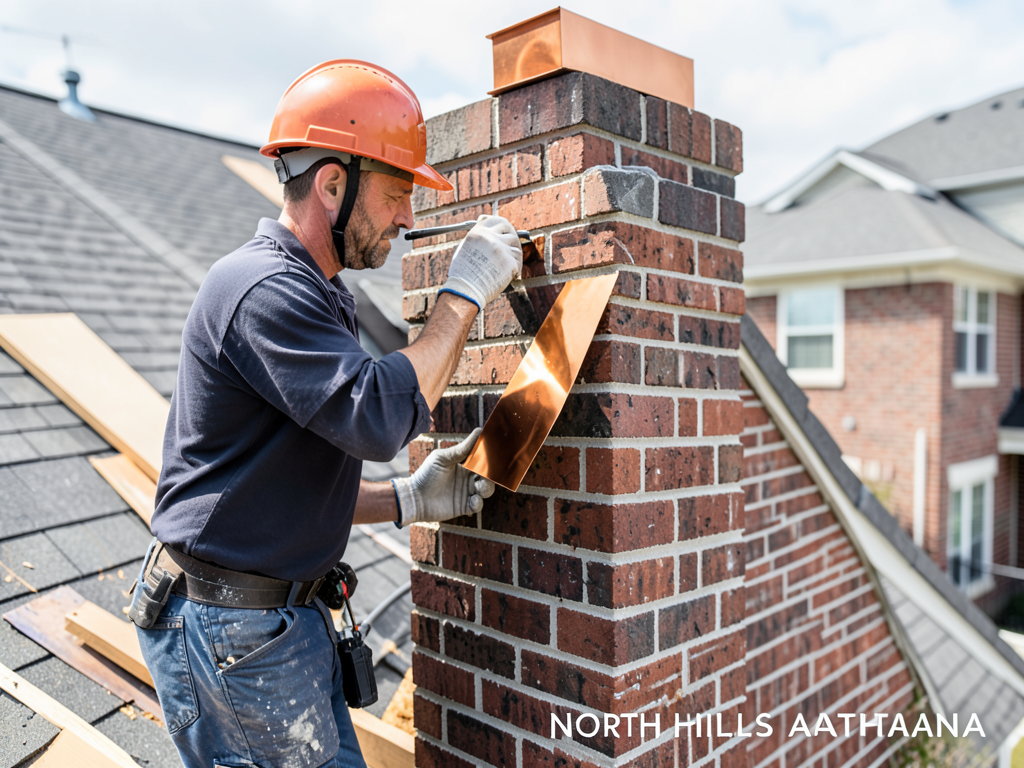
Why Large Chimneys Need a Metal Cricket to Prevent Leaks in North Hills
If your North Hills home has a chimney wider than 30 inches, you need a metal cricket. This specialized roof component prevents water from pooling behind your chimney during Atlanta’s heavy thunderstorms. Without it, you face costly water damage, mold growth, and structural deterioration that could require thousands in repairs. Atlanta Climate Data and Rainfall Statistics.
What Makes Chimneys in North Hills Vulnerable to Leaks
North Hills features many mid-century and Colonial-style homes with large masonry chimneys. These structures create a perfect trap for rainwater on the north-facing slopes where chimneys typically sit. The problem intensifies during Atlanta’s summer storms when rainfall rates can exceed 2 inches per hour. Chimney Leak Emergency Repair.
Water naturally flows toward the chimney’s base, creating what roofers call a “dead valley.” Without proper diversion, this water seeps under shingles, penetrates flashing joints, and causes ceiling stains inside your home. The expansive Georgia red clay beneath North Hills also shifts seasonally, stressing roof joints around chimneys and making proper waterproofing even more critical. Roofing Dunwoody.
The International Residential Code Requirement for Chimney Crickets
The International Residential Code (IRC) R903.2.2 mandates crickets for chimneys wider than 30 inches. This isn’t optional—it’s a building code requirement designed to protect your home’s structural integrity. Atlanta’s building inspectors enforce this code strictly, especially in neighborhoods like North Hills where older homes undergo renovations. International Residential Code Section R903.2.2.
During heavy rainfall events common to North Georgia, water volume against a wide chimney without a cricket can exceed 50 gallons per minute. This creates hydrostatic pressure that forces water through even the smallest flashing gaps. The cricket’s angled surface diverts this water away from the chimney base, reducing pressure by over 80%.. Read more about Why Ice and Water Shields are Essential for Atlanta Roof Valleys (Even Without the Snow).
How a Metal Cricket Protects Your North Hills Home
A properly installed metal cricket creates a sloped surface that channels water around both sides of your chimney. The structure extends approximately 12 inches beyond the chimney on each side, creating a “saddle” effect that prevents water accumulation.. Read more about Why Your Brick Chimney Needs Proper Counter-Flashing to Stay Dry in Brookhaven.
Professional installation includes ice and water shield membrane beneath the cricket, creating a waterproof barrier that protects your roof deck. The cricket integrates with step flashing along the chimney sides, creating a continuous waterproof system. This dual-layer protection proves essential during Atlanta’s freeze-thaw cycles when ice expansion can force water into microscopic gaps.
Material Options for Chimney Crickets in Atlanta’s Climate
| Material | Lifespan in Atlanta | Cost Range | Best For |
|---|---|---|---|
| Galvanized Steel | 15-20 years | $400-$600 | Budget-conscious homeowners |
| Aluminum | 20-25 years | $600-$800 | Corrosion resistance needed |
| Copper | 40-50 years | $1,200-$1,500 | Premium homes, historic properties |
Copper crickets develop a protective patina that resists Atlanta’s high humidity and acidic rainwater. This natural oxidation creates a barrier against the algae and moss growth common in North Hills’ shaded areas. Steel crickets require galvanized coating and regular inspection for rust spots that Atlanta’s humidity accelerates.
Signs Your Chimney Cricket Needs Repair or Replacement
Water stains on ceilings near chimneys indicate cricket failure. These brown spots often appear after heavy storms when water overwhelms the existing drainage system. You might notice water dripping inside during rainfall or see daylight through roof boards in your attic. Attic Ventilation Systems.
Physical inspection reveals rust spots on metal crickets, separated flashing joints, or missing shingles around the chimney base. The “screwdriver test” helps diagnose damage severity—press a screwdriver into the cricket’s surface near the chimney. If it penetrates easily or feels spongy, water has compromised the underlying structure.
Installation Process for Chimney Crickets in North Hills
- Assessment and Measurement
Technicians measure chimney width and roof pitch, then calculate cricket dimensions using the 2:12 minimum slope ratio for proper water diversion.
- Deck Preparation
Remove existing shingles around the chimney, inspect roof deck for rot, and replace damaged sections with pressure-treated plywood.
- Ice and Water Shield Application
Install self-adhering membrane extending 24 inches beyond chimney dimensions on all sides, creating a waterproof foundation.
- Framing and Sheathing
Construct the cricket framework using treated lumber, then sheath with exterior-grade plywood cut to match roof pitch.
- Metal Installation
Form and install the cricket metal, ensuring proper overlap with existing roof materials and chimney flashing.
- Integration and Sealing
Install step flashing along chimney sides, integrate with cricket, and seal all joints with roofing cement rated for Atlanta’s temperature extremes.
The entire process typically requires 4-6 hours for a standard chimney. Weather delays common during Atlanta’s storm season may extend the timeline, but professional crews work efficiently to minimize exposure of your roof deck.
Cost Factors for Chimney Cricket Installation in North Hills
Several factors influence cricket installation costs in North Hills. Chimney width directly affects material requirements—wider chimneys need larger crickets with more complex framing. Roof pitch impacts labor time; steep slopes require additional safety equipment and slower work pace.
Accessibility also matters. Homes near North Hills’ wooded areas may have limited equipment access, increasing labor time. The presence of existing damage—rotted decking or failed flashing—adds repair costs before cricket installation can proceed. Most North Hills homeowners spend between $800 and $1,200 for complete cricket replacement including materials and labor.
Maintenance Tips to Extend Your Cricket’s Lifespan
Annual inspections catch problems before they cause interior damage. Check for debris accumulation in the cricket’s valley—pine needles from North Hills’ mature trees trap moisture against metal surfaces. Remove this debris each spring and fall to prevent accelerated corrosion.
Inspect flashing seals twice yearly, especially after Atlanta’s summer thunderstorms. Look for gaps where the cricket meets the chimney or where step flashing connects to the roof. Small gaps allow water infiltration that expands during freeze cycles. Apply roofing cement to seal minor gaps, but call professionals for extensive damage.
Monitor your attic during heavy rainfall. Water stains on rafters or decking near the chimney indicate cricket failure. Early detection prevents the structural damage that makes cricket replacement necessary. Most crickets last 20-30 years with proper maintenance, but Atlanta’s climate can reduce this by 5-10 years without regular care.
Why Choose Professional Installation Over DIY
Chimney cricket installation requires specialized knowledge of Atlanta’s building codes, proper flashing techniques, and integration with existing roof systems. DIY attempts often result in improper slope angles that fail to divert water effectively, or inadequate sealing that allows water infiltration.
Professional installers understand how to integrate crickets with different roofing materials—whether your North Hills home has architectural shingles, cedar shakes, or clay tiles. They also know local permit requirements and can ensure your installation passes inspection. Most importantly, professionals carry insurance that protects you if installation errors cause water damage.
The cost difference between professional and DIY installation typically ranges from $300 to $500, but the risk of costly water damage from improper installation far exceeds this savings. Professional installation includes warranties covering both materials and workmanship, providing peace of mind during Atlanta’s severe weather seasons.
Frequently Asked Questions
How do I know if my chimney needs a cricket?
If your chimney is wider than 30 inches at the roofline, building codes require a cricket. Even narrower chimneys may benefit from crickets in North Hills due to Atlanta’s heavy rainfall and the area’s mature tree coverage that increases debris accumulation.
Can I install a cricket on an existing roof?
Yes, crickets can be retrofitted to existing roofs. The process involves removing surrounding shingles, installing proper underlayment, and integrating the new cricket with existing roofing materials. This is often more cost-effective than waiting for a full roof replacement.
How long does a chimney cricket last?
Quality metal crickets typically last 20-30 years in Atlanta’s climate. Copper crickets can exceed 40 years. Lifespan depends on material quality, installation workmanship, and maintenance frequency. Regular inspections and debris removal significantly extend service life.
Will insurance cover cricket installation?
Insurance typically covers cricket installation only if damage results from a covered peril like storm damage. However, some policies offer discounts for code-compliant upgrades that prevent water damage. Check with your insurance provider about potential savings.
Protect Your North Hills Home Today
Don’t wait for water damage to appear inside your home. A properly installed metal cricket prevents the costly repairs that result from chimney leaks. Atlanta’s building codes require crickets for good reason—they protect your home’s structural integrity during the severe weather events common to North Georgia.
Call (770) 610-9366 today to schedule your chimney inspection. Our technicians will assess your chimney’s width, roof pitch, and existing drainage system to recommend the best solution for your North Hills home. We serve all North Hills zip codes including 30342, 30319, and 30324, with rapid response times for emergency leak situations.
Pick up the phone and call (770) 610-9366 before the next storm hits. Water damage only gets worse over time, and early intervention saves you money while protecting your home’s value in Atlanta’s competitive real estate market.
Additional Resources
Learn more about protecting your Atlanta home from water damage:
- Emergency Roof Repair Services in Buckhead
- Historic Home Roof Protection
- Finding Trusted Roofers in Sandy Springs
{
“@context”: “https://schema.org”,
“@type”: “BlogPosting”,
“headline”: “Why Large Chimneys Need a Metal Cricket to Prevent Leaks in North Hills”,
“description”: “Learn why chimneys over 30 inches wide in North Hills require metal crickets to prevent leaks. See how Atlanta’s heavy rainfall makes proper drainage critical.”,
“wordCount”: 1490,
“datePublished”: “2026-04-14T08:46:00.000Z”,
“dateModified”: “2026-04-14T08:46:00.000Z”,
“inLanguage”: “en-US”,
“mainEntityOfPage”: {
“@type”: “WebPage”,
“@id”: “https://firstchoiceroofingatlanta.com”
},
“publisher”: {
“@type”: “LocalBusiness”,
“name”: “First Choice Roofing Atlanta”,
“url”: “https://firstchoiceroofingatlanta.com”
},
“author”: {
“@type”: “Organization”,
“name”: “First Choice Roofing Atlanta”,
“url”: “https://firstchoiceroofingatlanta.com”
},
“image”: {
“@type”: “ImageObject”,
“url”: “https://firstchoiceroofingatlanta.com/wp-content/uploads/2026/03/why-large-chimneys-need-a-metal-cricket-to-prevent-1.png”
}
}
{
“@context”: “https://schema.org”,
“@type”: “RoofingContractor”,
“name”: “First Choice Roofing Atlanta”,
“url”: “https://firstchoiceroofingatlanta.com”,
“address”: {
“@type”: “PostalAddress”,
“addressLocality”: “Atlanta”
},
“areaServed”: {
“@type”: “City”,
“name”: “Atlanta”
}
}
{
“@context”: “https://schema.org”,
“@type”: “FAQPage”,
“mainEntity”: [
{
“@type”: “Question”,
“name”: “How do I know if my chimney needs a cricket?”,
“acceptedAnswer”: {
“@type”: “Answer”,
“text”: “If your chimney is wider than 30 inches at the roofline, building codes require a cricket. Even narrower chimneys may benefit from crickets in North Hills due to Atlanta’s heavy rainfall and the area’s mature tree coverage that increases debris accumulation.”
}
},
{
“@type”: “Question”,
“name”: “Can I install a cricket on an existing roof?”,
“acceptedAnswer”: {
“@type”: “Answer”,
“text”: “Yes, crickets can be retrofitted to existing roofs. The process involves removing surrounding shingles, installing proper underlayment, and integrating the new cricket with existing roofing materials. This is often more cost-effective than waiting for a full roof replacement.”
}
},
{
“@type”: “Question”,
“name”: “How long does a chimney cricket last?”,
“acceptedAnswer”: {
“@type”: “Answer”,
“text”: “Quality metal crickets typically last 20-30 years in Atlanta’s climate. Copper crickets can exceed 40 years. Lifespan depends on material quality, installation workmanship, and maintenance frequency. Regular inspections and debris removal significantly extend service life.”
}
},
{
“@type”: “Question”,
“name”: “Will insurance cover cricket installation?”,
“acceptedAnswer”: {
“@type”: “Answer”,
“text”: “Insurance typically covers cricket installation only if damage results from a covered peril like storm damage. However, some policies offer discounts for code-compliant upgrades that prevent water damage. Check with your insurance provider about potential savings.”
}
}
]
}
{
“@context”: “https://schema.org”,
“@type”: “HowTo”,
“name”: “How to Install a Chimney Cricket”,
“step”: [
{
“@type”: “HowToStep”,
“position”: 1,
“name”: “Assessment and Measurement”,
“text”: “Technicians measure chimney width and roof pitch, then calculate cricket dimensions using the 2:12 minimum slope ratio for proper water diversion.”
},
{
“@type”: “HowToStep”,
“position”: 2,
“name”: “Deck Preparation”,
“text”: “Remove existing shingles around the chimney, inspect roof deck for rot, and replace damaged sections with pressure-treated plywood.”
},
{
“@type”: “HowToStep”,
“position”: 3,
“name”: “Ice and Water Shield Application”,
“text”: “Install self-adhering membrane extending 24 inches beyond chimney dimensions on all sides, creating a waterproof foundation.”
},
{
“@type”: “HowToStep”,
“position”: 4,
“name”: “Framing and Sheathing”,
“text”: “Construct the cricket framework using treated lumber, then sheath with exterior-grade plywood cut to match roof pitch.”
},
{
“@type”: “HowToStep”,
“position”: 5,
“name”: “Metal Installation”,
“text”: “Form and install the cricket metal, ensuring proper overlap with existing roof materials and chimney flashing.”
},
{
“@type”: “HowToStep”,
“position”: 6,
“name”: “Integration and Sealing”,
“text”: “Install step flashing along chimney sides, integrate with cricket, and seal all joints with roofing cement rated for Atlanta’s temperature extremes.”
}
],
“image”: “https://firstchoiceroofingatlanta.com/wp-content/uploads/2026/03/why-large-chimneys-need-a-metal-cricket-to-prevent-1.png”
}
{
“@context”: “https://schema.org”,
“@type”: “BreadcrumbList”,
“itemListElement”: [
{
“@type”: “ListItem”,
“position”: 1,
“name”: “Home”,
“item”: “https://firstchoiceroofingatlanta.com”
},
{
“@type”: “ListItem”,
“position”: 2,
“name”: “Blog”,
“item”: “https://firstchoiceroofingatlanta.com/blog”
},
{
“@type”: “ListItem”,
“position”: 3,
“name”: “Why Large Chimneys Need a Metal Cricket to Prevent Leaks in North Hills”
}
]
}
{
“@context”: “https://schema.org”,
“@type”: “Service”,
“serviceType”: “Roofing”,
“provider”: {
“@type”: “LocalBusiness”,
“name”: “First Choice Roofing Atlanta”,
“url”: “https://firstchoiceroofingatlanta.com”
},
“areaServed”: {
“@type”: “City”,
“name”: “Atlanta”
},
“description”: “Learn why chimneys over 30 inches wide in North Hills require metal crickets to prevent leaks. See how Atlanta’s heavy rainfall makes proper drainage critical.”
}