Why Your Midtown Flat Roof is Leaking and How to Fix It
Midtown Atlanta’s dense urban environment creates unique challenges for flat roof systems. The combination of heat island effects, frequent afternoon thunderstorms, and aging commercial buildings means flat roof leaks are a common emergency for property owners. If you’re dealing with water intrusion, you need to understand what’s causing the problem and how to fix it before extensive damage occurs. Atlanta Building Code.
Flat roofs in Midtown typically fail due to ponding water, membrane deterioration, or compromised flashing around HVAC units and roof penetrations. The urban heat island effect accelerates UV degradation of roofing materials, while the area’s mature tree canopy contributes to debris accumulation that clogs drainage systems. These factors combine to create perfect conditions for leaks that can damage interior finishes, electrical systems, and tenant spaces. Roofing Dunwoody.
Understanding your specific roof system is crucial. Midtown properties often feature TPO membranes on newer buildings, EPDM rubber on mid-century structures, or modified bitumen on older commercial properties. Each material has distinct failure modes and repair requirements that require specialized knowledge and equipment to address properly.
Common Flat Roofing Challenges in Midtown Atlanta
Midtown’s urban environment creates specific challenges that suburban properties don’t face. The heat island effect causes surface temperatures on flat roofs to exceed 150°F during summer months, accelerating membrane breakdown and causing thermal expansion that stresses seams and flashings. This constant expansion and contraction creates micro-fractures that eventually lead to water infiltration.
Ponding water represents another critical issue. When drainage systems become clogged with leaves from Piedmont Park area trees or debris from nearby construction, water accumulates in low spots. Standing water can add thousands of pounds of weight to your roof structure and creates ideal conditions for algae and mold growth that further degrades roofing materials.
Urban pollution also affects roof longevity. Exhaust from I-75/85 traffic, restaurant grease from rooftop HVAC units, and acid rain all contribute to material degradation. These factors mean Midtown flat roofs typically require replacement or major repairs 5-7 years earlier than similar systems in suburban areas.
Building age compounds these problems. Many Midtown properties were constructed between 1960-1990 when roofing standards were less stringent. Original membranes may have exceeded their 20-25 year lifespan, and previous repair attempts often used incompatible materials that accelerate failure.
Types of Flat Roof Systems We Service in Midtown
Understanding your roof system helps determine the most effective repair strategy. Midtown properties feature several common flat roof types, each with specific characteristics and failure patterns.
TPO (Thermoplastic Polyolefin) represents the most common modern flat roof material in Midtown. This single-ply membrane offers excellent UV resistance and energy efficiency but requires precise seam welding. TPO typically lasts 20-30 years when properly installed but fails prematurely when seams separate or UV protection degrades.
EPDM Rubber Roofing appears frequently on older Midtown buildings. This black rubber membrane provides good waterproofing but becomes brittle with age. EPDM typically shows failure through cracking, shrinkage that pulls flashings loose, or seam separation. The material’s dark color also contributes to heat absorption in urban settings.
Modified Bitumen systems use multiple layers of asphalt-based materials with reinforcing fabrics. These roofs offer good durability but develop problems when the top layer wears through or when blisters form between layers. Modified bitumen typically requires more frequent maintenance than single-ply alternatives.
Built-Up Roofing (BUR) consists of alternating layers of asphalt and roofing felt. While highly durable when new, BUR systems in Midtown often show age-related issues like alligatoring, where the surface develops a cracked pattern resembling reptile skin. Water infiltration through these cracks leads to interior damage.
Our Midtown Repair Process: From Inspection to Seal
Effective flat roof repair requires systematic diagnosis and targeted solutions. Our process begins with comprehensive inspection using infrared moisture detection to identify water intrusion patterns that aren’t visible to the naked eye. This technology reveals moisture trapped beneath the surface that could cause future problems if left unaddressed.
Drainage assessment forms a critical part of our inspection. We evaluate scuppers, internal drains, and roof slope to identify ponding areas. Midtown’s older buildings often have inadequate slope or clogged drainage systems that contribute to recurring leak problems. Proper drainage correction prevents future water accumulation.
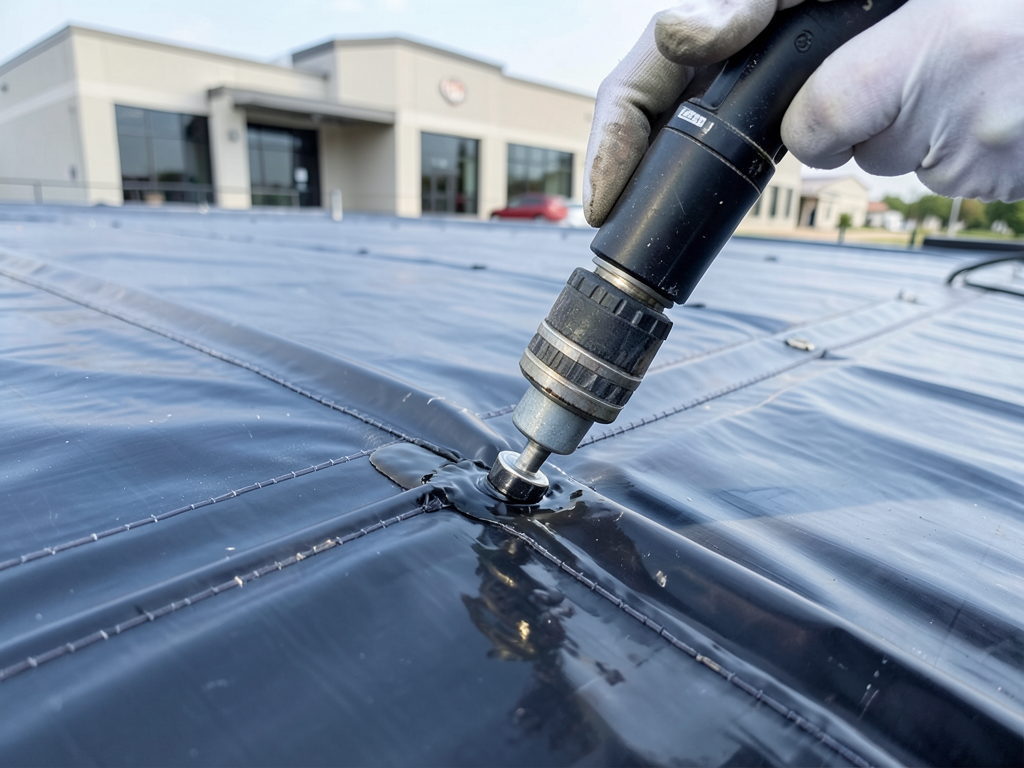
Material-specific repair techniques follow our assessment. For TPO roofs, we use heat-welded patches that create permanent bonds stronger than the original material. EPDM repairs involve cleaning and applying compatible adhesives and patches. Modified bitumen requires torching or cold-applied adhesives depending on the specific system.
Flashing repair represents another critical component. Roof penetrations around HVAC units, vents, and equipment curbs are common leak sources. We replace deteriorated flashing with materials compatible with your existing roof system and ensure proper sealing to prevent future water intrusion.
Coating applications provide additional protection for aging roofs. Silicone and acrylic coatings can extend roof life by 5-10 years when properly applied to sound substrates. These systems reflect UV radiation and provide an additional waterproof barrier.
Repair vs. Replacement: Making the Right Choice for Your Atlanta Property
Deciding between repair and replacement depends on several factors including roof age, extent of damage, and your long-term property plans. Understanding these considerations helps you make cost-effective decisions that protect your investment.
Roof age significantly impacts repair viability. Most flat roof systems in Midtown have 20-30 year lifespans. If your roof is approaching or exceeding this age, multiple repairs often cost more over time than replacement. A 15-year-old TPO roof with isolated leaks might benefit from repair, while a 28-year-old system likely needs replacement.
Damage extent determines repair feasibility. Small, localized leaks from punctures or separated seams typically respond well to repair. However, widespread membrane deterioration, extensive ponding, or structural issues usually indicate replacement is more economical. Multiple repair attempts on the same area often signal systemic problems requiring replacement.
Energy efficiency considerations affect long-term costs. Modern roofing materials offer superior insulation and reflectivity compared to older systems. If you’re experiencing high cooling costs, replacement with an energy-efficient system could provide ROI through reduced utility bills while solving leak problems.
Building use and occupancy impact decision timing. Commercial tenants expect reliable protection from water damage. If leaks disrupt business operations or damage tenant improvements, rapid replacement might be necessary despite higher upfront costs. Residential properties might tolerate temporary repairs while planning for eventual replacement.
Why Choose a Midtown-Based Roofing Specialist
Midtown’s unique characteristics require specialized knowledge that general contractors often lack. Local experience means understanding how urban heat island effects accelerate material degradation, knowing which drainage patterns work best for tight urban lots, and recognizing the specific challenges of working in high-density areas.
Fulton County building codes include specific requirements for commercial roofing that differ from residential standards. Midtown properties must comply with Atlanta Building Code Section 1507 for membrane roofing, including specific wind uplift requirements for urban environments. Local contractors understand these nuances and ensure your repairs meet all regulatory requirements.
Permit requirements in Midtown can be complex due to the area’s mix of historic preservation districts and modern high-rises. We navigate Fulton County permitting processes efficiently, understanding which repairs require permits and how to expedite approvals for emergency situations. Who to Call for Urgent Emergency Roof Repairs in Buckhead.
Rapid response capability is crucial in Midtown where water damage can affect multiple tenant spaces or residential units quickly. Our location allows us to dispatch crews within hours of emergency calls, minimizing damage to interior finishes and contents. Chimney Leak Emergency Repair.
Local supplier relationships ensure we have access to materials suited for Midtown’s specific conditions. We source products that withstand urban pollution, high heat loads, and the area’s unique weather patterns rather than generic materials that might fail prematurely.
Emergency Flat Roof Repair Services in Midtown Atlanta
Flat roof emergencies require immediate attention to prevent extensive damage. When you notice active leaks during storms or see water stains spreading on ceilings, quick professional response can mean the difference between minor repairs and major reconstruction.
Emergency services include temporary leak sealing to stop active water intrusion, followed by comprehensive assessment when weather permits. We use specialized materials that adhere to wet surfaces and provide immediate waterproofing while permanent repairs are planned.
Insurance coordination helps streamline the repair process. Many flat roof emergencies result from storm damage covered by commercial property insurance. We document damage thoroughly, provide detailed estimates, and work directly with insurance adjusters to ensure proper claim handling.
Business continuity remains our priority during repairs. We schedule work to minimize disruption to your operations, use containment systems to prevent dust and debris from entering occupied spaces, and maintain safe access routes for your tenants or customers.
Preventative maintenance programs help avoid future emergencies. Regular inspections identify developing problems before they cause leaks, and scheduled maintenance extends roof life while reducing the likelihood of unexpected failures during critical business periods.
Flat Roof Maintenance to Prevent Future Leaks
Proactive maintenance significantly extends flat roof life and prevents costly emergency repairs. A comprehensive maintenance program addresses the specific challenges Midtown roofs face from urban pollution, heat exposure, and drainage issues.
Seasonal inspections should occur twice yearly, typically in spring and fall. Spring inspections identify winter damage from freeze-thaw cycles, while fall inspections prepare roofs for heavy rain and leaf debris accumulation. These inspections should include membrane condition assessment, drainage system evaluation, and flashing integrity checks.
Drainage system maintenance prevents ponding water that causes most flat roof failures. This includes clearing debris from scuppers and internal drains, ensuring proper slope toward drainage points, and repairing any areas where water accumulates. Even small improvements in drainage can significantly extend roof life. Repairing Slate and Tile Roofs on Historic Homes in Druid Hills.
Debris removal prevents organic material accumulation that retains moisture and promotes algae growth. Midtown’s tree canopy means leaves, twigs, and seeds constantly fall on roofs. Regular cleaning prevents these materials from clogging drains or creating moisture traps that degrade roofing materials.
Coating applications provide additional protection for aging roofs. Reflective coatings reduce heat absorption, lowering cooling costs while protecting the underlying membrane from UV damage. These applications typically pay for themselves through energy savings and extended roof life. Protecting Your Historic Decatur Home with Specialty Roof Repairs.
Cost Factors for Flat Roof Repair in Midtown
Understanding cost factors helps you budget effectively for flat roof repairs. Several variables affect pricing, and knowing these factors prevents surprises while ensuring you receive fair value for quality repairs.
Roof accessibility significantly impacts labor costs. Midtown’s high-rise buildings often require special equipment for roof access, and tight urban lots limit staging areas for materials and equipment. These logistical challenges can increase labor costs by 15-25% compared to suburban properties.
Material compatibility affects repair costs. Using manufacturer-approved materials for your specific roof system ensures warranty compliance and optimal performance but may cost more than generic alternatives. However, incompatible materials often fail prematurely, leading to higher long-term costs.
Extent of damage determines repair scope and cost. Small, localized repairs might cost $500-1,500, while extensive damage affecting large areas could range from $5,000-15,000 or more. Hidden damage discovered during repairs can increase final costs, making thorough initial inspection crucial.
Emergency service premiums apply to after-hours calls or storm response. Standard rates typically apply during business hours, but emergency calls on weekends or holidays may incur 1.5-2x standard rates. However, these premiums often prove worthwhile when preventing extensive interior damage.
Permit requirements add administrative costs but ensure code compliance. Permit fees in Fulton County typically range from $100-500 depending on repair scope, and professional contractors handle permit acquisition as part of their service.
Choosing the Right Contractor for Your Midtown Flat Roof
Selecting qualified contractors for flat roof work requires careful evaluation beyond basic licensing. Flat roofing demands specialized skills and equipment that many general roofing contractors lack, making proper vetting essential for successful repairs.
Experience with your specific roof system matters significantly. Ask potential contractors about their experience with TPO, EPDM, modified bitumen, or other systems used on your property. Request references from similar commercial buildings in Midtown and verify their ability to handle your specific material.
Insurance coverage protects you from liability during repairs. Contractors should carry general liability insurance, workers’ compensation, and specific roofing insurance. Verify current coverage and ensure adequate limits for commercial work in urban environments where damage potential is higher.
Warranty offerings indicate contractor confidence in their work. Quality contractors provide both material warranties from manufacturers and workmanship warranties for their installation. Understand what’s covered, for how long, and what conditions might void warranties.
Local knowledge proves invaluable for Midtown projects. Contractors familiar with the area understand parking restrictions, building access procedures, and local code requirements. They also maintain relationships with suppliers and can source materials quickly when needed.
Communication quality reflects overall professionalism. Reliable contractors provide detailed written estimates, explain their proposed solutions clearly, and maintain consistent communication throughout the project. Poor communication often indicates broader quality issues.
Frequently Asked Questions
How long do flat roof repairs typically take in Midtown?
Most flat roof repairs in Midtown can be completed within 1-3 days, depending on the extent of damage and weather conditions. Emergency leak sealing can often be done within hours, with permanent repairs scheduled within a week.
Can I repair my flat roof myself to save money?
DIY flat roof repairs often cause more problems than they solve. Without proper materials and techniques, amateur repairs typically fail within months, potentially voiding manufacturer warranties and leading to more extensive damage. Professional repairs ensure proper waterproofing and code compliance.
How often should I have my Midtown flat roof inspected?
Flat roofs in Midtown should be professionally inspected twice yearly, typically in spring and fall. Additionally, inspections should follow severe weather events or if you notice interior water stains or other signs of potential problems.
What’s the average cost for flat roof repair in Midtown Atlanta?
Flat roof repair costs in Midtown typically range from $500 for minor repairs to $15,000+ for extensive work. Most property owners spend $2,000-5,000 for common repairs. Factors affecting cost include roof accessibility, damage extent, and material requirements.
Does my commercial property insurance cover flat roof leaks?
Many commercial property insurance policies cover sudden roof damage from covered perils like storms or falling objects. However, damage from wear and tear or lack of maintenance is typically excluded. Review your policy details and consult your insurance agent for specific coverage information.

Flat roof leaks in Midtown Atlanta require prompt attention from qualified professionals who understand the unique challenges of urban roofing systems. Whether you’re dealing with ponding water, membrane deterioration, or flashing failures, proper diagnosis and repair protects your property investment while preventing costly interior damage.
Don’t wait for small leaks to become major problems. Call (770) 610-9366 today to schedule your comprehensive flat roof inspection. Our Midtown-based team provides emergency response, expert repairs, and preventative maintenance to keep your commercial or residential property protected year-round.
Pick up the phone and call (770) 610-9366 before the next storm hits. Quick action now can prevent thousands in water damage repairs later. We’re ready to help Midtown property owners solve their flat roof problems permanently. For more information, visit National Roofing Contractors Association.
{
“@context”: “https://schema.org”,
“@type”: “BlogPosting”,
“headline”: “Why Your Midtown Flat Roof is Leaking and How to Fix It”,
“description”: “Discover why Midtown Atlanta flat roofs leak and get expert solutions for TPO, EPDM, and modified bitumen systems. Learn repair options before water damage worsens.”,
“wordCount”: 2520,
“datePublished”: “2026-02-22T11:44:00.000Z”,
“dateModified”: “2026-02-22T11:44:00.000Z”,
“inLanguage”: “en-US”,
“mainEntityOfPage”: {
“@type”: “WebPage”,
“@id”: “https://firstchoiceroofingatlanta.com”
},
“publisher”: {
“@type”: “LocalBusiness”,
“name”: “First Choice Roofing Atlanta”,
“url”: “https://firstchoiceroofingatlanta.com”
},
“author”: {
“@type”: “Organization”,
“name”: “First Choice Roofing Atlanta”,
“url”: “https://firstchoiceroofingatlanta.com”
},
“image”: {
“@type”: “ImageObject”,
“url”: “https://firstchoiceroofingatlanta.com/wp-content/uploads/2026/03/why-your-midtown-flat-roof-is-leaking-and-how-to-f-1.png”
}
}
{
“@context”: “https://schema.org”,
“@type”: “RoofingContractor”,
“name”: “First Choice Roofing Atlanta”,
“url”: “https://firstchoiceroofingatlanta.com”,
“address”: {
“@type”: “PostalAddress”,
“addressLocality”: “Atlanta”
},
“areaServed”: {
“@type”: “City”,
“name”: “Atlanta”
}
}
{
“@context”: “https://schema.org”,
“@type”: “FAQPage”,
“mainEntity”: [
{
“@type”: “Question”,
“name”: “How long do flat roof repairs typically take in Midtown?”,
“acceptedAnswer”: {
“@type”: “Answer”,
“text”: “Most flat roof repairs in Midtown can be completed within 1-3 days, depending on the extent of damage and weather conditions. Emergency leak sealing can often be done within hours, with permanent repairs scheduled within a week.”
}
},
{
“@type”: “Question”,
“name”: “Can I repair my flat roof myself to save money?”,
“acceptedAnswer”: {
“@type”: “Answer”,
“text”: “DIY flat roof repairs often cause more problems than they solve. Without proper materials and techniques, amateur repairs typically fail within months, potentially voiding manufacturer warranties and leading to more extensive damage. Professional repairs ensure proper waterproofing and code compliance.”
}
},
{
“@type”: “Question”,
“name”: “How often should I have my Midtown flat roof inspected?”,
“acceptedAnswer”: {
“@type”: “Answer”,
“text”: “Flat roofs in Midtown should be professionally inspected twice yearly, typically in spring and fall. Additionally, inspections should follow severe weather events or if you notice interior water stains or other signs of potential problems.”
}
},
{
“@type”: “Question”,
“name”: “What’s the average cost for flat roof repair in Midtown Atlanta?”,
“acceptedAnswer”: {
“@type”: “Answer”,
“text”: “Flat roof repair costs in Midtown typically range from $500 for minor repairs to $15,000+ for extensive work. Most property owners spend $2,000-5,000 for common repairs. Factors affecting cost include roof accessibility, damage extent, and material requirements.”
}
},
{
“@type”: “Question”,
“name”: “Does my commercial property insurance cover flat roof leaks?”,
“acceptedAnswer”: {
“@type”: “Answer”,
“text”: “Many commercial property insurance policies cover sudden roof damage from covered perils like storms or falling objects. However, damage from wear and tear or lack of maintenance is typically excluded. Review your policy details and consult your insurance agent for specific coverage information.”
}
}
]
}
{
“@context”: “https://schema.org”,
“@type”: “BreadcrumbList”,
“itemListElement”: [
{
“@type”: “ListItem”,
“position”: 1,
“name”: “Home”,
“item”: “https://firstchoiceroofingatlanta.com”
},
{
“@type”: “ListItem”,
“position”: 2,
“name”: “Blog”,
“item”: “https://firstchoiceroofingatlanta.com/blog”
},
{
“@type”: “ListItem”,
“position”: 3,
“name”: “Why Your Midtown Flat Roof is Leaking and How to Fix It”
}
]
}
{
“@context”: “https://schema.org”,
“@type”: “Service”,
“serviceType”: “Roofing”,
“provider”: {
“@type”: “LocalBusiness”,
“name”: “First Choice Roofing Atlanta”,
“url”: “https://firstchoiceroofingatlanta.com”
},
“areaServed”: {
“@type”: “City”,
“name”: “Atlanta”
},
“description”: “Discover why Midtown Atlanta flat roofs leak and get expert solutions for TPO, EPDM, and modified bitumen systems. Learn repair options before water damage worsens.”
}