
Checking for Blocked Soffit Vents to Stop Your West End Attic from Overheating
Attic ventilation problems in West End homes often start with blocked soffit vents. These intake vents allow cool air to enter your attic space, creating the airflow needed to push hot air out through ridge vents. When blocked, your attic traps heat like a pressure cooker, causing temperatures to soar well above 130°F on summer days. This creates a cascade of problems from warped wood to skyrocketing cooling bills. The good news is you can diagnose this issue yourself with a few simple tests before calling a professional. Attic Ventilation Systems.
West End’s historic bungalows and craftsman-style homes, particularly those built before 1980, frequently suffer from ventilation issues. Many older homes had soffit vents painted over during exterior renovations or covered by insulation that migrated into the eave space. The humid Atlanta climate makes these problems worse, accelerating wood rot and creating perfect conditions for mold growth when airflow stops. Protecting Your Historic Decatur Home with Specialty Roof Repairs.
Five Warning Signs Your Soffit Vents Are Blocked
Before climbing into your attic, look for these physical symptoms around your home’s exterior. Blocked soffit vents create distinct patterns that experienced contractors can spot immediately.. Read more about Repairing Rotten Soffit and Fascia Boards on Older Smyrna Homes.
- Mold on Eaves
Dark streaks or fuzzy growth along the underside of your roof’s overhang indicates moisture buildup from stagnant air.
- Peeling Exterior Paint
Paint bubbles or peels away from fascia boards where trapped moisture forces its way out.
- Compressed Insulation
Fiberglass batts near eaves appear flattened or show signs of water damage from condensation.
- Visible Debris
Leaves, pine needles, or small animal nests visible through vent holes block airflow.
- Inconsistent Roof Temperatures
Ice dams form in winter or certain roof sections feel hotter to touch on sunny days.
According to the Georgia State Minimum Standard Residential Code, proper attic ventilation requires a minimum net free area of 1/150 of the attic floor space when using a balanced system of intake and exhaust vents. Blocked soffits immediately throw this balance off, forcing your ridge vents to work alone and creating negative pressure that pulls conditioned air from your living space. Georgia State Minimum Standard Residential Code.
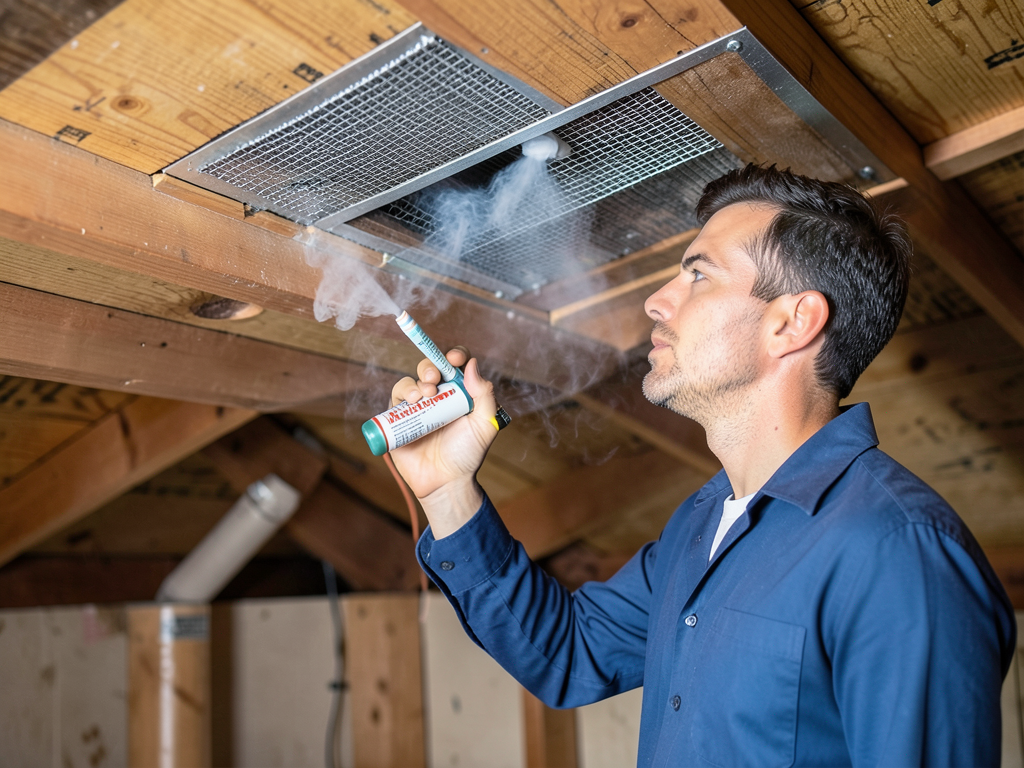
The DIY Smoke Test: How to Check Your Soffit Airflow
Testing soffit vent airflow requires no special equipment. This simple diagnostic test takes five minutes and reveals whether air moves freely through your intake vents.
- Gather Materials
You need an incense stick or smoke pencil and a flashlight. Work on a calm day when attic fans are off.
- Access the Attic
Enter through your attic hatch or pull-down stairs. Bring a sturdy ladder and wear protective gear.
- Position Yourself
Stand near the eaves where soffit vents are located. Look for light coming through vent holes.
- Light the Smoke Source
Light your incense or smoke pencil. Hold it steady near a soffit vent opening.
- Observe Airflow
Smoke should be drawn into the vent and disappear into the attic. If smoke pools or blows back, the vent is blocked.
Another quick test uses a tissue held near the vent. If the tissue flutters inward, air flows properly. No movement means blockage. These tests work because they reveal the pressure differential that should exist between your attic and the outside air.
Common Causes of Blocked Soffit Vents in Atlanta Homes
Understanding what blocks your soffit vents helps prevent future problems. Atlanta’s unique climate and construction patterns create specific failure modes.
Insulation baffles, also called rafter vents, prevent loose-fill insulation from sliding into the soffit area. When missing or improperly installed, cellulose or fiberglass insulation migrates down and completely blocks the air channel. This happens frequently in West End homes where original insulation settles over decades.
Paint overspray from exterior painting projects often seals vent holes shut. Many Atlanta homeowners don’t realize their soffit vents are designed to be open. A single coat of exterior paint can reduce airflow by 80% or more.
Pest activity creates another common blockage. Georgia’s humid climate attracts wasps, mud daubers, and birds seeking sheltered nesting sites. These creatures build nests directly in vent openings, completely obstructing airflow. Squirrels sometimes chew through vent screens, creating entry points for debris.. Read more about Keeping Woodpeckers and Birds from Destroying the Eaves of Your Dunwoody Home.
Atlanta’s Climate Impact on Attic Ventilation
Georgia’s 90% summer humidity creates unique ventilation challenges. When soffit vents block, trapped humid air condenses on cool roof surfaces, creating ideal conditions for mold growth. This process happens faster in Atlanta than in drier climates because moisture-laden air holds more heat energy.
High pollen counts in spring compound the problem. Atlanta’s famous yellow dust settles in vent openings, mixing with moisture to create a sticky paste that hardens over time. This biological growth can reduce vent effectiveness by half within a single season.
Temperature differentials between day and night in North Georgia cause materials to expand and contract. This movement can loosen vent screens or create gaps where debris enters. Homes near the Chattahoochee River corridor experience these effects more severely due to higher humidity levels.
The Cost of Ignoring Blocked Vents
Blocked soffit vents create a domino effect of home problems. Your air conditioning system works harder to cool your home, leading to premature equipment failure. The EPA estimates that proper attic ventilation can reduce cooling costs by 10-15% annually. EPA ventilation guidelines.
Shingle manufacturers often void warranties when inadequate ventilation causes premature failure. Most require proof of proper airflow for warranty claims. Heat buildup from blocked soffits can cook shingles from underneath, causing granule loss and cracking within 5-7 years instead of the expected 20-25 year lifespan.
Moisture damage extends beyond the attic. Trapped humidity migrates through ceilings, causing drywall damage, electrical problems, and creating conditions for termite colonies to thrive. The average cost to repair moisture-related damage in Atlanta homes ranges from $3,000 to $8,000.
When to Call a Professional
Some ventilation problems require professional diagnosis and repair. If you notice any of these conditions, contact First Choice Roofing Atlanta immediately. Roofing Dunwoody.
- Multiple Blocked Vents
If more than 30% of your soffit vents show blockage, the entire system needs evaluation.
- Structural Damage
Sagging rafters or water-stained decking indicates long-term ventilation failure.
- Complex Roof Designs
Homes with multiple roof levels or valleys need specialized airflow calculations.
- Insurance Claims
Storm damage may have compromised your ventilation system without visible signs.
Professional inspection includes thermal imaging to detect hot spots, moisture readings to find hidden water damage, and airflow calculations to ensure code compliance. First Choice Roofing Atlanta uses drone technology to inspect hard-to-reach areas without damaging your home’s exterior.
Frequently Asked Questions
How often should I check my soffit vents?
Inspect your soffit vents annually, preferably in spring before Atlanta’s heavy cooling season. Check more frequently if you notice attic temperature spikes or increased cooling costs.
Can I clean blocked soffit vents myself?
Minor blockages from leaves or debris can be cleared with a vacuum or compressed air. However, if vents are painted over or insulation is packed in, professional removal prevents damage to surrounding materials.
Will adding more soffit vents solve my ventilation problems?
Adding vents without addressing the root cause often creates new problems. Blocked vents indicate systemic issues that need comprehensive evaluation of your entire ventilation system.
Take Action Before Summer Heat Arrives
Atlanta’s summer heat is approaching fast. Don’t wait until your attic reaches dangerous temperatures or your cooling bills skyrocket. The simple smoke test takes minutes but could save you thousands in energy costs and prevent extensive damage to your home’s structure.
First Choice Roofing Atlanta specializes in ventilation diagnostics for West End and surrounding Atlanta neighborhoods. Our technicians understand the unique challenges of historic Atlanta homes and can recommend solutions that preserve your home’s character while improving efficiency.
Call (770) 610-9366 today to schedule your ventilation inspection. Don’t let another summer pass with an overheated attic threatening your home’s comfort and value. Our team provides honest assessments and clear recommendations without high-pressure sales tactics.
Remember, proper attic ventilation isn’t just about comfort—it’s about protecting your investment. A well-ventilated attic can extend your roof’s life by 10 years or more while reducing your energy costs significantly. The cost of inspection is minimal compared to the potential damage from years of blocked soffit vents.
Pick up the phone and call (770) 610-9366 before the next heat wave hits. Your home deserves better than baking in an overheated attic all summer long.
{
“@context”: “https://schema.org”,
“@type”: “BlogPosting”,
“headline”: “Checking for Blocked Soffit Vents to Stop Your West End Attic from Overheating”,
“description”: “Learn how blocked soffit vents cause attic overheating in West End homes. Discover DIY diagnostic tests, common causes, and when to call First Choice Roofing Atlanta.”,
“wordCount”: 1391,
“datePublished”: “2026-04-26T12:46:00.000Z”,
“dateModified”: “2026-04-26T12:46:00.000Z”,
“inLanguage”: “en-US”,
“mainEntityOfPage”: {
“@type”: “WebPage”,
“@id”: “https://firstchoiceroofingatlanta.com”
},
“publisher”: {
“@type”: “LocalBusiness”,
“name”: “First Choice Roofing Atlanta”,
“url”: “https://firstchoiceroofingatlanta.com”
},
“author”: {
“@type”: “Organization”,
“name”: “First Choice Roofing Atlanta”,
“url”: “https://firstchoiceroofingatlanta.com”
},
“image”: {
“@type”: “ImageObject”,
“url”: “https://firstchoiceroofingatlanta.com/wp-content/uploads/2026/03/checking-for-blocked-soffit-vents-to-stop-your-wes-1.png”
}
}
{
“@context”: “https://schema.org”,
“@type”: “RoofingContractor”,
“name”: “First Choice Roofing Atlanta”,
“url”: “https://firstchoiceroofingatlanta.com”,
“address”: {
“@type”: “PostalAddress”,
“addressLocality”: “Atlanta”
},
“areaServed”: {
“@type”: “City”,
“name”: “Atlanta”
}
}
{
“@context”: “https://schema.org”,
“@type”: “FAQPage”,
“mainEntity”: [
{
“@type”: “Question”,
“name”: “How often should I check my soffit vents?”,
“acceptedAnswer”: {
“@type”: “Answer”,
“text”: “Inspect your soffit vents annually, preferably in spring before Atlanta’s heavy cooling season. Check more frequently if you notice attic temperature spikes or increased cooling costs.”
}
},
{
“@type”: “Question”,
“name”: “Can I clean blocked soffit vents myself?”,
“acceptedAnswer”: {
“@type”: “Answer”,
“text”: “Minor blockages from leaves or debris can be cleared with a vacuum or compressed air. However, if vents are painted over or insulation is packed in, professional removal prevents damage to surrounding materials.”
}
},
{
“@type”: “Question”,
“name”: “Will adding more soffit vents solve my ventilation problems?”,
“acceptedAnswer”: {
“@type”: “Answer”,
“text”: “Adding vents without addressing the root cause often creates new problems. Blocked vents indicate systemic issues that need comprehensive evaluation of your entire ventilation system.”
}
}
]
}
{
“@context”: “https://schema.org”,
“@type”: “HowTo”,
“name”: “Warning Signs of Blocked Soffit Vents”,
“step”: [
{
“@type”: “HowToStep”,
“position”: 1,
“name”: “Mold on Eaves”,
“text”: “Dark streaks or fuzzy growth along the underside of your roof’s overhang indicates moisture buildup from stagnant air.”
},
{
“@type”: “HowToStep”,
“position”: 2,
“name”: “Peeling Exterior Paint”,
“text”: “Paint bubbles or peels away from fascia boards where trapped moisture forces its way out.”
},
{
“@type”: “HowToStep”,
“position”: 3,
“name”: “Compressed Insulation”,
“text”: “Fiberglass batts near eaves appear flattened or show signs of water damage from condensation.”
},
{
“@type”: “HowToStep”,
“position”: 4,
“name”: “Visible Debris”,
“text”: “Leaves, pine needles, or small animal nests visible through vent holes block airflow.”
},
{
“@type”: “HowToStep”,
“position”: 5,
“name”: “Inconsistent Roof Temperatures”,
“text”: “Ice dams form in winter or certain roof sections feel hotter to touch on sunny days.”
}
],
“image”: “https://firstchoiceroofingatlanta.com/wp-content/uploads/2026/03/checking-for-blocked-soffit-vents-to-stop-your-wes-1.png”
}
{
“@context”: “https://schema.org”,
“@type”: “BreadcrumbList”,
“itemListElement”: [
{
“@type”: “ListItem”,
“position”: 1,
“name”: “Home”,
“item”: “https://firstchoiceroofingatlanta.com”
},
{
“@type”: “ListItem”,
“position”: 2,
“name”: “Blog”,
“item”: “https://firstchoiceroofingatlanta.com/blog”
},
{
“@type”: “ListItem”,
“position”: 3,
“name”: “Checking for Blocked Soffit Vents to Stop Your West End Attic from Overheating”
}
]
}
{
“@context”: “https://schema.org”,
“@type”: “Service”,
“serviceType”: “Roofing”,
“provider”: {
“@type”: “LocalBusiness”,
“name”: “First Choice Roofing Atlanta”,
“url”: “https://firstchoiceroofingatlanta.com”
},
“areaServed”: {
“@type”: “City”,
“name”: “Atlanta”
},
“description”: “Learn how blocked soffit vents cause attic overheating in West End homes. Discover DIY diagnostic tests, common causes, and when to call First Choice Roofing Atlanta.”
}