How to Safely Remove Black Algae Streaks from Your Grant Park Roof
Black streaks on your Grant Park roof are not just unsightly—they’re a sign of Gloeocapsa Magma, a cyanobacteria that thrives in Atlanta’s humid climate. These dark stains form when airborne spores land on your roof and feed on the limestone filler in asphalt shingles. Left untreated, they can reduce your roof’s lifespan and lower your home’s curb appeal. Asphalt Roofing Manufacturers Association.
The good news is that safe removal is possible without damaging your shingles. Professional soft washing uses low-pressure application of specialized cleaning solutions to eliminate algae while protecting your roof’s integrity. This method is approved by the Asphalt Roofing Manufacturers Association (ARMA) and won’t void your shingle warranty. Protecting Your Historic Decatur Home with Specialty Roof Repairs.
Understanding Black Algae Growth in Grant Park
Grant Park’s tree-lined streets and historic bungalows create perfect conditions for algae growth. The neighborhood’s mature canopy blocks sunlight, keeping roof surfaces damp longer after rain. Combined with Atlanta’s average relative humidity of 70% during summer months, this creates an environment where algae can establish and spread rapidly across roof surfaces.. Read more about Dealing with Moss and Mold Growth on Shaded Avondale Estates Roofs.
Older homes in Grant Park often have north-facing slopes that receive minimal direct sunlight throughout the year. These shaded areas stay cooler and retain moisture, making them prime targets for algae colonization. The historic district’s architectural styles, with their varying roof pitches and dormers, create additional micro-environments where moisture can collect.
The Soft Wash Process: What Makes It Different
Traditional pressure washing uses water at 1,500-3,000 PSI to blast away surface contaminants. This high pressure can strip granules from asphalt shingles, damage flashing, and force water under roofing materials. Soft washing operates at just 40-80 PSI—similar to a garden hose—while relying on chemical action to kill and remove algae. Roofing Dunwoody.
The cleaning solution typically contains sodium hypochlorite (the active ingredient in pool shock) mixed with specialized surfactants and algaecides. When properly diluted and applied, this mixture kills algae on contact and continues working for weeks after application. The surfactants help the solution cling to vertical surfaces, ensuring complete coverage even on steep slopes.
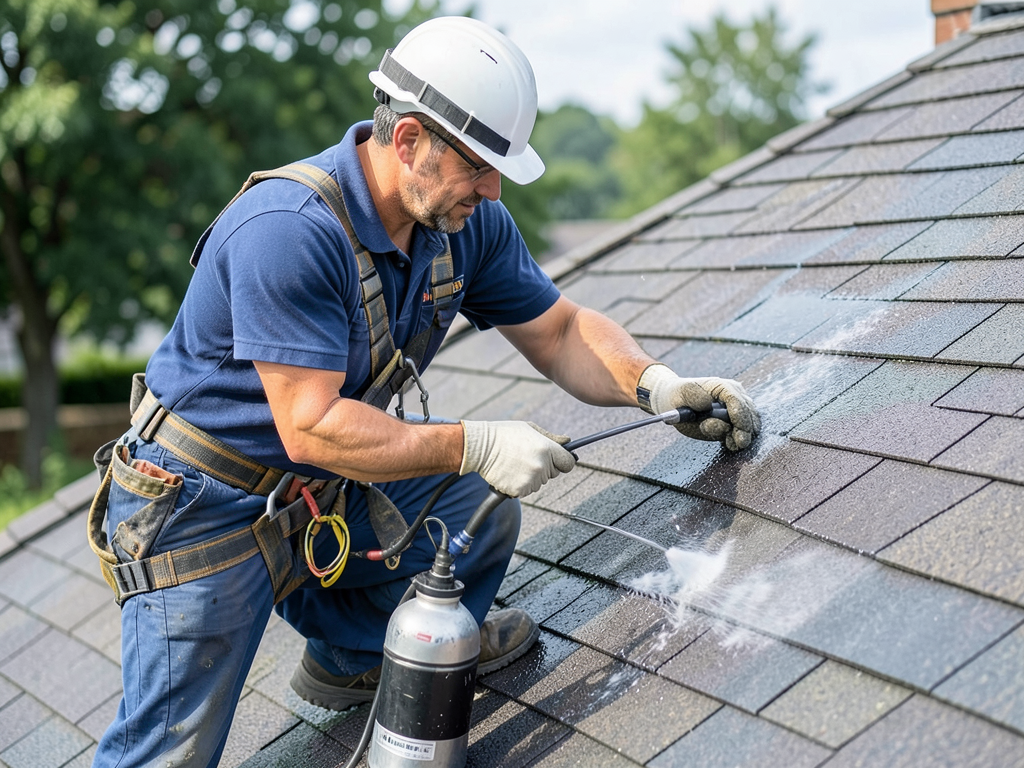
Diagram showing soft wash chemical application versus high-pressure washing damage patterns on asphalt shingles
Step-by-Step Soft Washing Process
- Property Protection
Before any cleaning begins, technicians cover landscaping, outdoor furniture, and AC units with protective tarps. They also pre-wet surrounding vegetation to minimize chemical absorption and establish containment areas for runoff.
- Solution Preparation
Technicians mix sodium hypochlorite with water and specialized surfactants based on roof pitch, algae severity, and local temperature. The typical concentration ranges from 3-6% sodium hypochlorite, significantly lower than household bleach.
- Low-Pressure Application
Using specialized pumps and wide-fan nozzles, technicians apply the solution from a safe distance. The low pressure ensures the mixture covers all surfaces without damaging shingles or forcing water under roofing materials.
- Dwell Time
The solution must remain on the roof surface for 15-25 minutes to fully penetrate and kill algae at the root level. During this time, the mixture continues breaking down organic matter and loosening stains.
- Thorough Rinsing
Technicians rinse the roof using clean water at low pressure, removing dead algae and residual cleaning solution. This step also flushes any solution that may have collected in valleys or around flashing.
- Final Inspection
Technicians inspect all roof areas for missed spots, damaged shingles, or areas requiring additional treatment. They also check gutters for debris and ensure all protective coverings are removed.
Safety Equipment and OSHA Compliance
Working on sloped roofs requires specialized safety equipment to prevent falls and injuries. Professional roof cleaning crews use full-body harnesses anchored to the roof structure, non-slip footwear, and fall protection systems that meet OSHA 1926.502 standards for residential construction. OSHA Safety Standards.
Technicians also wear chemical-resistant gloves, eye protection, and respirators when handling concentrated cleaning solutions. The equipment must be properly maintained and inspected before each use. Fall protection systems include guardrails, safety nets, or personal fall arrest systems depending on roof configuration and pitch.
Weather conditions play a crucial role in safety. Crews avoid working during high winds, which can create slip hazards and make chemical application difficult. They also monitor heat index levels, as roof surfaces can reach 150°F on sunny summer days, creating heat stress risks.
Environmental Considerations for Atlanta Properties
Atlanta’s Chattahoochee River watershed requires careful chemical management during roof cleaning. Professional services use biodegradable cleaning solutions that break down into salt and water within 48-72 hours. These eco-friendly formulations protect local waterways while effectively removing algae.
Plant protection is critical in Grant Park’s established neighborhoods. Technicians use specialized rinsing techniques to dilute runoff before it reaches sensitive vegetation. They also apply neutralizing agents to areas where cleaning solution contacts plants, preventing leaf burn and soil contamination.
Water conservation is another consideration. Professional soft washing typically uses 50-80 gallons of water per average home, compared to 150-300 gallons for pressure washing. The reduced water usage, combined with the chemical’s effectiveness, makes soft washing the more environmentally responsible choice.
Cost Factors and Investment Protection
Professional roof cleaning costs in Grant Park typically range from $0.25 to $0.40 per square foot, depending on roof complexity, algae severity, and accessibility. A standard 2,000-square-foot roof might cost $400-800 for complete cleaning and treatment.
Factors affecting price include steep roof pitches that require additional safety equipment, multiple stories that increase setup time, and extensive landscaping that requires extra protection. Homes with severe algae growth or moss accumulation may need multiple treatment applications, increasing the overall cost.
Regular cleaning every 2-3 years can extend your roof’s life by 5-7 years, making it a cost-effective maintenance strategy. The average asphalt shingle roof replacement costs $8,000-12,000, so investing $400-800 in cleaning provides significant long-term savings.
Grant Park Specific Considerations
Grant Park’s historic district designation means many homes have unique architectural features that require special attention during cleaning. Decorative ridge caps, copper flashing, and intricate dormer designs all need careful treatment to avoid damage while ensuring complete algae removal.
The neighborhood’s proximity to Zoo Atlanta and Grant Park itself means increased wildlife activity. Technicians must be aware of potential animal nesting areas and take precautions to avoid disturbing protected species. This includes checking for bird nests before beginning work and scheduling cleaning outside of breeding seasons.
Grant Park’s clay soil and mature tree canopy create specific drainage patterns that affect roof cleaning. Water runoff follows established paths through the neighborhood’s hilly terrain, requiring technicians to plan containment strategies that prevent chemical migration onto neighboring properties.
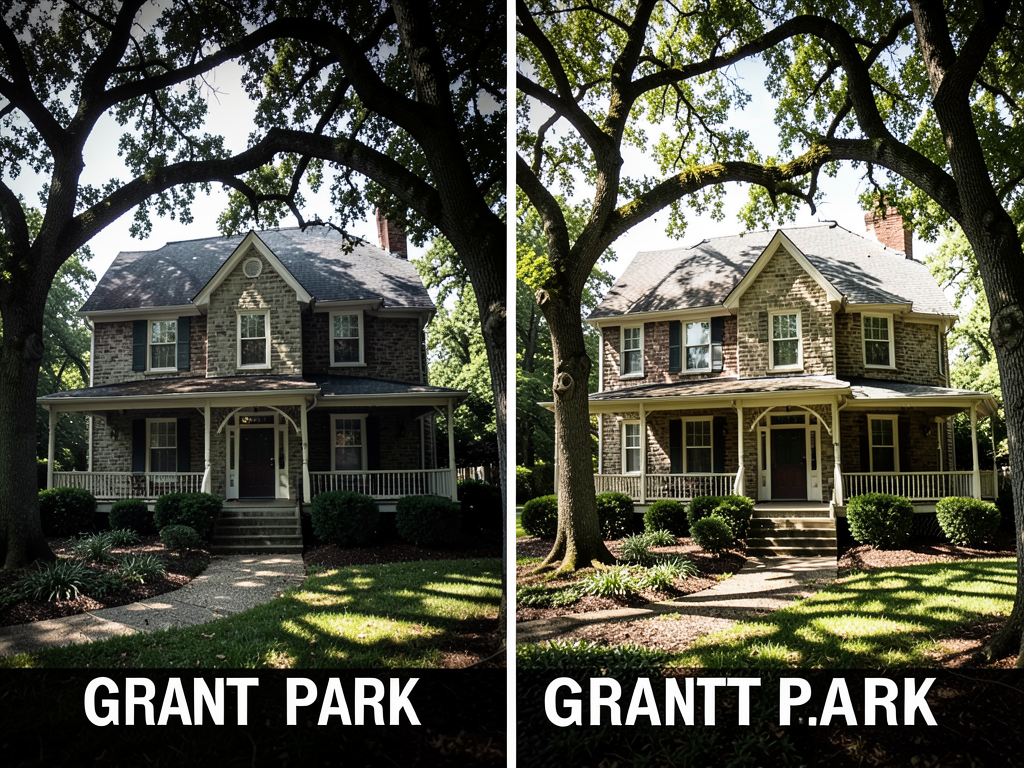
Before and after comparison showing black algae removal from a Grant Park bungalow with mature tree canopy
Maintenance Schedule for Atlanta Roofs
Atlanta’s climate requires specific timing for roof maintenance. The ideal cleaning window is late spring (May-June) after pollen season but before summer heat intensifies. This timing allows the cleaning solution to work effectively without rapid evaporation and provides protection through the heaviest algae growth months.
Homeowners should inspect their roofs annually, looking for dark streaks, moss growth, or missing shingles. Early detection of algae problems makes cleaning more effective and less expensive. Signs of algae typically appear as dark vertical streaks on north-facing slopes or areas under heavy tree cover.
Between professional cleanings, homeowners can reduce algae growth by trimming tree branches that overhang the roof, ensuring proper attic ventilation to reduce moisture buildup, and keeping gutters clean to prevent water backup onto roof surfaces. Attic Ventilation Systems.
Insurance and Liability Considerations
Professional roof cleaning companies carry liability insurance specifically for chemical application and roof work. This coverage protects homeowners from damage caused by improper cleaning techniques or chemical exposure. Always verify insurance certificates before hiring any service provider.
Homeowner’s insurance policies typically don’t cover routine maintenance like roof cleaning, but they may cover damage caused by improper DIY attempts. Professional services provide documentation of their work, which can be valuable for insurance claims related to roof damage or water intrusion.
OSHA compliance extends beyond worker safety. Professional companies maintain proper documentation for chemical handling, disposal procedures, and safety training. This documentation demonstrates due diligence and protects both the company and homeowner from liability issues.
Choosing the Right Service Provider
Not all roof cleaning services are created equal. Look for companies with specific experience in soft washing techniques, proper licensing for chemical application, and verifiable insurance coverage. Ask about their training procedures and whether technicians are certified in roof cleaning best practices.
Request references from Grant Park homeowners or similar historic neighborhoods. A reputable company should provide before-and-after photos of similar projects and explain their process in detail. Be wary of services offering extremely low prices, as they may use high-pressure washing or improper chemical concentrations.
Professional companies provide detailed written estimates that outline the scope of work, materials to be used, and warranty information. They should also explain their cleanup procedures and how they protect your property during the cleaning process.
Frequently Asked Questions
How long does roof cleaning take?
Most residential roof cleaning projects in Grant Park take 2-4 hours, depending on roof size and complexity. Larger homes or those with severe algae growth may require additional time for multiple treatment applications.
Will cleaning damage my plants?
Professional services use plant protection techniques including pre-wetting, covering sensitive vegetation, and applying neutralizing agents. While some leaf browning may occur, established plants typically recover within 2-3 weeks.
How soon can I walk on my roof after cleaning?
Roof surfaces are typically safe to walk on within 24-48 hours after cleaning, once all cleaning solution has been rinsed away and surfaces have dried completely.
Does roof cleaning affect my home’s energy efficiency?
Removing dark algae stains can improve your roof’s solar reflectance, potentially reducing cooling costs by 2-5% during summer months. Clean shingles also allow better heat dissipation during evening hours.
How often should I clean my roof?
Most Atlanta homes benefit from professional cleaning every 2-3 years. Homes in heavily wooded areas or those with severe algae problems may need annual cleaning to maintain appearance and prevent damage.
Technician demonstrating proper safety harness setup and chemical application techniques on a steep roof pitch
Protect Your Investment Today
Black algae streaks on your Grant Park roof are more than just a cosmetic issue—they’re a sign that your home needs professional attention. The humid Atlanta climate creates perfect conditions for algae growth, but proper soft washing can restore your roof’s appearance and extend its lifespan.
Don’t wait until algae damage becomes severe enough to require costly repairs or premature replacement. Professional soft washing is a cost-effective maintenance strategy that protects your home’s value and curb appeal. The process is safe for your shingles, environmentally responsible, and backed by industry standards.
Call (770) 610-9366 today to schedule your free roof inspection. Our experienced technicians will evaluate your roof’s condition, identify any algae growth, and provide a detailed quote for safe removal. Protect your Grant Park home with professional care that’s been trusted by Atlanta homeowners for years. Finding the Most Trusted Local Roofers in Sandy Springs.
Pick up the phone and call (770) 610-9366 before the next storm hits. Algae growth doesn’t wait, and neither should you when it comes to protecting your home’s most important asset—your roof.
{
“@context”: “https://schema.org”,
“@type”: “BlogPosting”,
“headline”: “How to Safely Remove Black Algae Streaks from Your Grant Park Roof”,
“description”: “Professional black algae removal for Grant Park homes. Learn safe soft washing methods that protect your shingles and restore your roof’s appearance.”,
“wordCount”: 1858,
“datePublished”: “2026-03-10T08:12:00.000Z”,
“dateModified”: “2026-03-10T08:12:00.000Z”,
“inLanguage”: “en-US”,
“mainEntityOfPage”: {
“@type”: “WebPage”,
“@id”: “https://firstchoiceroofingatlanta.com”
},
“publisher”: {
“@type”: “LocalBusiness”,
“name”: “First Choice Roofing Atlanta”,
“url”: “https://firstchoiceroofingatlanta.com”
},
“author”: {
“@type”: “Organization”,
“name”: “First Choice Roofing Atlanta”,
“url”: “https://firstchoiceroofingatlanta.com”
},
“image”: {
“@type”: “ImageObject”,
“url”: “https://firstchoiceroofingatlanta.com/wp-content/uploads/2026/03/how-to-safely-remove-black-algae-streaks-from-your-1.png”
}
}
{
“@context”: “https://schema.org”,
“@type”: “RoofingContractor”,
“name”: “First Choice Roofing Atlanta”,
“url”: “https://firstchoiceroofingatlanta.com”,
“address”: {
“@type”: “PostalAddress”,
“addressLocality”: “Atlanta”
},
“areaServed”: {
“@type”: “City”,
“name”: “Atlanta”
}
}
{
“@context”: “https://schema.org”,
“@type”: “FAQPage”,
“mainEntity”: [
{
“@type”: “Question”,
“name”: “How long does roof cleaning take?”,
“acceptedAnswer”: {
“@type”: “Answer”,
“text”: “Most residential roof cleaning projects in Grant Park take 2-4 hours, depending on roof size and complexity. Larger homes or those with severe algae growth may require additional time for multiple treatment applications.”
}
},
{
“@type”: “Question”,
“name”: “Will cleaning damage my plants?”,
“acceptedAnswer”: {
“@type”: “Answer”,
“text”: “Professional services use plant protection techniques including pre-wetting, covering sensitive vegetation, and applying neutralizing agents. While some leaf browning may occur, established plants typically recover within 2-3 weeks.”
}
},
{
“@type”: “Question”,
“name”: “How soon can I walk on my roof after cleaning?”,
“acceptedAnswer”: {
“@type”: “Answer”,
“text”: “Roof surfaces are typically safe to walk on within 24-48 hours after cleaning, once all cleaning solution has been rinsed away and surfaces have dried completely.”
}
},
{
“@type”: “Question”,
“name”: “Does roof cleaning affect my home’s energy efficiency?”,
“acceptedAnswer”: {
“@type”: “Answer”,
“text”: “Removing dark algae stains can improve your roof’s solar reflectance, potentially reducing cooling costs by 2-5% during summer months. Clean shingles also allow better heat dissipation during evening hours.”
}
},
{
“@type”: “Question”,
“name”: “How often should I clean my roof?”,
“acceptedAnswer”: {
“@type”: “Answer”,
“text”: “Most Atlanta homes benefit from professional cleaning every 2-3 years. Homes in heavily wooded areas or those with severe algae problems may need annual cleaning to maintain appearance and prevent damage.”
}
}
]
}
{
“@context”: “https://schema.org”,
“@type”: “HowTo”,
“name”: “How to Soft Wash a Roof”,
“step”: [
{
“@type”: “HowToStep”,
“position”: 1,
“name”: “Property Protection”,
“text”: “Before any cleaning begins, technicians cover landscaping, outdoor furniture, and AC units with protective tarps. They also pre-wet surrounding vegetation to minimize chemical absorption and establish containment areas for runoff.”
},
{
“@type”: “HowToStep”,
“position”: 2,
“name”: “Solution Preparation”,
“text”: “Technicians mix sodium hypochlorite with water and specialized surfactants based on roof pitch, algae severity, and local temperature. The typical concentration ranges from 3-6% sodium hypochlorite, significantly lower than household bleach.”
},
{
“@type”: “HowToStep”,
“position”: 3,
“name”: “Low-Pressure Application”,
“text”: “Using specialized pumps and wide-fan nozzles, technicians apply the solution from a safe distance. The low pressure ensures the mixture covers all surfaces without damaging shingles or forcing water under roofing materials.”
},
{
“@type”: “HowToStep”,
“position”: 4,
“name”: “Dwell Time”,
“text”: “The solution must remain on the roof surface for 15-25 minutes to fully penetrate and kill algae at the root level. During this time, the mixture continues breaking down organic matter and loosening stains.”
},
{
“@type”: “HowToStep”,
“position”: 5,
“name”: “Thorough Rinsing”,
“text”: “Technicians rinse the roof using clean water at low pressure, removing dead algae and residual cleaning solution. This step also flushes any solution that may have collected in valleys or around flashing.”
},
{
“@type”: “HowToStep”,
“position”: 6,
“name”: “Final Inspection”,
“text”: “Technicians inspect all roof areas for missed spots, damaged shingles, or areas requiring additional treatment. They also check gutters for debris and ensure all protective coverings are removed.”
}
],
“image”: “https://firstchoiceroofingatlanta.com/wp-content/uploads/2026/03/how-to-safely-remove-black-algae-streaks-from-your-1.png”
}
{
“@context”: “https://schema.org”,
“@type”: “BreadcrumbList”,
“itemListElement”: [
{
“@type”: “ListItem”,
“position”: 1,
“name”: “Home”,
“item”: “https://firstchoiceroofingatlanta.com”
},
{
“@type”: “ListItem”,
“position”: 2,
“name”: “Blog”,
“item”: “https://firstchoiceroofingatlanta.com/blog”
},
{
“@type”: “ListItem”,
“position”: 3,
“name”: “How to Safely Remove Black Algae Streaks from Your Grant Park Roof”
}
]
}
{
“@context”: “https://schema.org”,
“@type”: “Service”,
“serviceType”: “Roofing”,
“provider”: {
“@type”: “LocalBusiness”,
“name”: “First Choice Roofing Atlanta”,
“url”: “https://firstchoiceroofingatlanta.com”
},
“areaServed”: {
“@type”: “City”,
“name”: “Atlanta”
},
“description”: “Professional black algae removal for Grant Park homes. Learn safe soft washing methods that protect your shingles and restore your roof’s appearance.”
}